

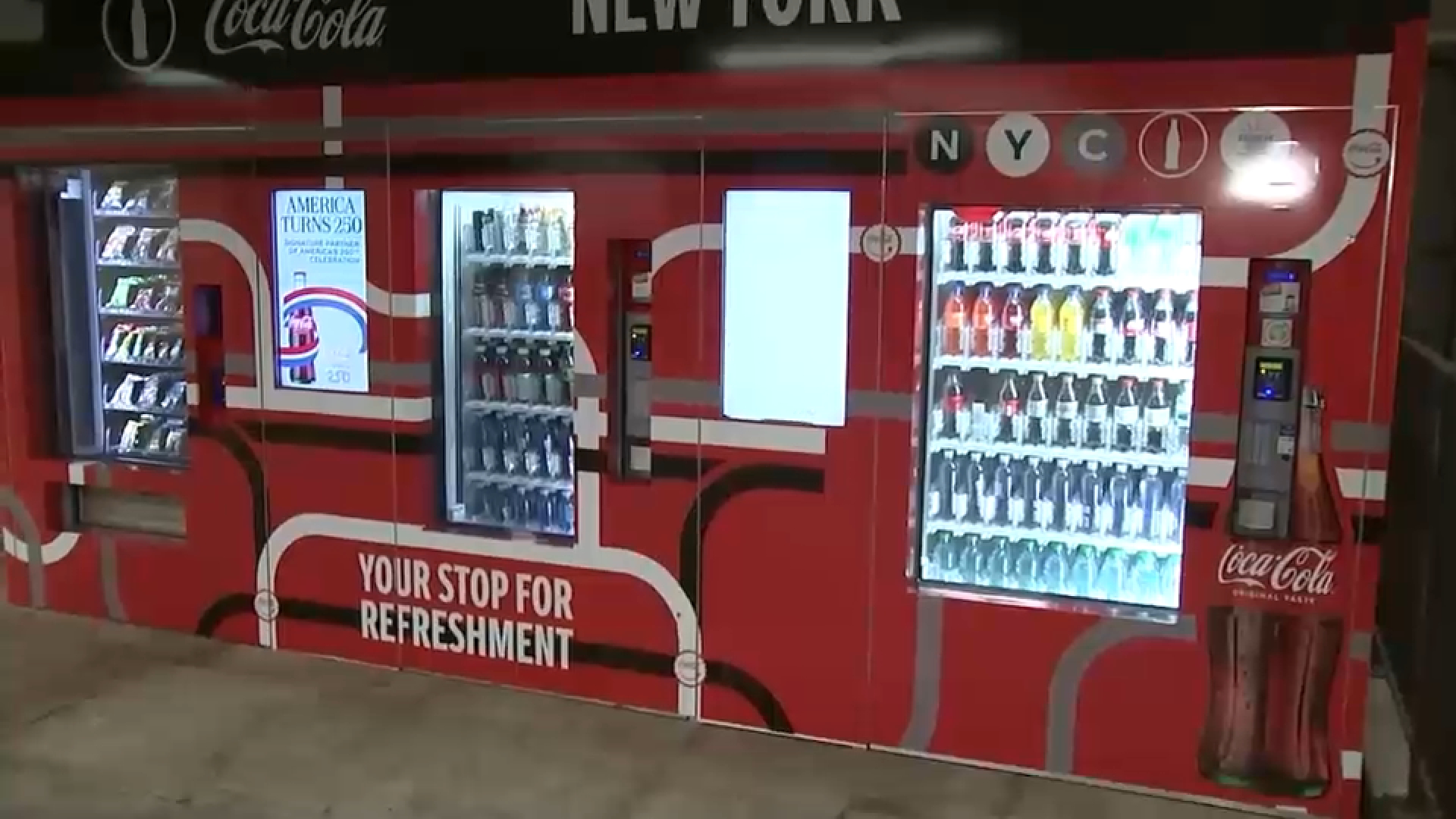
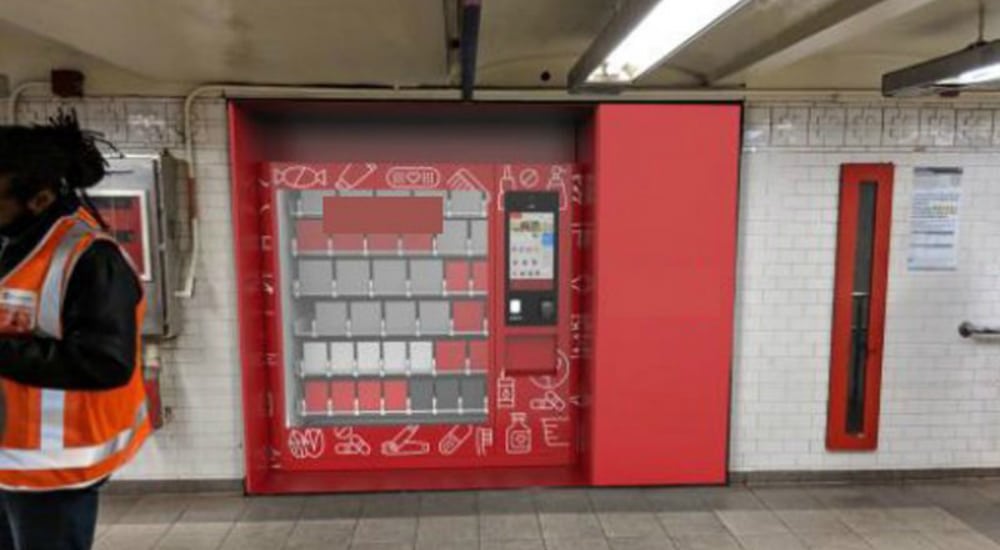
The MTA has leased out 60 former retail kiosks in subway stations to a company called CC Vending, which works exclusively with Coca-Cola to stock automated vending machines.
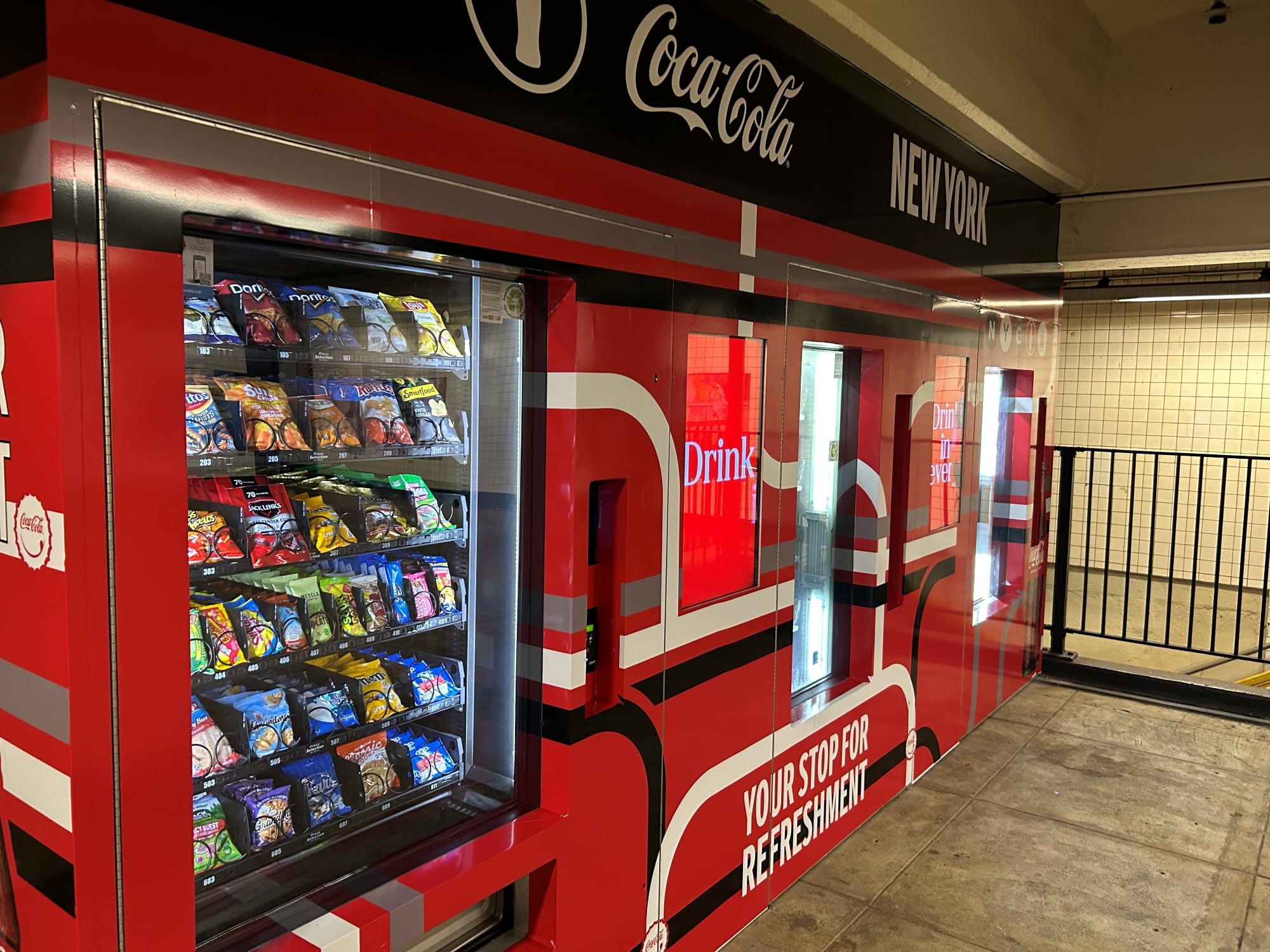
The MTA leased 60 former retail kiosks to CC Vending for automated machines stocking Coca-Cola beverages and snacks, with the initial rollout placing machines in 26 stations including Brooklyn Bridge/City Hall, Canal Street, and three already operating at 23rd Street-Broadway, Second Avenue-East Houston and 116th Street-Lexington Avenue stations.
MTA Chairman and CEO Janno Lieber described the machines as a low-cost way to restore some of the convenience once provided by newsstands, which previously operated in nearly 300 stations but now number only a few dozen.
“We love the old newsstands,” Lieber said. “They kept disappearing, and then really disappeared during COVID, and they didn’t want to come back.”
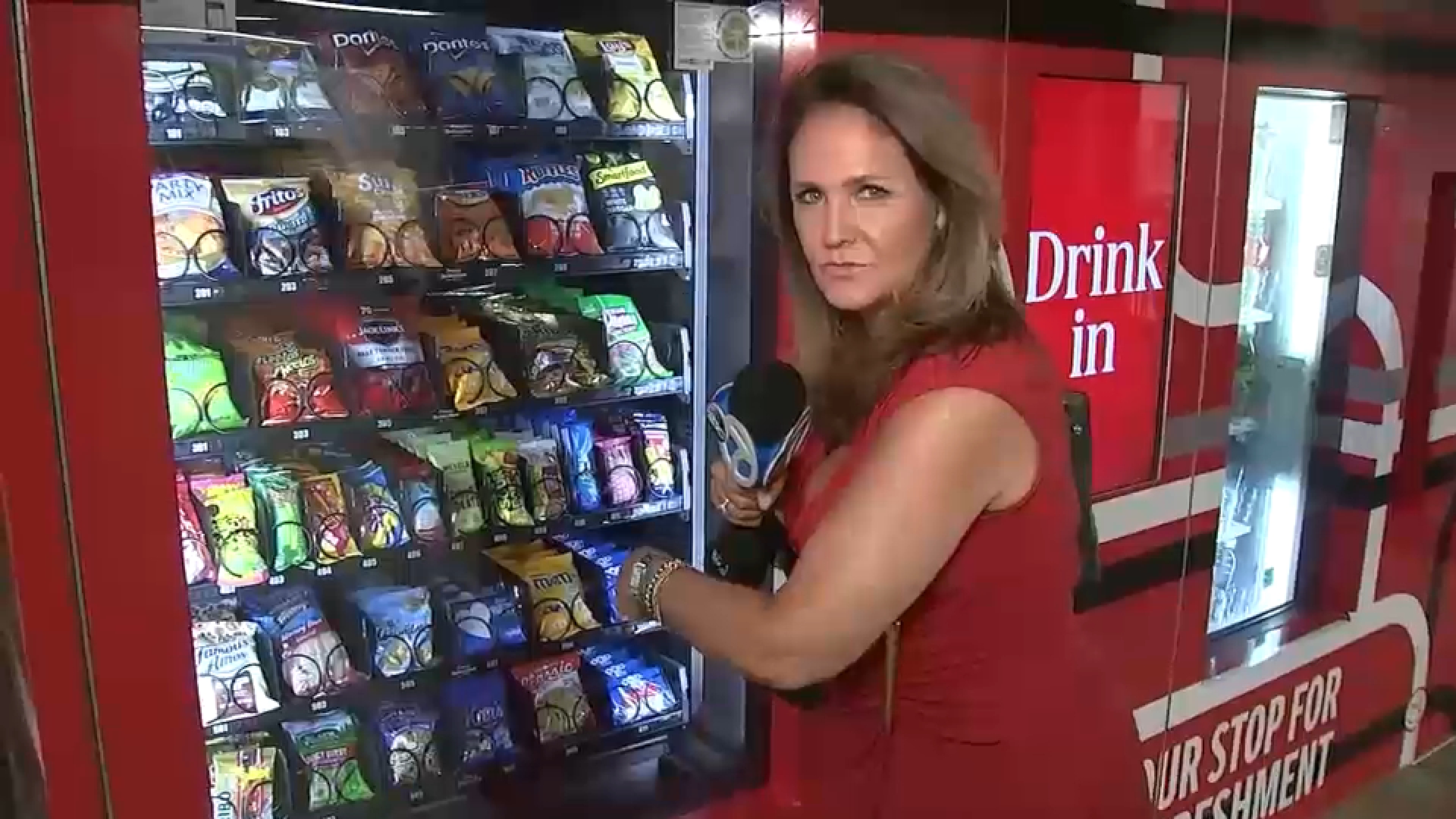
Eyewitness News reporter Michelle Charlesworth started punching in different options at the vending machines installed at the F line at Second Avenue on the Lower East Side, and it looks like the food runs around $3, and the most expensive drink, a protein drink, is $4.50.
“Vending is obviously low cost, it doesn’t require as much investment in terms of the physical installation, and it works,” Lieber said.
Michael Cascione Sr., president of CC Vending Inc., reflected on the historic moment for his company.
“This initiative marks the beginning of a new chapter for New York City’s subway system,” Cascione said. “Together with the MTA and Coca-Cola, we’re delivering a more convenient experience for millions of riders. This launch is the result of years of planning, collaboration and innovation, and we’re proud to see our vision come to life. As a New York company that started with a single vending machine more than 35 years ago, it’s especially rewarding to help shape the future of retail in the city’s transit system.”
“I mean, they’re not going to be the Beats by Dre or the AirPods. But because we have all wireless data and tracking, we’ll be able to see what’s selling by the second. We’ll be able to pivot accordingly for those customers,” Cascione told NY1.
MTA Chief Customer Officer Shanifah Rieara emphasized the agency’s aim to repurpose vacant spaces.
“Newsstands are sort of, you know, has outdated at this point,” Rieara told NY1. “But the needs of our customers is ever so present. So we wanted to sort of meet those needs, use these unoccupied spaces and repurpose them.”
Not all riders embraced the shift from human-staffed newsstands to cashless machines.
“I think they need to fix the train system first, they need to clean the train entirely it’s extremely unhygienic; the human feces, the urine, the stalls especially,” one person told WOR reporter Natalie Migliore when asked about the vending machines.
“Every Sunday we do not get proper train schedules, we don’t get bus schedules on time… we have real issues we need to address and getting vending machines is not a priority at all.” the rider added.
One commuter voiced nostalgia for the old retail experience.
“Of course I miss buying my People magazine at the newsstand on Chambers,” a Tribeca Citizen commenter wrote, referencing the loss of traditional newsstands.
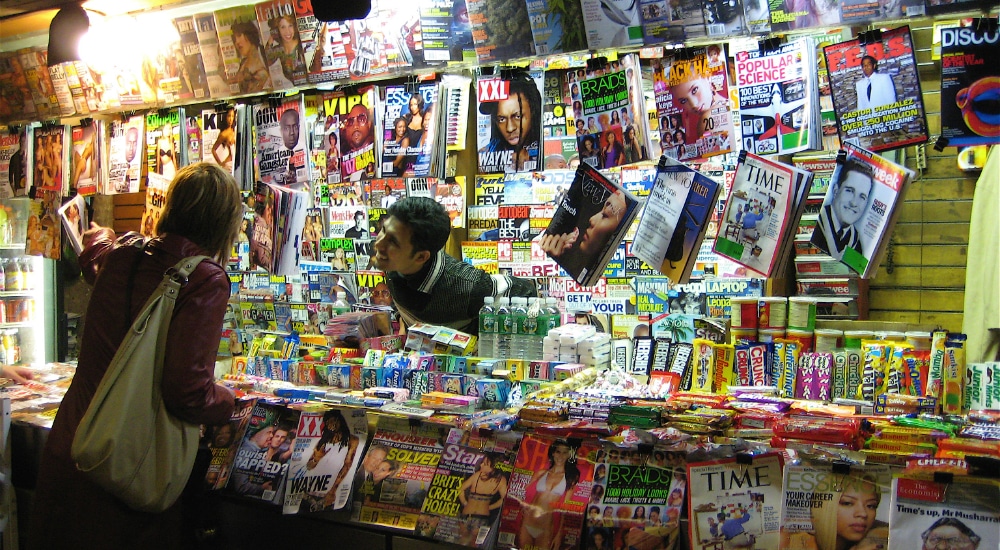
Subway newsstands once served as bustling hubs where straphangers could grab a newspaper, a magazine, or a snack while waiting for their train to arrive, but the majority of those box-shaped stainless steel structures have stood vacant, with their shutters drawn, for several years now.
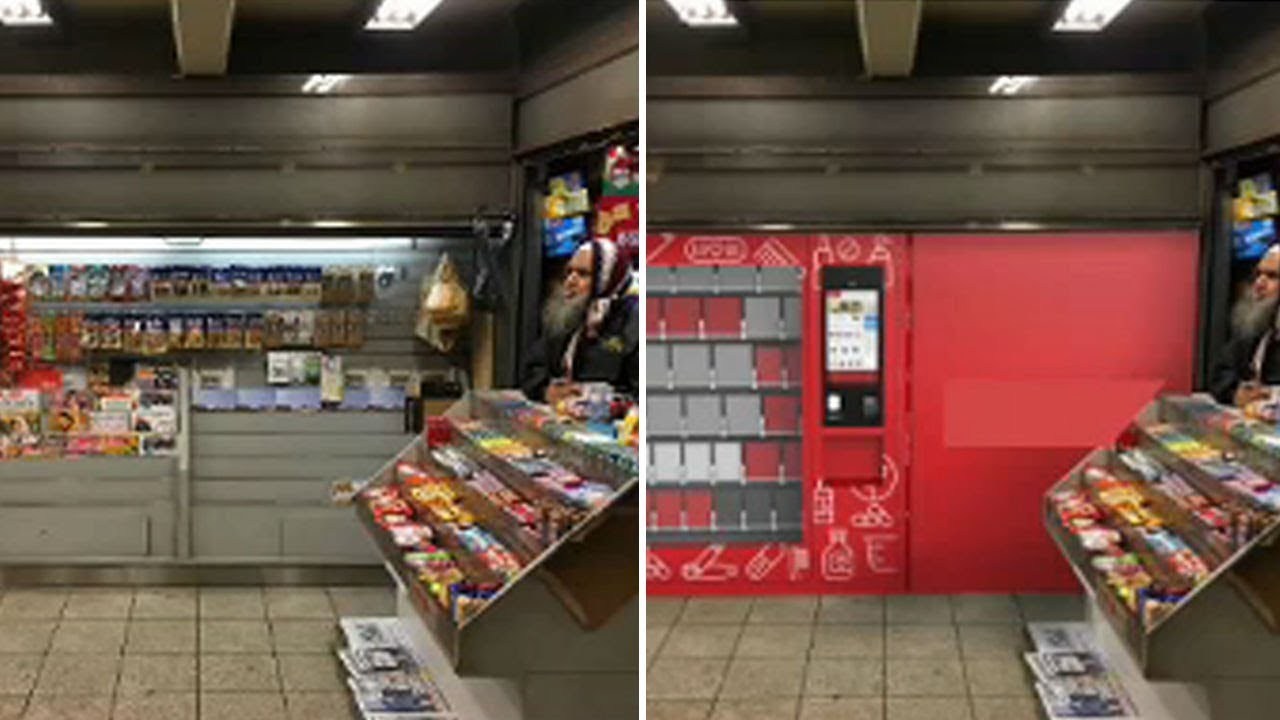
The MTA put out a request for proposals in 2024 to transform long-vacant subway newsstands with automated retail machines that sell beverages, snacks and everyday essentials.
Back in the day, the little news stand stores were in almost 300 train stations, but now there are just a few dozen. Just under 27 percent of retail spaces in the subway are currently open, MTA stats show. The disappearance accelerated during the pandemic, with dozens of magazine covers serving as dusty throwbacks to pre-pandemic times — grim indicators of how subway newsstands are struggling to survive amid major shifts in ridership and reading habits.
CC Vending, which has owned vending machines across the city for 35 years, partnered with Transit Tech NYC, which will provide the design, engineering, construction and program management.
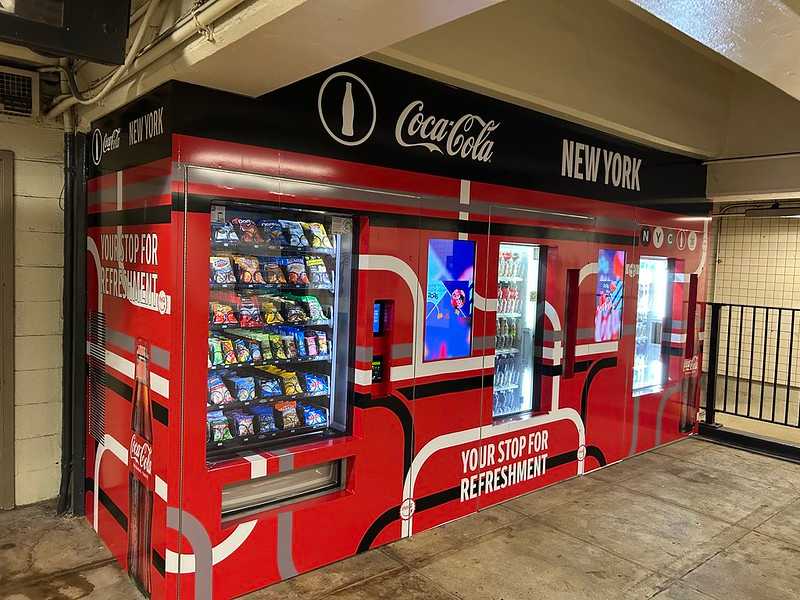
Each unit occupies a former retail space and sits flush with the station wall, keeping platforms and passenger circulation areas clear.
Per the agreement, CC Vending, Inc., can expand offerings to include retail merchandise, technology products, health and beauty products, and other convenience items.
The license agreement with CC Vending Inc. Is for a five-year term, with an option to extend for an additional five years, with additional installations planned for this year and into 2027 as the program continues to expand throughout the system.
Another 23 stations are slated to get the retail units next year, including Atlantic Av-Barclays Center, Broadway-Lafayette St, and Flushing-Main St on the 7 line.