

For months, Courtney believed the lump in her breast was likely a cyst tied to hormonal changes. Because it seemed to appear and fade, it did not initially strike her as something more serious. That changed when it stopped going away and began to grow.
“At first it seemed to fluctuate around my cycle, which made it easier to rationalize, but eventually it became visibly larger over time,” 29-year-old Courtney, who was diagnosed in January, says. She asked that her last name not be used to protect her and her family’s privacy.
She was also dealing with fatigue, something she initially blamed on burnout and shifting hormones. Eventually, both the exhaustion and the lump became, in her words, impossible to brush aside, prompting her to make an appointment with her GP.
“The first time I brought it up to my doctor, I was told it didn’t seem overly concerning and that an ultrasound would just be done to be safe,” she says.
The results brought life-changing news: Courtney had breast cancer.

Breast cancer is far more commonly diagnosed later in life. The median age at diagnosis in the U.S. Is about 62-64 years old, placing Courtney well outside the age group most people associate with the disease. However, while breast cancer incidence in younger women remains relatively low, the rate has been rising faster in women under 50 compared to older women. Between 2012 and 2022, breast cancer incidence in women under 50 increased about 1.4 percent each year, compared to about 1 percent each year in women over 50. As of 2024, approximately 16 percent of women diagnosed with breast cancer are younger than 50 years of age.
She is not alone, however. Researchers have found that 11 forms of cancer are increasingly being seen in younger adults in their 20s, 30s, and 40s, with breast cancer among them. In fact, cancer in young adults aged 18-49 has become significantly more prevalent, with rates having increased 79.1 percent since 1990. Additionally, breast cancer is now the leading cause of cancer death in women aged 20 to 49 in the U.S., highlighting the growing impact of early-onset cancer on younger populations.
Courtney believes age can sometimes cause legitimate medical concerns to be downplayed. “I’ve definitely heard the phrase ‘you’re too young’ throughout this process,” she says, “but honestly, you don’t even need someone to say it out loud to feel it.”
Although she was eventually referred for more testing, the road to diagnosis still took months. “Between insurance changes, scheduling issues, and availability, it took around six months before I actually got imaging done,” Courtney says, adding that once the diagnosis came, events moved very quickly.
“I went from imaging to biopsy to treatment discussions almost immediately, and honestly I don’t think I had much time to emotionally process what was happening before my life completely shifted into survival mode.”
Imaging wait times can differ significantly depending on where someone lives. In many places, routine MRI and CT appointments may be delayed by one to four weeks, though suspected cancer cases are often treated as a priority.
For Courtney, the emotional impact has also been shaped by how unusual her diagnosis is for her age group. “The experience can be incredibly isolating,” she adds. “You walk into oncology appointments and look around the waiting room and realize very quickly that almost nobody there is your age. Nobody has to explain it for you to understand that you’re part of a much smaller group experiencing this young.”
By May, she had already completed six rounds of chemotherapy and still had two left to go.
“Emotionally, that’s been really difficult for me,” Courtney continues. “I think what frustrates me most is that being young made it easier for both myself and others to assume what I was experiencing probably wasn’t serious.”
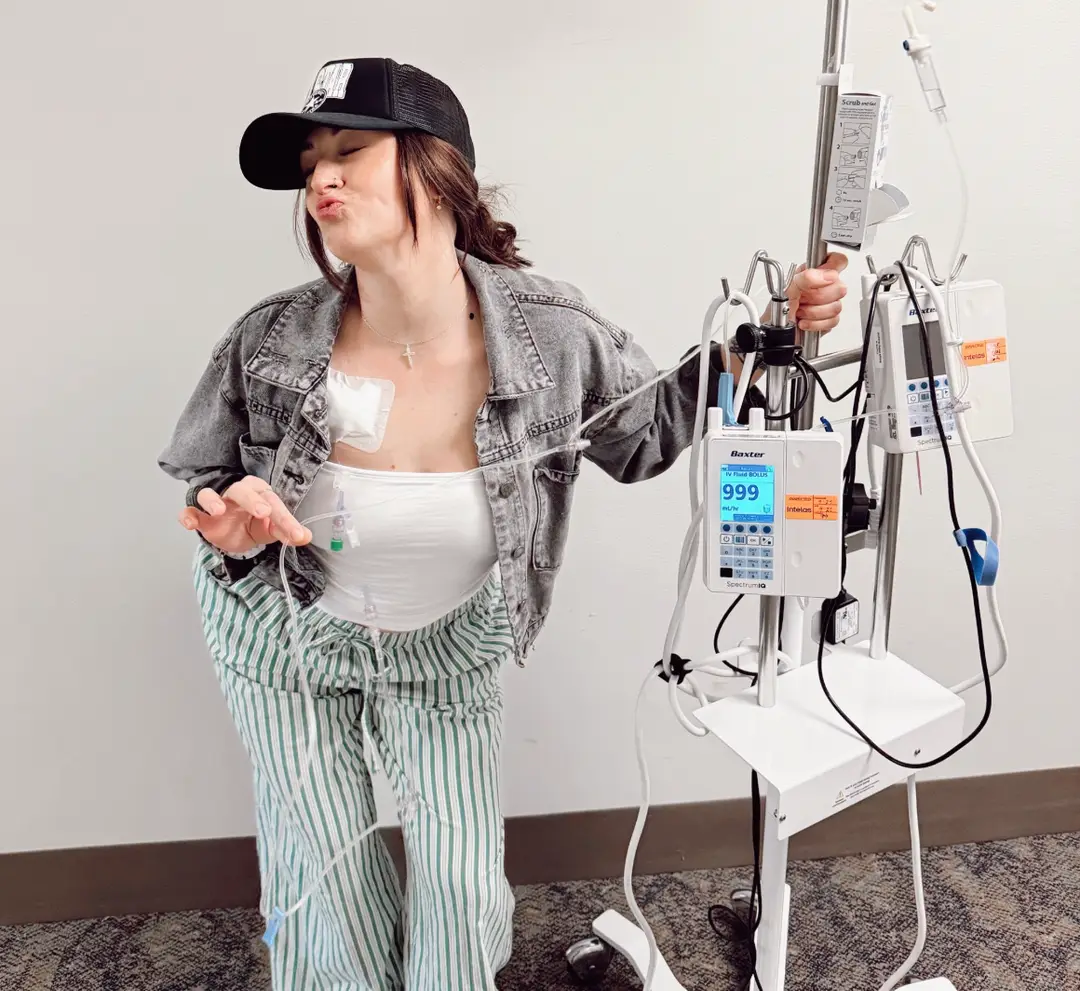
“I genuinely believed it was likely a cyst or something harmless because that’s what made the most sense at the time and because I was reassured early on. Looking back, of course there’s a part of me that wishes I had pushed harder or advocated for myself more aggressively, but hindsight feels very different when you’re living through something in real time.”
“After chemotherapy, I’ll most likely be having a lumpectomy followed by radiation, and then hormone therapy for the next five years since my cancer is hormone-positive,” she adds.
“In a lot of ways, I’ve already come really far, but there’s still a long road ahead of me physically and emotionally.”
In a June 28 update on her TikTok page, @withcandor, Courtney said she had “responded fully to chemo” and that an MRI showed her lymph nodes were “normal and healthy.”
She later told followers she had initially planned to undergo a lumpectomy on July 16, but decided to cancel that operation so a different surgeon could perform the procedure. Her surgery ultimately took place on July 30.
Her treatment is ongoing, with radiotherapy next, followed by five years of hormone therapy.

Doctors still do not know exactly why Courtney developed breast cancer. She underwent testing for inherited genetic mutations, including BRCA, but those results were negative. While about half of early-onset breast cancers are related to BRCA mutations, the other half arise from unknown causes, and researchers continue to investigate why early-onset breast cancer rates are increasing among younger adults.
In sharing her story, she wants younger people to know that age does not make someone immune from serious illness.
“I think younger people deserve to feel heard when something feels wrong in their body, even if statistically they’re considered ‘low risk’,” she says.
“Cancer doesn’t wait for your birthday to manifest, and I think symptoms should be taken seriously regardless of age.”
Gen C is weekly series focusing on young adults with cancer sharing their experiences.
If you’ve been affected by any of these issues and want to speak to someone in confidence, contact the American Cancer Society on 1-800-227-2345 or via their live chat feature, available 24/7 every day of the year.