

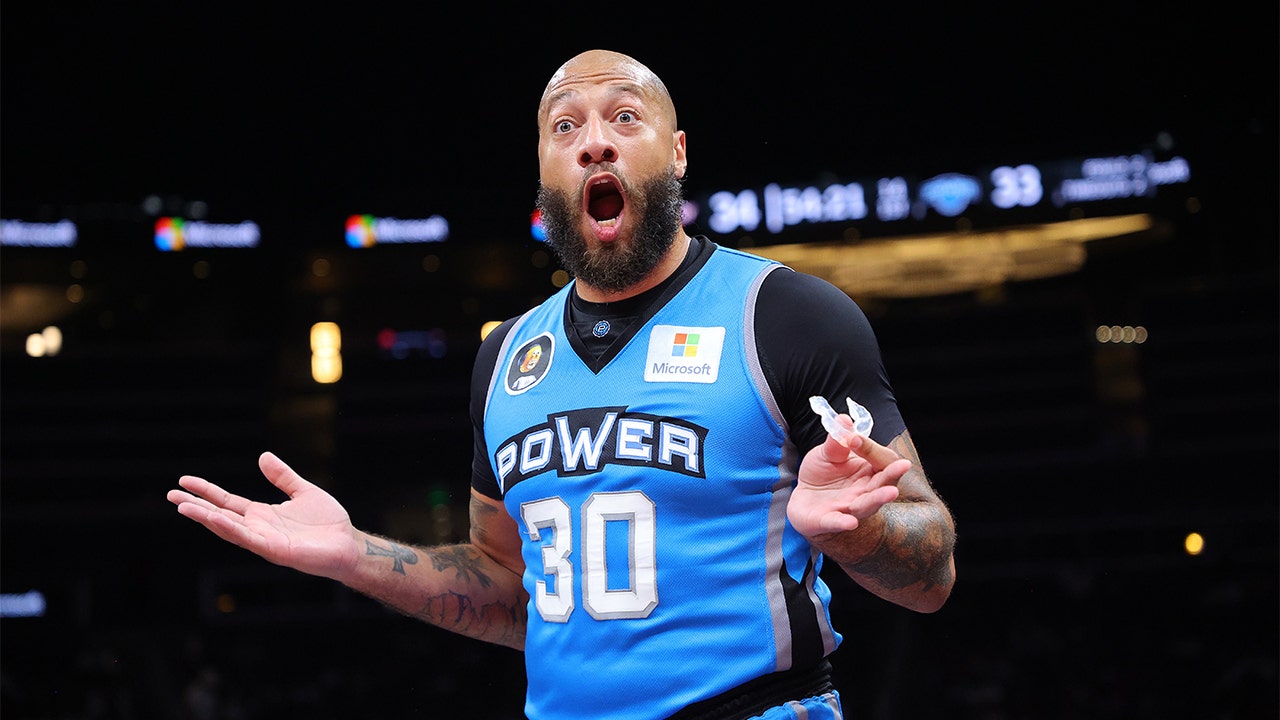
Former NBA player Royce White declared Friday that he plans to enter the 2027 WNBA Draft as a transgender woman, becoming the second former pro in as many days to challenge the league’s eligibility policies. The 35-year-old Minnesota Republican Senate candidate’s announcement came hours after another ex-NBA player, Enes Kanter Freedom, made a similar declaration, setting off a new flash point in the ongoing debate over transgender athletes in women’s sports.
“I’m transgender. I’m a woman,” White said. “I identify as sometimes identifying as a woman for purposes of professional basketball. So I’ll be declaring for the WNBA Draft in 2027 as well.”
On social media, White shared his announcement with characteristic flair, posting: “As I stated a few days ago, I am declaring for the 2027 WNBA Draft. I identify as a sometimes identifying transgender woman! My wig is in the mail.”
White played just three NBA games during the 2013-14 season with the Sacramento Kings. He was drafted 16th overall in 2012 by the Houston Rockets straight out of Iowa State University but never suited up for the team due to a generalized anxiety disorder triggered by a severe fear of flying. The 6-foot-8 forward led his Iowa State team in all five major statistical categories during his college career.
The back-to-back declarations from White and Kanter Freedom expose a significant gap in the WNBA’s governance structure. The league’s 2026 collective bargaining agreement states: “Only players who are women are eligible to play in the WNBA.” However, the 409-page document neither defines “women” nor offers any policy addressing transgender eligibility, leaving open the question of whether self-identification alone suffices for eligibility.
Kanter Freedom, a 6-foot-10 center who played 11 NBA seasons and was a first-round draft pick, announced his declaration in a video statement earlier Friday. “After careful consideration and reviewing the current eligibility guidelines, I’m officially declaring myself a WNBA prospect,” he said in the video posted to social media. “If simply declaring who you are is all that’s required, then I meet every single requirement necessary to compete in the WNBA.”
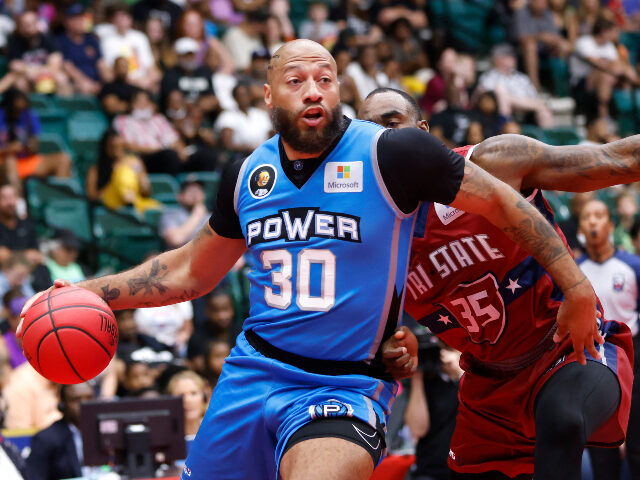
White went further than Kanter Freedom in his public statements, calling on the WNBA to clarify its stance. He suggested that the league could eliminate the challenge by being transparent about who is eligible to play. “I think the WNBA could come out and make a definitive statement about guys with a pair of balls playing in the Women’s Association,” he said. “I think I’d be unstoppable. But I’m a team-first guy. I’m a pass-first kind of player. I do the little things.”
White indicated he would pursue legal action if excluded from the draft. “I have to file a discrimination lawsuit, right?” he said. “We’re gonna have to have a huge legal battle about discrimination if I can’t play.”
The timing of these declarations comes amid an intensifying controversy in the WNBA over transgender participation in women’s sports. The conflict began last month when Indiana Fever guard Sophie Cunningham expressed opposition to transgender participation in women’s basketball. “I want to protect young girls in a locker room, or young girls in sport who shouldn’t have to go against biological men,” she said in July, later defending her remarks as reflecting “common sense.”
Cunningham’s comments triggered competing responses across the league. Minnesota Lynx coach Cheryl Reeve wore a “trans kids belong” shirt during a game against Cunningham’s Indiana Fever. Cunningham later said she respected Reeve for approaching her in person to discuss their differences. “She had stories about her point of view, and I had stories about my point of view, and we left with love and respect,” Cunningham said.
The Women’s National Basketball Players Association responded to the escalating controversy with a carefully worded statement emphasizing the union’s commitment to inclusion while warning against politicization. “We embrace justice, equity, diversity, and inclusion,” the union said Friday. “Those are the values that unite this Union and allow it to protect women’s sports while creating transformational change. Hate, abuse, and demonization of any person or group of people, including transgender people, only fuel fear, division, and harm. We will continue to have hard conversations. But we will not be used as political pawns.”
Multiple players and coaches have voiced support for transgender inclusion, including Seattle Storm center Stefanie Dolson and 2026 All-Star Gabby Williams. “I would welcome a trans athlete on my team or against my team any time,” Williams said. “I don’t think it’s a problem in the world.”
White’s political profile adds another dimension to his declaration. He is currently a Republican candidate in Minnesota’s August 11 primary for a U.S. Senate seat being vacated by Democrat Tina Smith. He won the GOP primary in 2024 but lost the general election to incumbent Democrat Amy Klobuchar. In April 2026, the Minnesota Republican Party called on him to suspend his campaign following reports of alleged threats against his ex-wife and children, though White has denied the allegations.
Neither White nor Kanter Freedom has formally submitted paperwork to the WNBA, and neither appears likely to do so. The formal draft declaration process involves submitting required documentation to the league office, a step the WNBA indicated it takes seriously. The league’s Commissioner Cathy Engelbert said the league would have conversations about the issue “in the weeks and months ahead” with teams and the players’ union, though the league has not publicly commented on the specific declarations.
No male player has ever competed in the WNBA. The league’s only transgender player to date is Layshia Clarendon, who came out as nonbinary and transgender in 2020 while already playing in the league. Some analysts have framed the declarations by Kanter Freedom and White as statements meant to highlight what they view as inconsistency in the league’s stated values around inclusion and its eligibility rules.
Kanter Freedom insisted his declaration was not intended as mockery. “I am definitely not here to mock, make fun of, or disrespect any community or personal choices,” he said. “I’m simply asking that the current rules be applied equally to everyone.” White took a different rhetorical approach, appearing to embrace the controversy as both a political and policy statement during an election year in which his national political profile has grown through provocative statements and associations with conservative figures.