

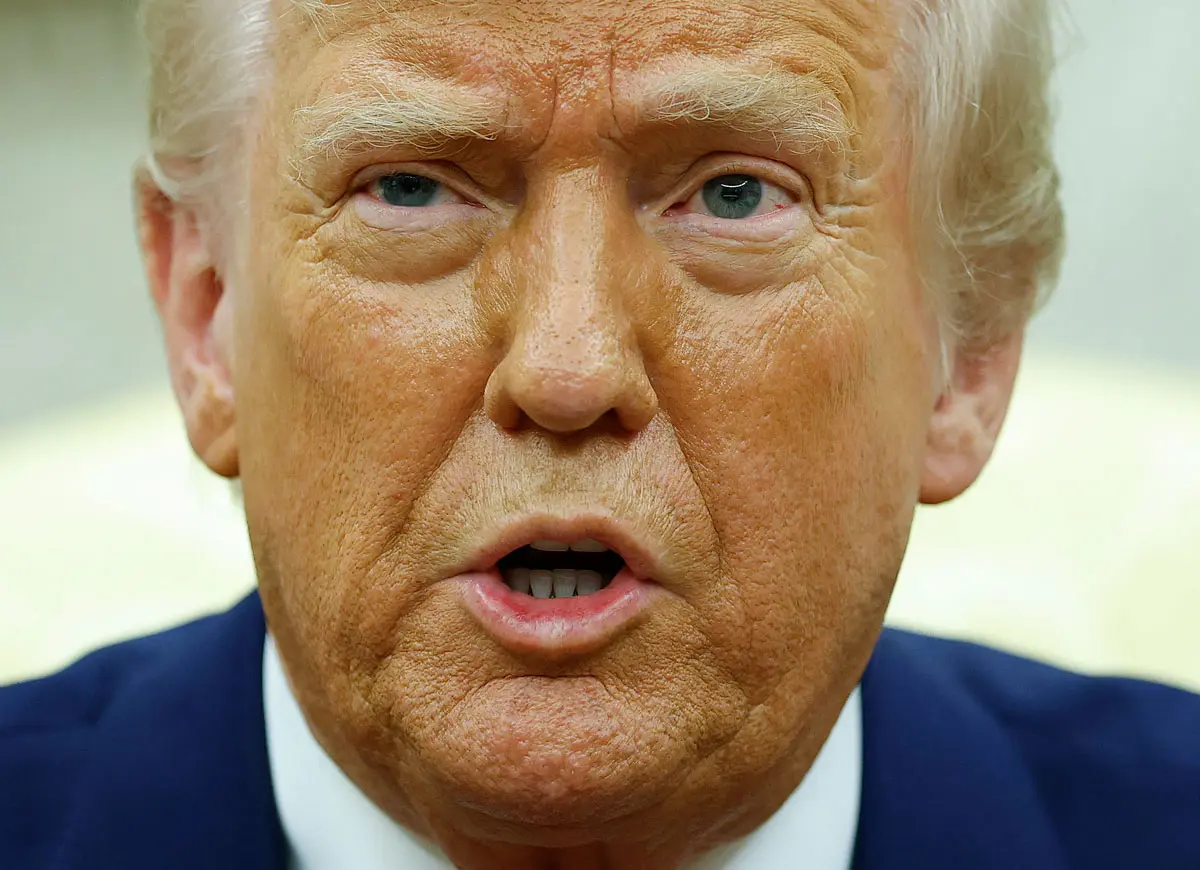
During a sit-down interview with Punchbowl News on Friday, President Donald Trump experienced an unusual moment when he was directly challenged by reporter Jake Sherman over one of his signature claims about his own record.
When Sherman asked the president about the possibility of Democrats impeaching him if they regain control of the House in the upcoming midterms, Trump deflected by pivoting to familiar territory. “Well, a lot of people are saying I’m one of the greatest presidents ever,” Trump said. It was an answer that would not stand unchallenged.
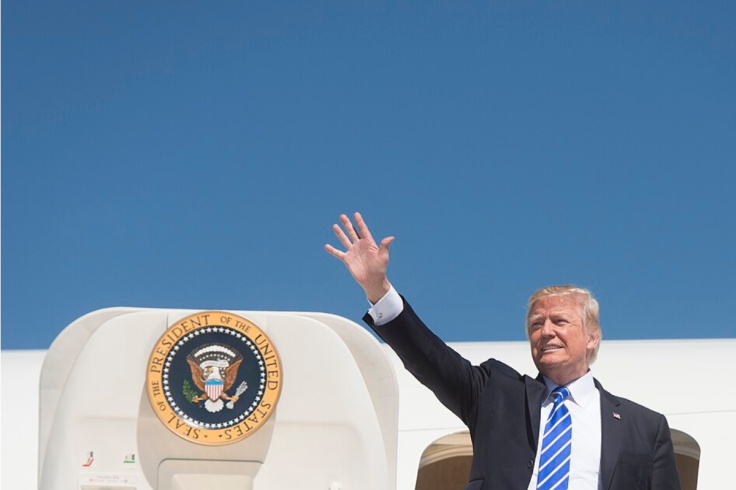
“They’re not saying that, though,” Sherman replied in a simple, four-word correction that immediately cut through the moment. The straightforward fact-check caught Trump visibly off guard, and the exchange quickly went viral across social media within hours, with clips spreading widely among accounts ranging from anti-Trump Republican groups to ordinary users marveling at the bluntness of the pushback.
Trump attempted to recover by saying that while people may not be saying it now, “they know. They see the results.” He then launched into an extended riff about his economic achievements, claiming that the country has “more money being invested in the United States than at any time in history” and touting manufacturing expansion and his use of tariffs.
“Look, we have right now more money being invested in the United States than at any time in history. More money than any country has ever had being invested,” Trump said. He continued with claims about factory construction, saying that Toyota was building “the largest plant anywhere in the world” and that automakers were leaving Mexico, Canada, Germany, and Japan in favor of the U.S. “Because of my very smart use of tariffs,” he added.
However, those claims stand in stark contrast to documented economic data. Manufacturing has actually contracted during Trump’s second term. According to the Senate’s Joint Economic Committee, the U.S. Manufacturing sector lost approximately 108,000 jobs during Trump’s first year back in office. More recent analysis shows the economy has lost 75,000 manufacturing roles between January 2025 and June of this year, while the same period under President Biden had seen 625,000 manufacturing jobs gained.
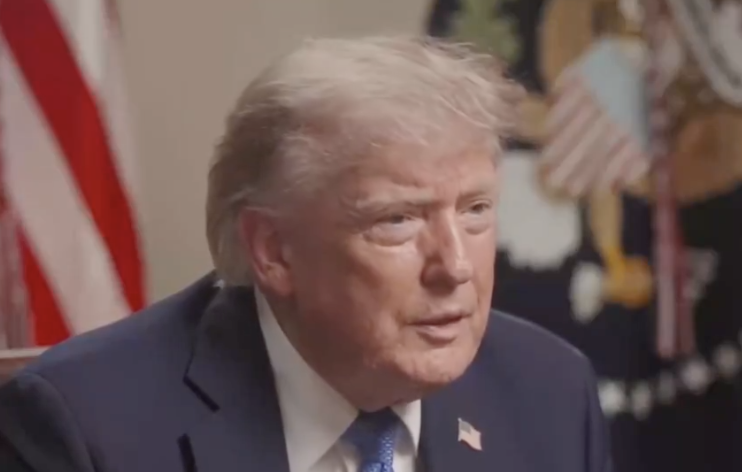
The Supreme Court also dealt a significant blow to Trump’s economic agenda in February 2026, ruling that the president exceeded his authority when he used the International Emergency Economic Powers Act to impose sweeping tariffs. The decision struck down tariffs that had collected more than $160 billion before the ruling and invalidated what Trump had called his “Liberation Day” tariffs announced in April 2025. Trump is the only president in American history to have been impeached twice, both times by a Democrat-controlled House, though the Senate fell short of conviction on both occasions.
Sherman circled back to the original impeachment question multiple times, pressing Trump on whether he believed Democrats would move to impeach him a third time if they gained control of the House. “It’s hard to believe they could,” Trump responded, describing the prospect as “a very unfair thing.”
He drew a comparison to his first term, claiming he had discouraged Republicans from pursuing Hillary Clinton. “They wanted to impeach her, they wanted to destroy her, and I said, ‘You just can’t do that.’ And then I get in there, and they tried to do the same thing with me. They were vicious,” he said.
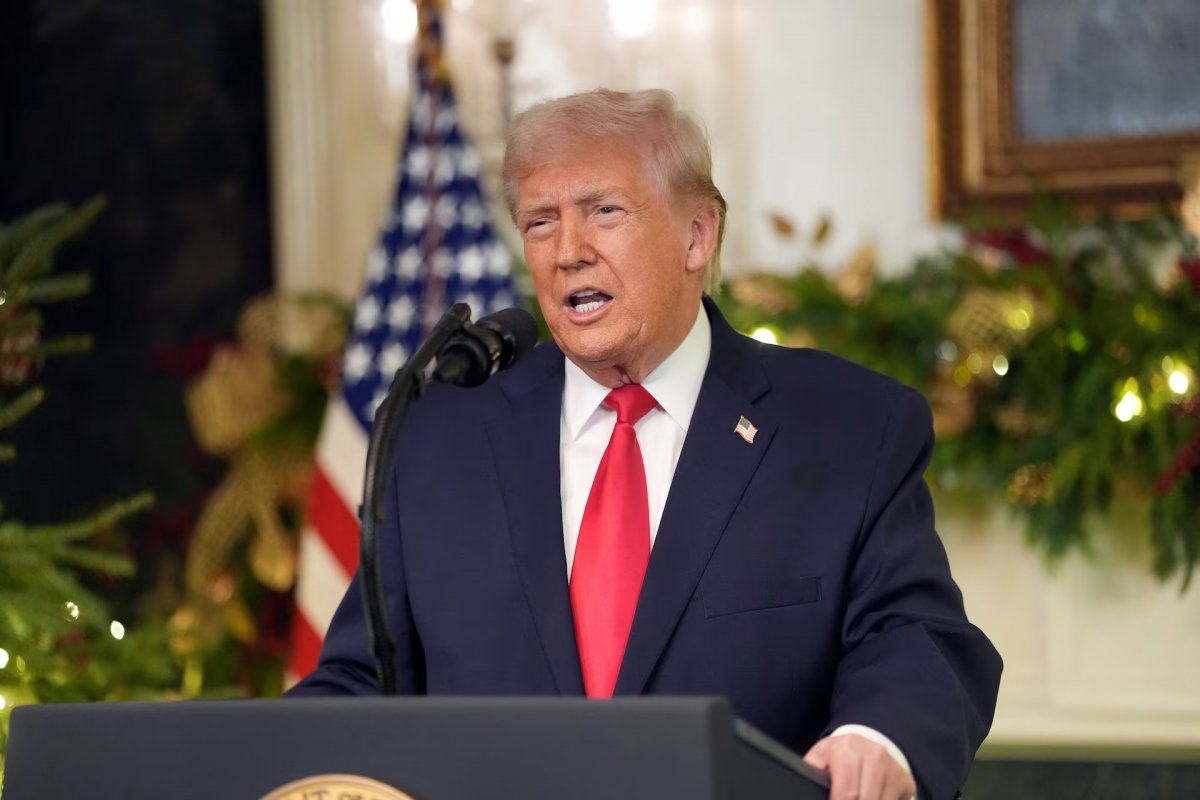
The moment revealed something striking: while many interviewers allow such boastful claims to slide without challenge, Sherman’s terse, factual correction stood out for its directness. Media commentators highlighted it as a model for real-time fact-checking in political interviews, where grandiose assertions are typically addressed much later, if at all. Rather than letting the claim go unchallenged, Sherman simply noted in the moment that the premise was false.
The exchange resonated widely at a time when Trump’s public statements have been drawing sharper scrutiny for what critics characterize as detachment from verifiable fact. The same week, a White House-produced promotional video for the MAGA movement drew comparisons to state propaganda, feeding into broader conversation about the administration’s relationship with reality.
Trump appeared mildly flustered in the moment but quickly moved past the jab, continuing with his litany of achievements and claims. The interview was punctuated by several similar awkward moments where Sherman redirected the president during characteristically long discussions about subjects like wind energy and tariffs.