

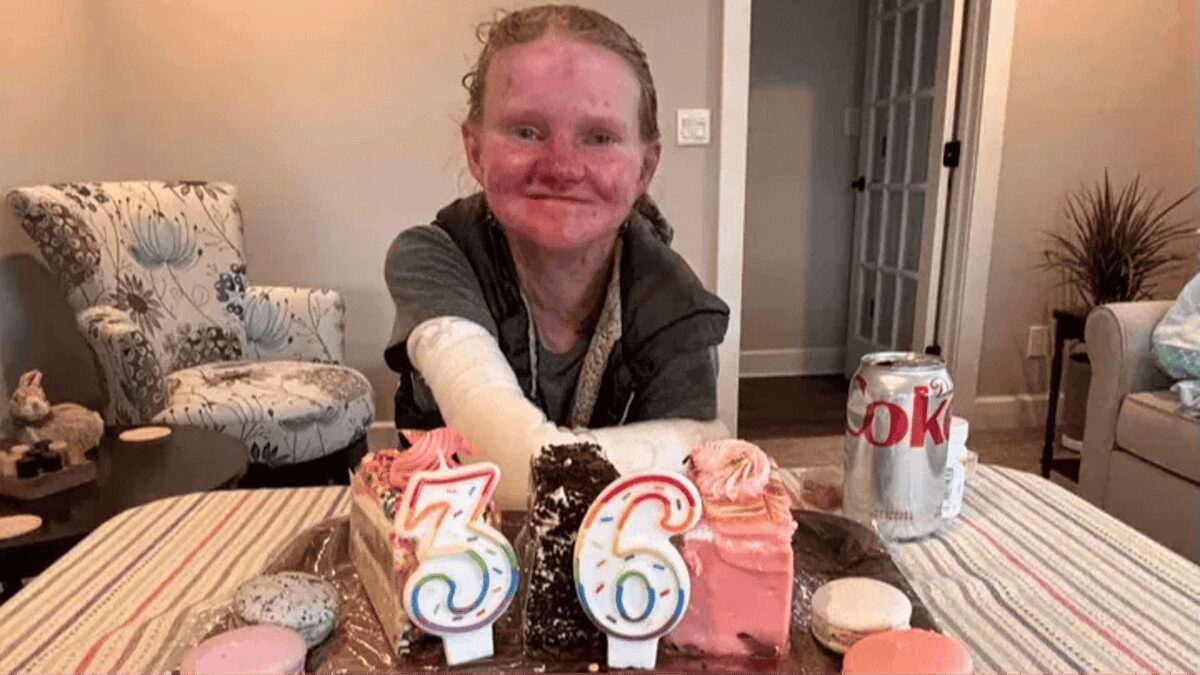
A woman diagnosed with a rare genetic skin disorder that affects about 500,000 people worldwide has opened up about the realities of living with it every day.
Rachel Buyle learned she had Epidermolysis Bullosa soon after birth, when doctors noticed her skin tore unusually easily while she was being cleaned.
The condition leaves skin extremely delicate and prone to blistering. Mayo Clinic explains, “The blisters may appear in response to minor injury, even from heat, rubbing or scratching. In severe cases, the blisters may occur inside the body, such as the lining of the mouth or stomach.”
According to the clinic, Epidermolysis Bullosa is inherited. Symptoms are often seen in infancy, although some people do not develop noticeable signs until their teenage years or early adulthood.
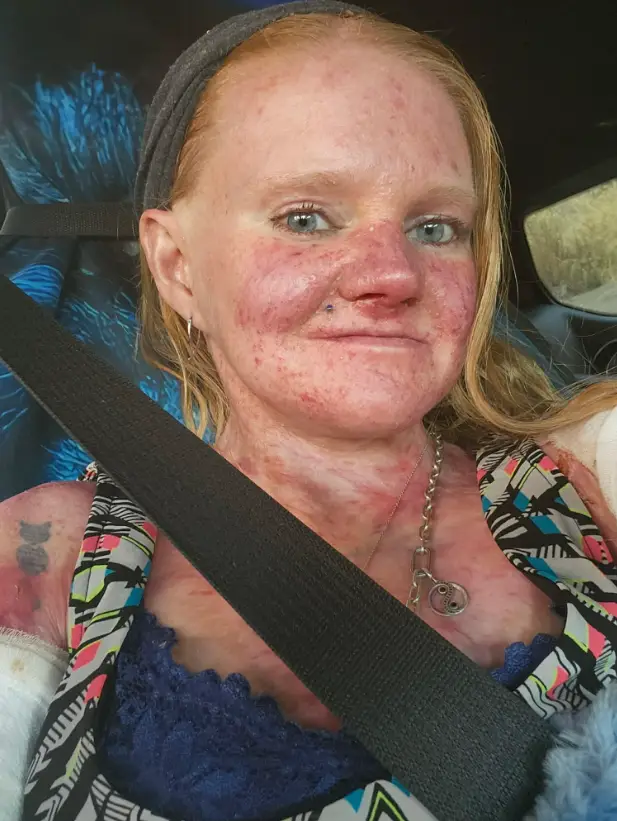
Rachel said daily life involves constant care and careful movement to avoid extra damage to her skin. She explained, “Aside from the dressings, I have to be careful moving around the house making sure I don’t do anything that causes extra friction to my skin, including excess walking.” She added, “I take breaks so my feet don’t get blistered and torn up. I use my current wheelchair outside to prevent excess walking to save my feet from blistering and tearing.” She also said, “Even though my current chair helps my feet, the bumpiness while riding in it still causes pain, wounds, and blistering to my thighs and my bottom.”
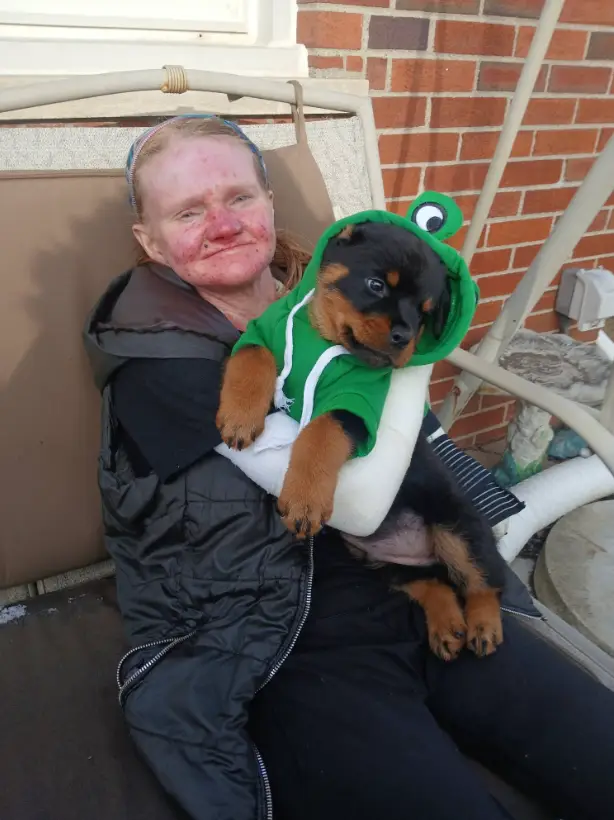
She is now raising money through GoFundMe for a new power wheelchair, saying it “would prevent a lot of pain and injuries because it has tracks instead of wheels and would be a smoother ride so I can get outside more to spend time with my husband and dogs”.
For Rachel, one of the toughest parts of the condition is how much time it takes to manage. She said, “The most difficult part of living with Epidermolysis Bullosa is that it is time consuming,” and, “Lots of time is spent changing dressings and going to doctor appointments.”
Although the disorder can be restrictive, she still pushes herself to enjoy life and seek out adventure. Rachel said, “I’ve gone skydiving so I typically do things that aren’t recommended,” and added, “I try to take precautions to prevent injuries by using padding and modifying things. If my skin tears, I will fix it afterwards because the pain was worth the adventure.”
There is currently no cure for Epidermolysis Bullosa, though treatments can help people manage it. In recent years, there have been significant advances in treatment options. The FDA has approved several new therapies, including gene therapies that use viral vectors to deliver functional genetic material to affected skin, as well as ex vivo cell-gene therapies that take a patient’s own skin cells, correct the genetic defect in the lab, and graft the repaired cells onto wounds. These recent approvals represent a major shift in dermatology strategy from providing supportive care to correcting underlying causes and boosting wound healing. Rachel said, “There are a lot of treatments to help, maybe someday there will something to more successful, but I don’t live my life waiting for that,”.
Anyone who wants to support Rachel can donate through her GoFundMe fundraiser.