

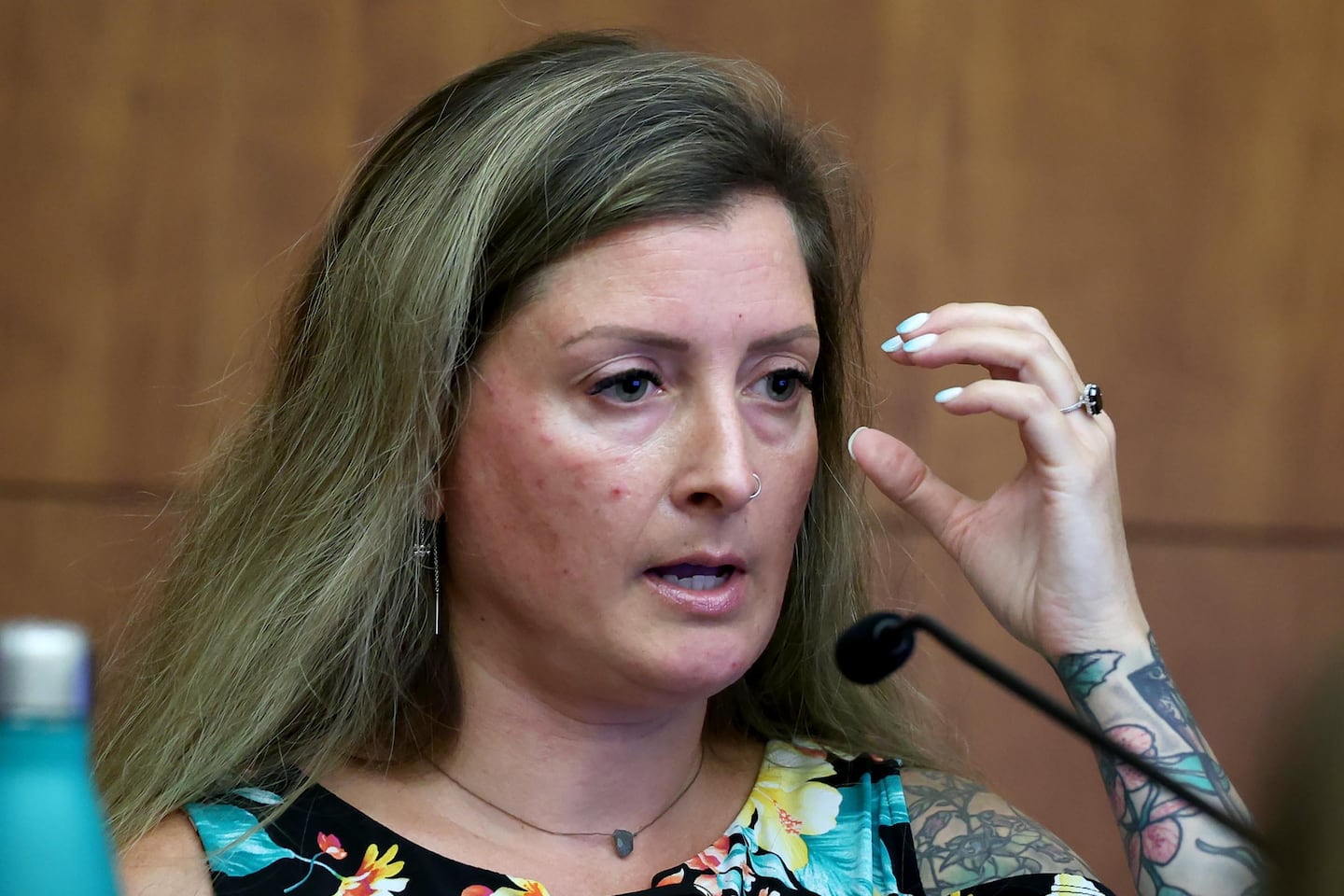
The murder trial of a Massachusetts mother accused of killing her three young children came to an emotional standstill on Wednesday as she broke down sobbing during graphic autopsy testimony. Lindsay Clancy, a 36-year-old from Duxbury, wept so intensely that Judge William Sullivan called multiple recesses to allow her to compose herself, and at one point she uttered the words: “I can’t do this.”
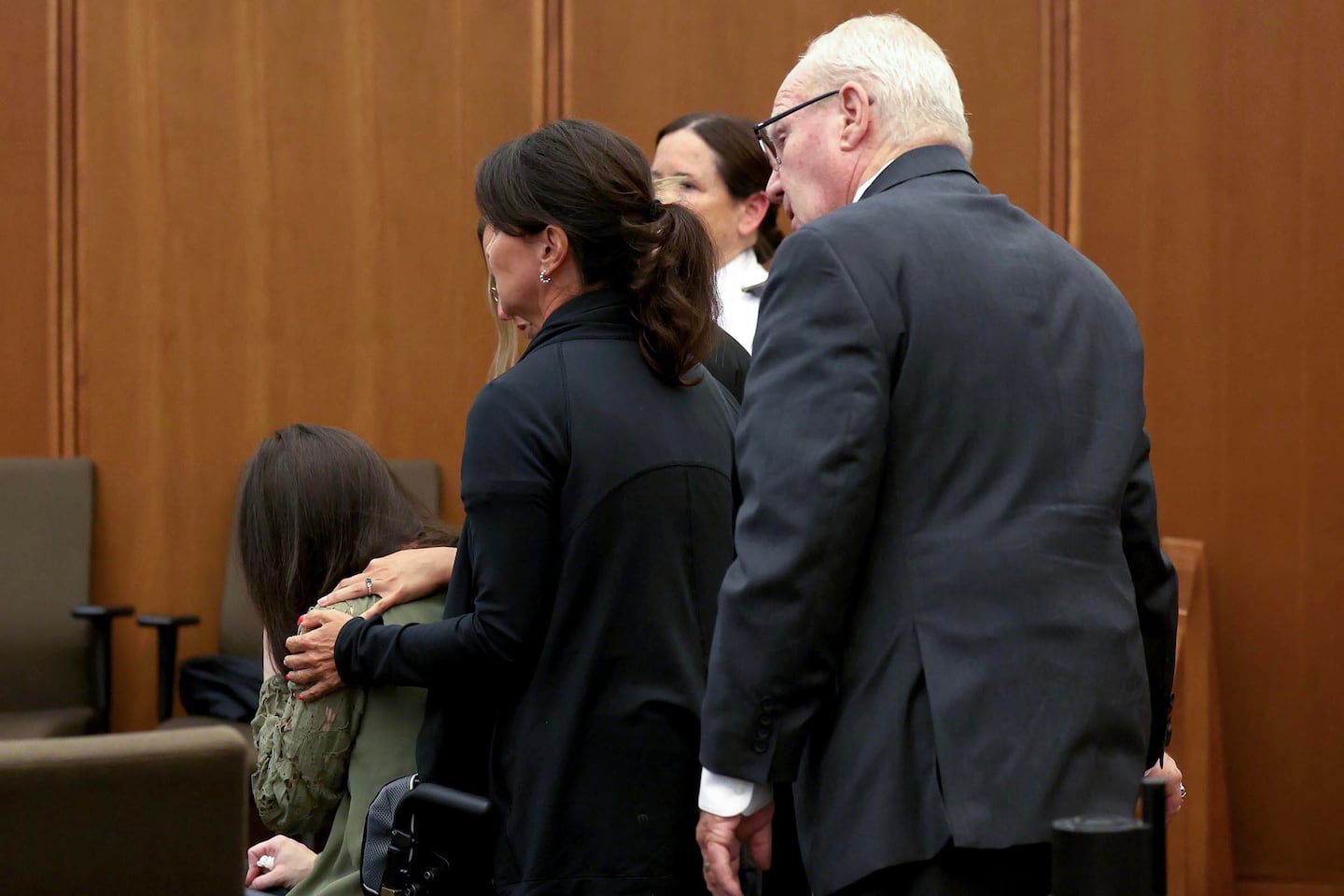
The paralyzed defendant, now confined to a wheelchair, had been listening as medical examiners described the injuries her children suffered during their deaths. When medical examiner Barbara Olson began testifying about the autopsy findings for Clancy’s 5-year-old daughter Cora, the courtroom became nearly silent except for Clancy’s anguished whimpers and gasps for breath. The judge quickly excused the jury and allowed support staff into the courtroom to console her as she hyperventilated.
Clancy’s emotional response was the second major breakdown the jury witnessed that afternoon. Earlier, she had become visibly distressed and wept as medical examiner Renee Stonebridge testified about examining the bodies of Clancy’s three children: Cora, 5; Dawson, 3; and 8-month-old Callan. Stonebridge described clinical details about injuries to their eyes and other body parts consistent with strangulation.
The trial is now in its second week and represents a pivotal moment in a case that has drawn national attention. According to Olson’s testimony, Cora died from asphyxiation, and the death would have been painful, lasting between 10 to 30 seconds before loss of consciousness. “There is a component of pain present until loss of consciousness occurs,” Olson said. She also testified that Clancy’s 3-year-old son Dawson died in the same manner, having also been asphyxiated.
On January 24, 2023, Clancy allegedly used exercise bands to strangle all three of her children in the basement of their home. After the killings, she cut her wrists and neck with a knife and jumped from a second-story window in a suicide attempt that left her paralyzed from the waist down. She now sits in court in a wheelchair while defending against three counts of first-degree murder.
The prosecution’s case centers on what they describe as deliberate, premeditated action. They argue Clancy sent her husband Patrick out of the house to pick up takeout and medication, giving herself a calculated window of time to carry out the killings. Prosecutors say she “acted intentionally, rationally and swiftly” to accomplish her goal.
But the defense paints a strikingly different picture of a woman in the grip of severe postpartum psychosis. Her attorney, Kevin Reddington, is arguing that Clancy should be found not guilty by reason of insanity, claiming she was suffering from an undiagnosed mental health condition that distorted her perception of reality. “She had no motive. She loved her children,” Reddington said in his opening statement.

A significant part of the trial has focused on the psychiatric care—or lack thereof—that Clancy received in the months before the killings. Testimony revealed that between September 2022 and January 2023, she was prescribed 30 prescriptions for 13 different powerful psychiatric medications by various providers, including psychiatrists, nurse practitioners, and emergency room doctors. The medications included antidepressants like Zoloft, antipsychotics like Seroquel, and benzodiazepines like Valium.
The defense has portrayed Clancy as a woman desperately seeking help while being shuffled between providers and overprescribed dangerous drug combinations. Patrick Clancy testified that his wife was hospitalized at McLean Hospital for five days starting January 1, 2023, but was discharged after just that brief stay. He said her condition “rapidly worsened” despite receiving treatment.
Evidence presented earlier in the trial showed that Clancy kept journals documenting her deteriorating mental state. She wrote about feeling overwhelmed caring for three young children, experiencing severe insomnia, anxiety, and depression. “I’m completely overwhelmed trying to take care of the 3 kids. I feel like I’m drowning everyday,” she wrote in one entry. Another read: “I now have horrible insomnia and anxiety which is causing depression. I have no appetite. I don’t know what’s wrong with me. I want help. I want to be well.”
The trial has also revealed troubling details about communications from the hospital. Shortly after the killings and her suicide attempt, while recovering at Brigham and Women’s Hospital in Boston, Clancy reportedly called her husband from the hospital using a psychiatrist’s cell phone. During that call, she told Patrick that she had heard a man’s voice telling her to kill the children because “it was her last chance.” The prosecution has speculated, without evidence, that the psychiatrist may have suggested she claim to hear voices as a defense strategy—something the defense attorney has vehemently disputed.
Clancy has not taken the stand during the trial. Her case has come to represent a broader national conversation about postpartum psychosis, a rare but severe psychiatric condition that affects approximately one to two mothers per 1,000 births. The condition can emerge suddenly in the days or weeks after childbirth and is characterized by delusions, hallucinations, mania, or severe depression that can completely distort a person’s grip on reality.
If convicted of three counts of first-degree murder, Clancy faces a mandatory life sentence without the possibility of parole. The jury must now decide whether to accept the prosecution’s narrative of a deliberate killer who meticulously planned her children’s deaths, or the defense’s argument that she was a loving mother whose mental illness rendered her not criminally responsible for her actions. The trial continues with both sides preparing for closing arguments and jury deliberations that could come soon.