

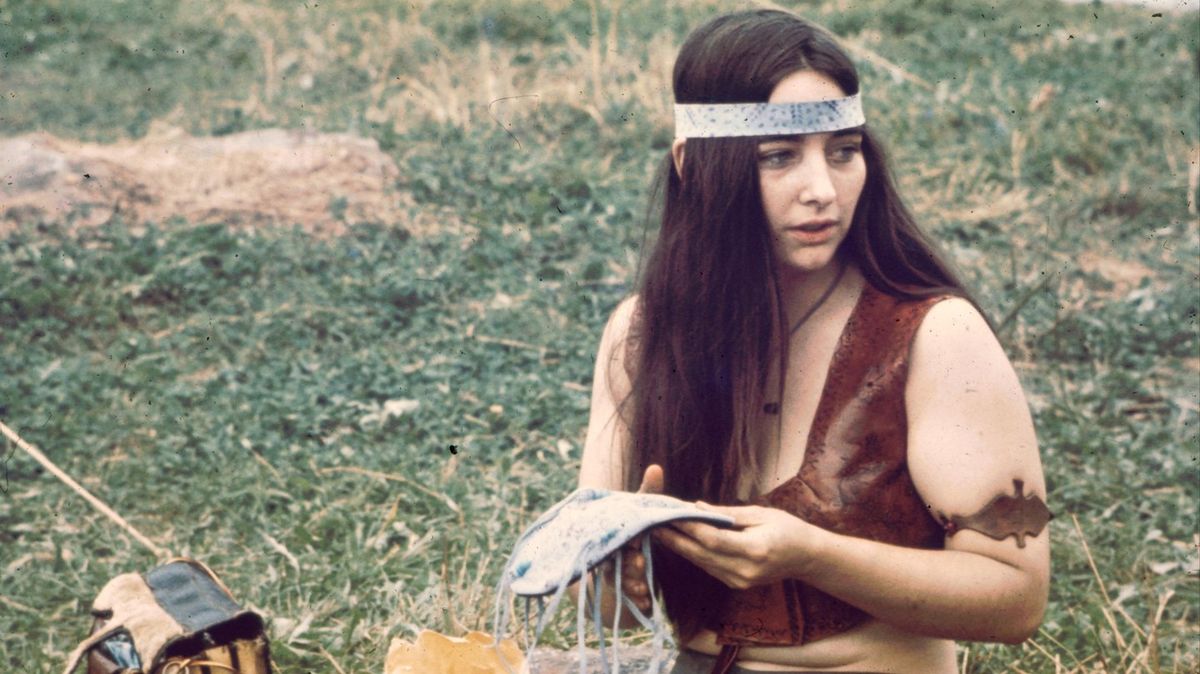
The dark reality behind Woodstock’s peace-and-love mythology has resurfaced in a new viral reckoning with the festival’s fatal chaos.
The 1969 event, held August 15-18 on dairy farmer Max Yasgur’s land in Bethel, New York, was sold as “three days of peace and music” but devolved into a logistical catastrophe that left two people dead among roughly 500,000 attendees. Promoters John Roberts, Joel Rosenman, Artie Kornfeld, and Michael Lang, all under 30, had initially pitched the festival as a profit-making venture before it spiraled beyond their control.
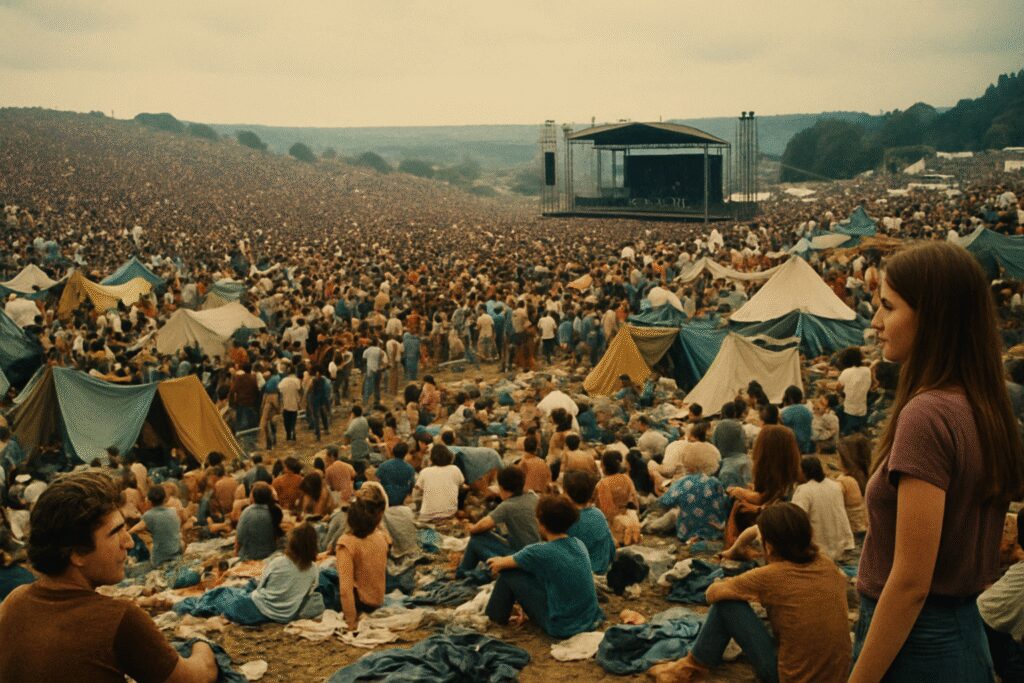
The crisis began before a single note played. Fences, gates, and ticket booths remained unfinished when thousands arrived early, forcing a last-minute pivot. Lang said: “You do everything you can to get the gates and the fences finished – but you have your priorities. People are coming, and you need to be able to feed them, and take care of them, and give them a show. So you have to prioritize.”
With no way to collect admission, Woodstock became a free concert. An estimated one million people attempted to reach the site, gridlocking highways for miles. Desperate attendees abandoned vehicles and walked. The New York State Thruway became a parking lot, and some artists required helicopter transport arranged by organizers.
Inside the grounds, conditions deteriorated rapidly. Torrential rain transformed fields into mud pits. Food and water shortages plagued the crowd, with concession stands overwhelmed and prices spiking. Portable toilets overflowed, forcing hour-long waits for unsanitary facilities. Governor Nelson Rockefeller eventually declared the site a disaster area, and the U.S. Military airlifted in food and medical personnel.
Security fell to unconventional means. With off-duty police banned, only about a dozen officers monitored half a million people. The Hog Farm, a New Mexico commune led by Wavy Gravy, handled crowd management with threats of seltzer sprays and thrown pies while operating free kitchens, playgrounds, and “freak-out” tents for those suffering bad drug experiences. The commune’s granola and rice lines became lifelines for hungry attendees.
Medical emergencies mounted relentlessly. The health department documented 5,162 medical cases, including 797 drug-related incidents. Eight women reportedly suffered miscarriages during the event. Medics treated endless cases of food poisoning and cut feet from people walking barefoot through mud and debris.
The musical lineup itself reflected the era’s tensions. Thirty-two acts performed across four days, with Richie Havens opening Friday after scheduled starter Tim Hardin proved too incapacitated to take the stage. Joan Baez, six months pregnant, closed the first night with civil rights anthems. Santana, The Who, Janis Joplin, and Grateful Dead played through Saturday into Sunday morning. Jimi Hendrix’s scheduled Sunday night set was delayed by storms until Monday at 9 a.m., when only about 25,000 exhausted fans remained to witness his iconic deconstruction of “The Star-Spangled Banner.”
Two fatalities punctured the festival’s peaceful image. One person died from a suspected heroin overdose, later disputed as myocarditis. A 17-year-old was accidentally run over by a tractor while sleeping in a sleeping bag. A third death from a burst appendix and a woman breaking her back falling from a scaffold further underscored the dangers. Despite these tragedies, no violent incidents were reported among the massive crowd—a statistic often cited in the mythmaking that followed.
The promoters lost millions, spending $3.1 million against $1.8 million in revenue, and spent a decade recovering financially. The 1970 documentary film and soundtrack eventually erased their debts while cementing the romanticized version of events. As Jon Pareles, who attended as a teenager, later described it: “sloppy, chaotic, bewildering, drenched, uncertain, sometimes excruciating, sometimes ecstatic.”
The mythology has persisted for 56 years, even as anniversary attempts in 1994, 1999, and a planned 2019 edition failed to recapture the original’s volatile alchemy. The 1999 revival notably descended into riots, sexual assaults, and arson—a far darker coda that made the 1969 chaos look almost quaint by comparison.
The Bethel Woods Center for the Arts now operates on the original site, with the 2025 concert season running through October.