

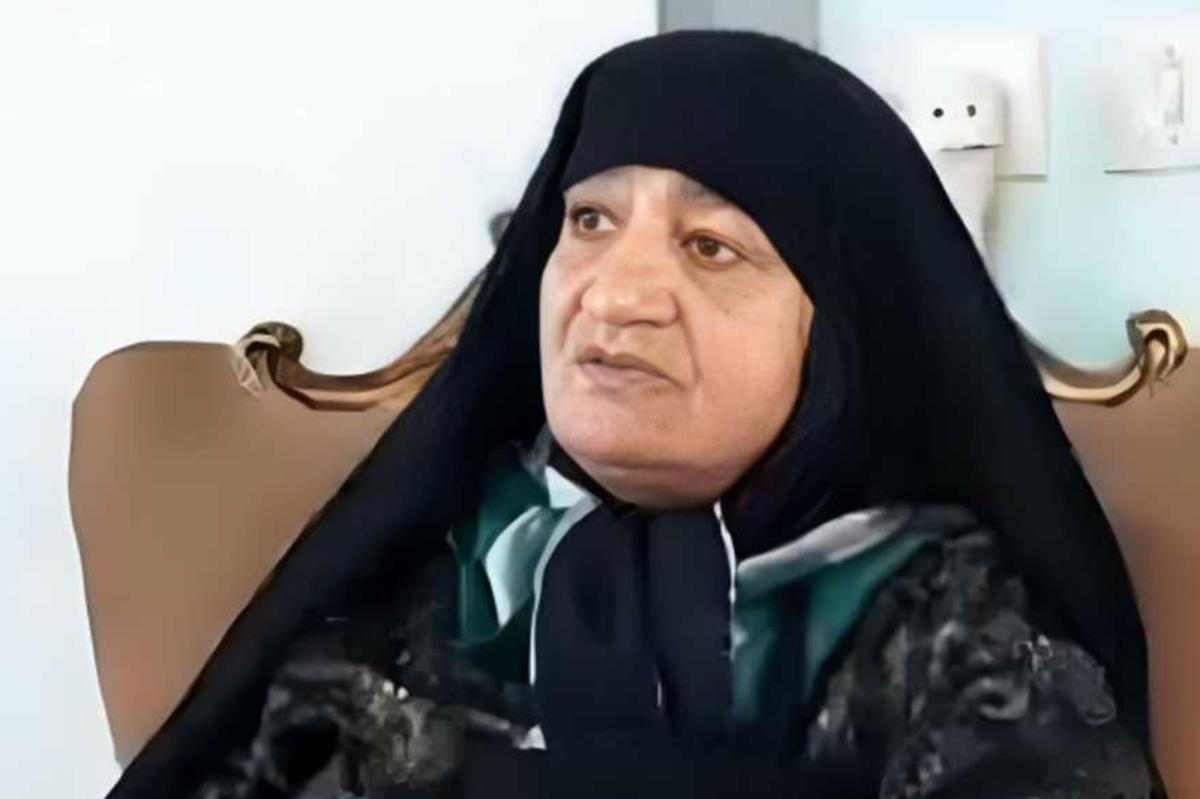
Kolthoum Akbari has been sentenced to death after confessing to murdering at least 10 of her former husbands across two decades in northern Iran.
The 56-year-old, dubbed Iran’s “Black Widow,” received 10 death sentences from a court in Mazandaran Province, the Mazandaran Judiciary’s public relations office told Iranian state media last Sunday. Akbari, born in the village of Malekabad, allegedly carried out the killings from 2000 onwards, with her victim count possibly reaching 12 or higher.


Her method involved entering temporary marriages, known as sigheh or mut’ah, with elderly men before poisoning them over a two-to-three month period. These contractual unions under Iranian law require a dowry and specified duration but no witnesses, and spouses do not automatically inherit. Akbari reportedly collected gold, cash and other dowry wealth from her victims, with authorities speculating greed as the primary motive.
Akbari’s killing spree finally ended in 2023 following the death of her 82-year-old husband Gholamreza Babaei. Months before his death, Babaei had complained to his children that Akbari had been forcing him to take medications for his heart and blood pressure, causing him to fall unconscious. He explicitly claimed she was trying to kill him. After his death, his children filed a police complaint against their father’s temporary wife, accusing her of murder.
“I don’t know how many I killed. Maybe it was 13 or 15 people. I don’t remember exactly. I’d drug them and then use a towel,” she said in a confession a year ago, according to reports.
Her poison of choice ranged from ordinary medications like diabetes treatments to industrial alcohol she sneaked into drinks and various sedatives. Iranian media and Saudi-based Iran International reported that she would dissolve pills in her victims’ drinks or force medications upon them. Victims were spread across various towns, which helped her evade detection for years.
Akbari divorced her first husband, according to Iranian site Faraz Daily. The site reported she confessed to killing her second husband, a man named Alijan, telling his family members she had endured beatings in the past, and admitted to pouring industrial alcohol into his mouth and suffocating him.
Ten families opted for qisas, Iran’s eye-for-an-eye punishment that mandates execution for murder, while at least one family agreed to accept blood money — diya — rather than a death sentence, as proscribed in Islamic Sharia law. All of Akbari’s property is to be confiscated by the courts.
Akbari and the families of her alleged victims have been given 20 days to deliver any appeal to a higher court, after which the verdict will become final. She also received a 10-year sentence for an attempted murder.
The looming state execution, typically carried out by hanging in Iran, comes amid heightened scrutiny of the country’s capital punishment practices. UN experts warned in September that over 1,000 people had been executed in less than nine months of 2025, with an average of more than nine hangings per day in recent weeks. The UN described Iran as conducting executions at “an industrial scale that defies all accepted standards of human rights protection.”
Akbari is the second known female serial killer in Iran, following Mahin Qadiri, who was executed in 2006 after being convicted of killing seven husbands by poisoning them over 17 years.