

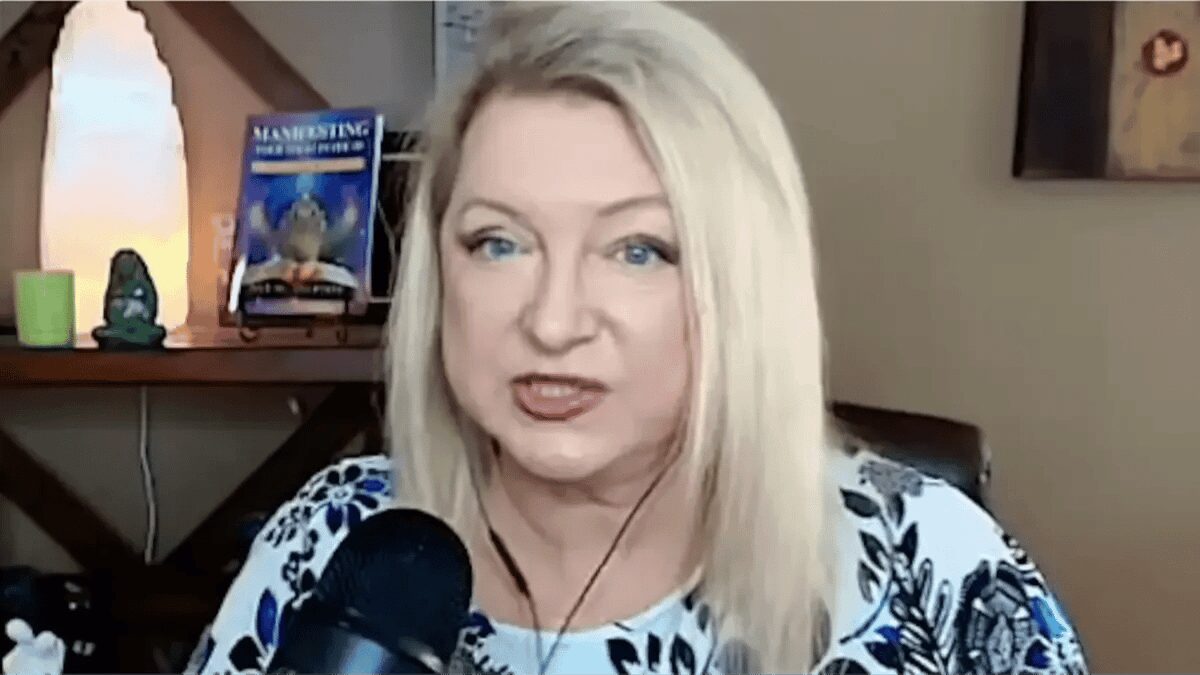
Mississippi medium Jill M Jackson says spirits tell her most people regret taking life too seriously and letting religion limit their worldview.
Jackson, who claims she can communicate with the dead, shared the two recurring themes in an interview. The psychic said spirits frequently express disappointment that they did not allow themselves more joy during their earthly existence.
“A common theme is that humans need to play more often,” Jackson told the publication. “That is when they look back on their life review, and notice that they were so serious, and that they had so many opportunities to just have fun, laugh and play.”
The second major regret, Jackson said, centers on those who followed strict religious doctrine during their lives. She told the outlet that spirits who “followed strict interpretations of religious teachings and commandments” feel that “modern religion limited their worldview and caused them to judge others of different faiths.”
“They wish they had taken the positive parts of that message in understanding that, yes, there is a Creator God, yes, that there is a higher consciousness, but it’s not about control – that it is not fear-based,” Jackson continued.
Jackson also offered her perspective on the nature of the afterlife, challenging Hollywood portrayals of heaven as a distant place in the sky. She said that deceased loved ones are not far away but exist in “a higher dimension than where we are.”
The medium explained that spirits share these regrets with her for a purpose. Some “chatty” spirits hope their messages will reach living relatives and help them avoid making the same mistakes, she said. Jackson noted that her encounters with spirits are “random,” and sometimes a spirit connected to someone she is speaking with will try to get her attention to deliver a message.

The psychic’s observations parallel findings from medical professionals who work with dying patients. Bronnie Ware, an author and nurse who spent years caring for people in their final weeks, identified similar patterns of regret among those facing death.
“When people realise that their life is almost over and look back clearly on it, it is easy to see how many dreams have gone unfulfilled,” Ware said.
Dr. Shoshana Ungerleider, speaking to CNBC Make It, echoed those claims and added another dimension. She said many of her patients regretted not taking risks, allowing fear to control their decisions. Ungerleider also found that people often regretted not spending enough time with loved ones and missing out on life because they were “working too much.”
Many patients also wished they had been “braver,” Ungerleider noted, with some saying they “focused too much on the future and lost touch with the present.”
Jackson’s claims about spirits’ posthumous reflections joined a growing body of testimony from both spiritual practitioners and healthcare workers about what people value most when facing mortality. The convergence of these accounts from different sources has fueled online conversation about living more fully in the present.
Jackson’s specific assertions about the afterlife being a “higher dimension” rather than a remote celestial location represent a notable departure from traditional religious imagery. Her characterization of spirits as wanting to help the living avoid their mistakes frames these alleged communications as intergenerational warnings rather than mere curiosity.
The medium did not specify how she first discovered her abilities or how long she has been practicing, but her account adds to the ongoing cultural fascination with near-death experiences, mediumship, and what might await after life ends.