

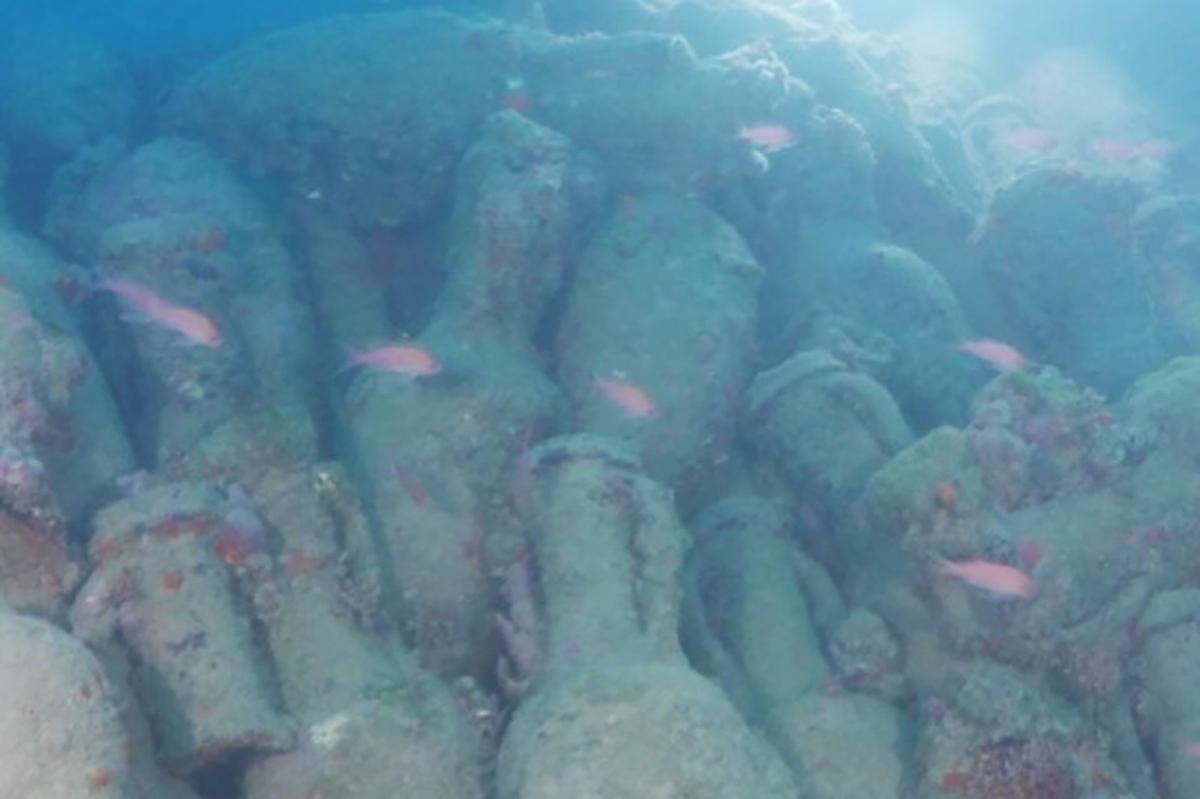
Giacomo de Mola, a world champion spearfisher, has spoken out about discovering what he called an “underwater museum” off the coast of Sicily.
De Mola, 47, and his fellow diver Igor Bisulli found the ancient Roman shipwreck about three miles off Mazara del Vallo on Sicily’s western coast. The wreck lies roughly 150 feet below the surface, according to Italian authorities who confirmed the find. De Mola’s sonic radar had initially picked up what he believed was simply a rock formation.
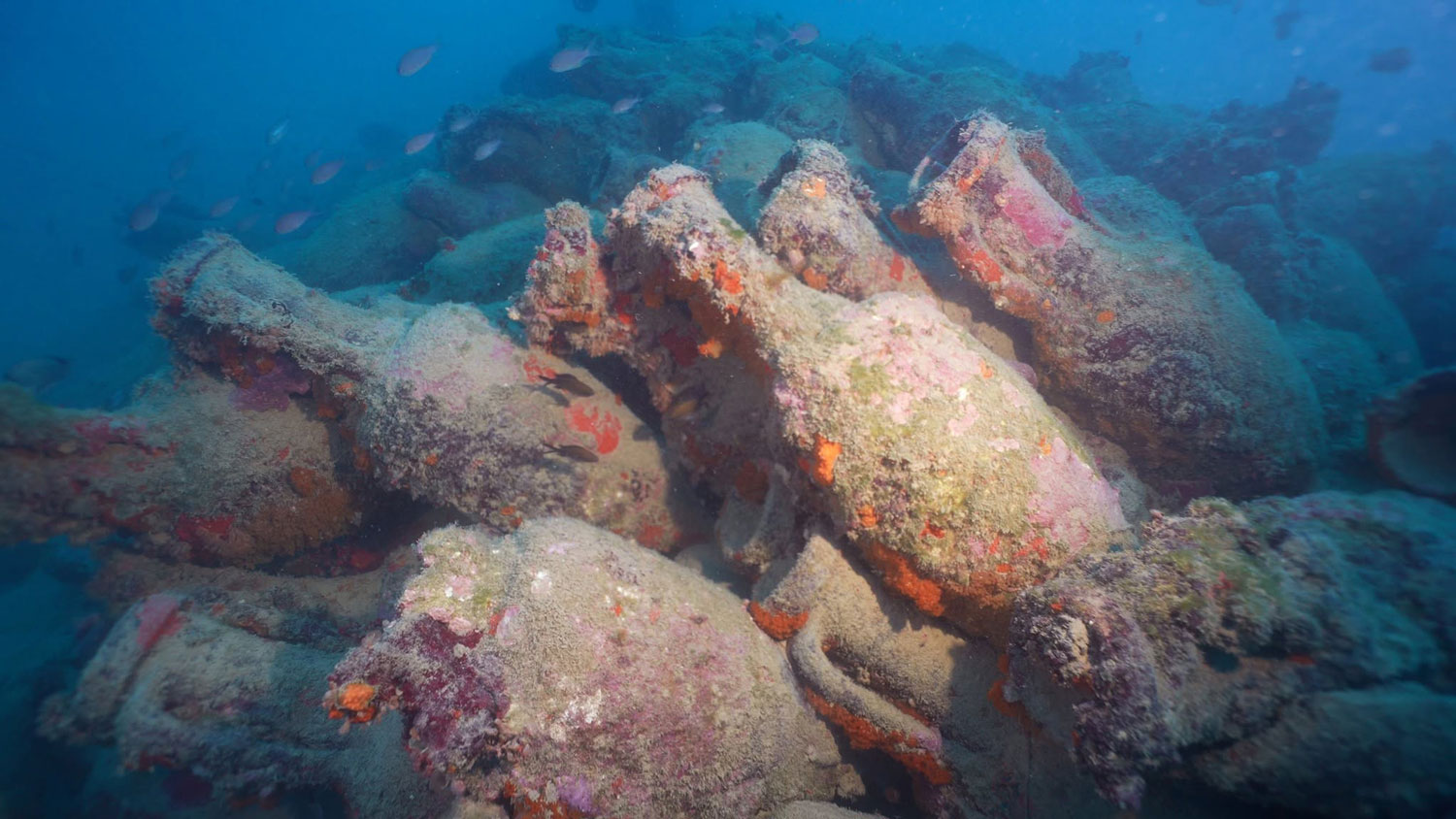
When De Mola got closer, he discovered hundreds of amphorae — ancient two-handled clay jars — scattered across a roughly 6-foot-by-70-foot stretch of seabed. The divers also spotted two large lead anchor stocks and a lead pipe among the remains. They immediately alerted Italian authorities, who launched a joint inspection involving the Carabinieri Cultural Heritage Protection Unit in Palermo, the Sicilian Region’s Superintendency of the Sea, and Carabinieri divers from Messina.
Italian Culture Minister Alessandro Giuli described the find as “one of the most significant underwater archaeological discoveries of recent years.”
“The sea continues to bring back precious fragments of our history, and the Mazara del Vallo wreck speaks to us of the people, the routes, and the exchanges that made the Mediterranean a crossroads of civilizations,” Giuli said.
Initial examination indicates the wreck probably dates from between the 2nd and 1st centuries BC, placing it at more than 2,000 years old. Most of the visible amphorae have been provisionally identified under the archaeological classification Dressel 1A, a tall cylindrical type mainly used for transporting wine. Some reports have estimated approximately 500 amphorae at the site, though official accounts describe the cargo only as numbering in the hundreds.
A still-awestruck De Mola gushed in an Instagram post, “This is, without a doubt, the most incredible discovery of my life … A Roman ship slumbering in the silence of the Mediterranean.”
“Visibility wasn’t the best… I got closer. And my heart stopped. Below me was a vast expanse of amphorae,” De Mola said in the Instagram post, which included video footage of the discovery.
The Superintendency of the Sea will undertake additional documentation and study to improve understanding of the site and determine appropriate protection measures. Further investigation will be needed to establish the wreck’s precise date and provide a fuller account of its cargo and historical context.
De Mola and Bisulli were exploring waters near their home region when technology and instinct led them to the ancient cargo. The wreck’s location, depth, and the remarkable preservation of its amphorae have drawn comparisons to other significant Mediterranean finds, including a 2021 discovery near Palermo and ongoing investigations of the Capo Mulini wreck off eastern Sicily. Sicily has proven repeatedly to be a treasure trove of maritime archaeology, with its position as Rome’s first province making it central to ancient trade networks.
The discovery adds to a particularly active period for Mediterranean underwater archaeology, with recent months also bringing finds off Greece and southern Italy. The Sicilian Superintendency of the Sea now faces the delicate task of balancing research access with site protection for a wreck that has survived millennia beneath the waves.