


A body found in the Bucegi Mountains of Romania is believed to be that of George Smyth, the British teenager who vanished nearly nine months ago while on a solo hiking expedition near Dracula’s Castle. Avon and Somerset Police announced the discovery on Saturday, ending an exhaustive search that has captivated international attention since the 18-year-old University of Bristol geology student disappeared in November 2025.
The remains were discovered Friday in the Valea Gaura area of the Bucegi Mountains by two shepherds named Sorin and Sorinel. While formal identification has yet to take place, police said it is believed to be Smyth based on documents found with the body. His family has been notified and is receiving support from family liaison officers as they process this tragic news.

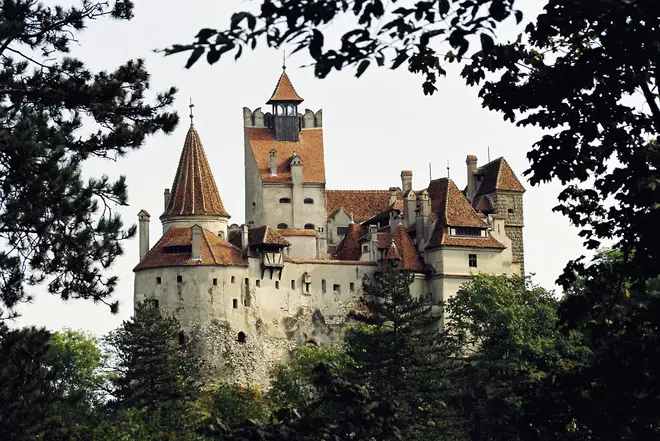
Smyth set out on November 23, 2025, from the Poiana Brașov neighborhood on what was intended to be a hike toward Bran, the village in Romania’s Transylvania region famous for its castle associated with the literary character Dracula. Experienced in mountaineering, the teenager pressed forward despite challenging conditions until he reached Tiganesti Valley, where he made a desperate emergency call to rescue services reporting that he was exhausted and suffering from hypothermia. Rescuers advised him to continue along the marked trail he was on, which should have led him toward the Malaiesti Chalet, but Smyth was never seen again.
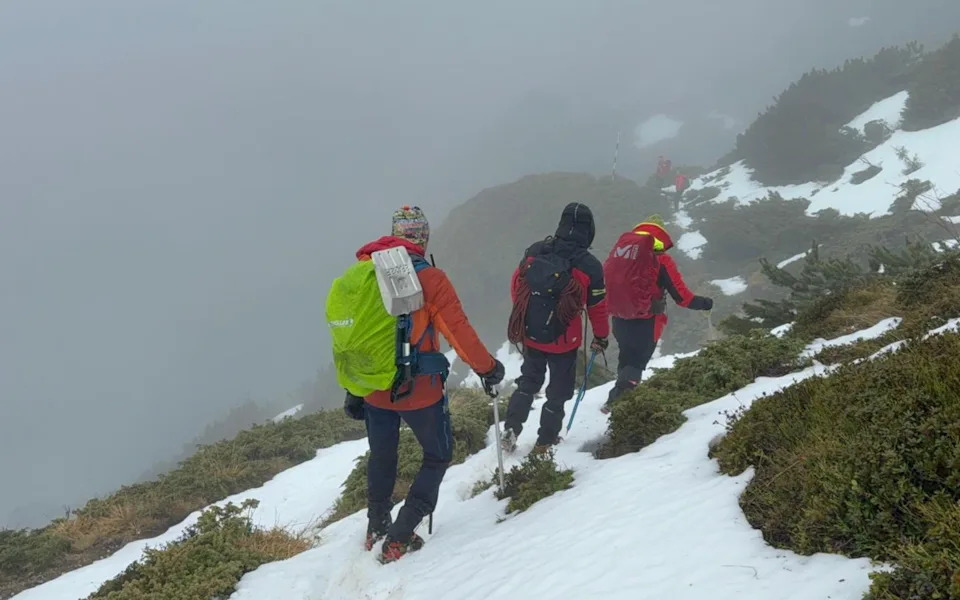
The search that followed became one of the most complex mountain rescue operations conducted in the region in recent years. Romanian authorities deployed extensive resources including mountain rescue teams, helicopters, thermal imaging drones, and canine units. Only his backpack, which contained a tent, sleeping bag, and food supplies, was recovered near where he had made his distressing call. The discovery of this equipment intact raised questions about what had happened to the young hiker.
Severe weather conditions repeatedly hampered rescue efforts throughout the long winter and spring. Deep snow accumulation, avalanche risk, and treacherous conditions forced rescue teams to pause operations multiple times. At certain points, the snowpack exceeded two meters in depth, making it impossible for rescuers to safely search the affected areas without putting themselves in grave danger. Even as conditions improved in the following months, residual snow and unstable mountain terrain continued to complicate systematic ground searches.
In January, after two months without progress, Smyth’s family released a statement acknowledging the grim reality they faced. “When the mountains that took him are ready to let go, George will be found, and we will bring him home to say goodbye,” the family said at that time, expressing their belief that their son had not survived the ordeal.
In an official statement released through Avon and Somerset Police on Saturday, the family expressed profound devastation. “We are all devastated by George’s death. He was the best of us and is deeply missed by his younger brothers, family and friends,” they said. “Although this latest news is incredibly painful, the torture of waiting is finally over, so we can now focus on bringing George home and saying goodbye.”
The family’s statement offered particular praise for the tireless efforts of Salvamont Mountain Rescue, the Romanian rescue service that coordinated the search. “We want to thank Salvamont Mountain Rescue, who have worked tirelessly since November searching for George, despite very difficult and often dangerous conditions. They are an amazing team, and have remained in constant communication, helping us greatly throughout this awful time,” the family said. They also thanked Avon and Somerset Police and the University of Bristol for their support and assistance throughout the months-long ordeal.
Smyth’s mother, Jo Smyth, had flown to Romania immediately after her son’s disappearance to support search efforts. She had previously told media outlets that her son left the United Kingdom without informing anyone that he planned to undertake the solo hiking expedition. “He left his university in the United Kingdom on Sunday, without telling us, to go hiking alone,” she explained during the initial search. “His phone last had signal in a remote mountain area. He made a distressing call to 112 on Sunday evening.”
The discovery comes nearly nine months after Smyth disappeared, bringing closure to one of the year’s most heartbreaking missing persons cases. Forensic enquiries will now take place to confirm the identity through official procedures, after which efforts will be made to return the remains to Bristol so the family can lay their son to rest. The case has underscored the inherent risks of solo mountain hiking in remote, high-altitude terrain, particularly when environmental conditions turn treacherous and communication becomes impossible.