


A robotics startup has pitched its humanoid robot to DHS officials for southern border patrol.
Sankaet Pathak, founder and CEO of Foundation, said that his company has demonstrated its Phantom humanoid robot to Department of Homeland Security officials and is in active talks with multiple national security agencies. The San Francisco-based company envisions the machine conducting reconnaissance and surveillance in rugged border terrain that challenges existing automated systems.
“We’re in conversations with almost all national security government bodies, so Air Force, Navy, Army, DHS,” Pathak said. “We continue to have dialogues. We’re starting to negotiate contracts and some applications for them.”
A DHS spokesperson pushed back on any imminent deal, saying that no formal arrangement currently exists. “The Department of Homeland Security currently does not have any non-contractual agreements, pilots, or active prime contracts with Foundation.”
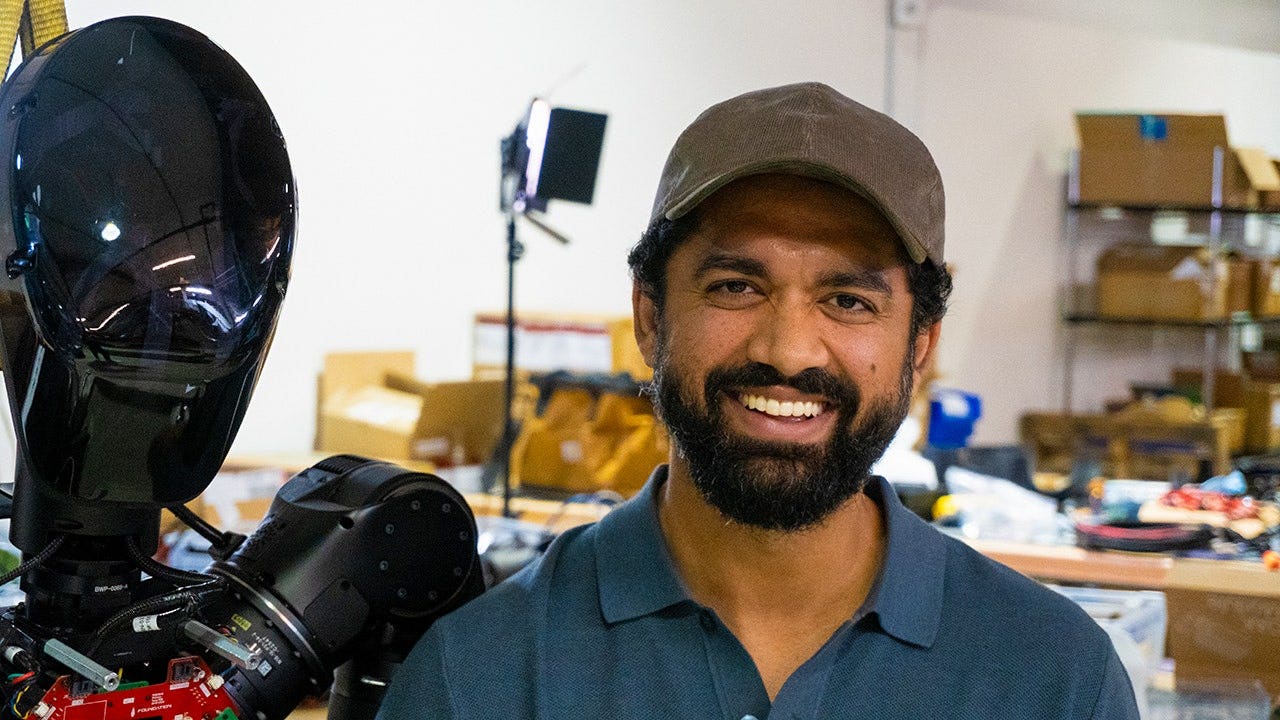
Pathak said Phantom can distinguish humans from other obstacles, autonomously traverse uneven terrain and map its environment. The company’s immediate goal is for robots to conduct reconnaissance functions autonomously before flagging potential border crossings for human officers to review.
“If drones and watchtowers were able to solve for everything, why do we still have humans at the border?” Pathak said. He said existing automated solutions struggle with tasks ranging from logistics to navigating complex terrain, adding that he thinks “humanoids will fill that gap quite well.”
Pathak also pointed to tunnels along the border as another potential application, saying Foundation would explore underground operations as part of its use cases. “Our biggest thing is if we can keep our officers in a safe place, and these robots can continue to surveil 24/7,” Pathak said.
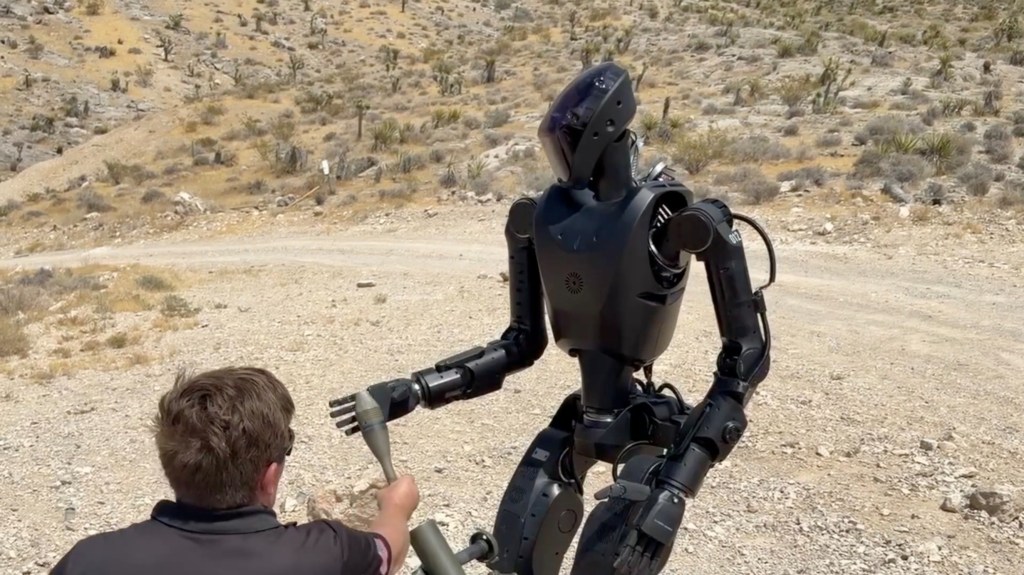
He said robots could flag significant activity and allow human officers to respond when intervention is necessary. “Tomorrow I think we could do a pilot. Next couple of months, we can do something much larger.”
Weather resistance remains one of the principal limitations of the current Phantom, Pathak acknowledged, but a second-generation model expected in the coming months is designed to be waterproof, dustproof and substantially more rugged for outdoor deployment.
While Foundation’s immediate vision centers on surveillance and reconnaissance, Pathak said the company would be willing to arm robots for border operations if requested by the federal government. He stressed, however, that the machines are not envisioned making enforcement decisions independently in the near future.
“They will detect and then flag and then a human would decide kind of like what the next step it needs to be,” Pathak said.
The border robotics pitch arrives as DHS pursues a massive expansion of surveillance infrastructure along the U.S.-Mexico border. The Electronic Frontier Foundation reported that the department plans to nearly triple its surveillance towers from 830 to 2,300 by 2034, with expected costs exceeding $1 billion. That expansion, funded through the 2025 tax and spending law, includes autonomous towers with AI-based radar, thermal infrared and optical tracking systems.
Foundation has already secured military contracts totaling approximately $24 million through SBIR Phase III programs with the Army, Navy and Air Force for inspection, logistics and weapons handling feasibility testing, according to robotics industry tracking site RobotScope. The company delivered roughly 40 units to the military in 2025 for base maintenance and hazardous task testing, and deployed Phantom MK-1 units to Ukraine in February 2026 for supply pickup and reconnaissance trials.