

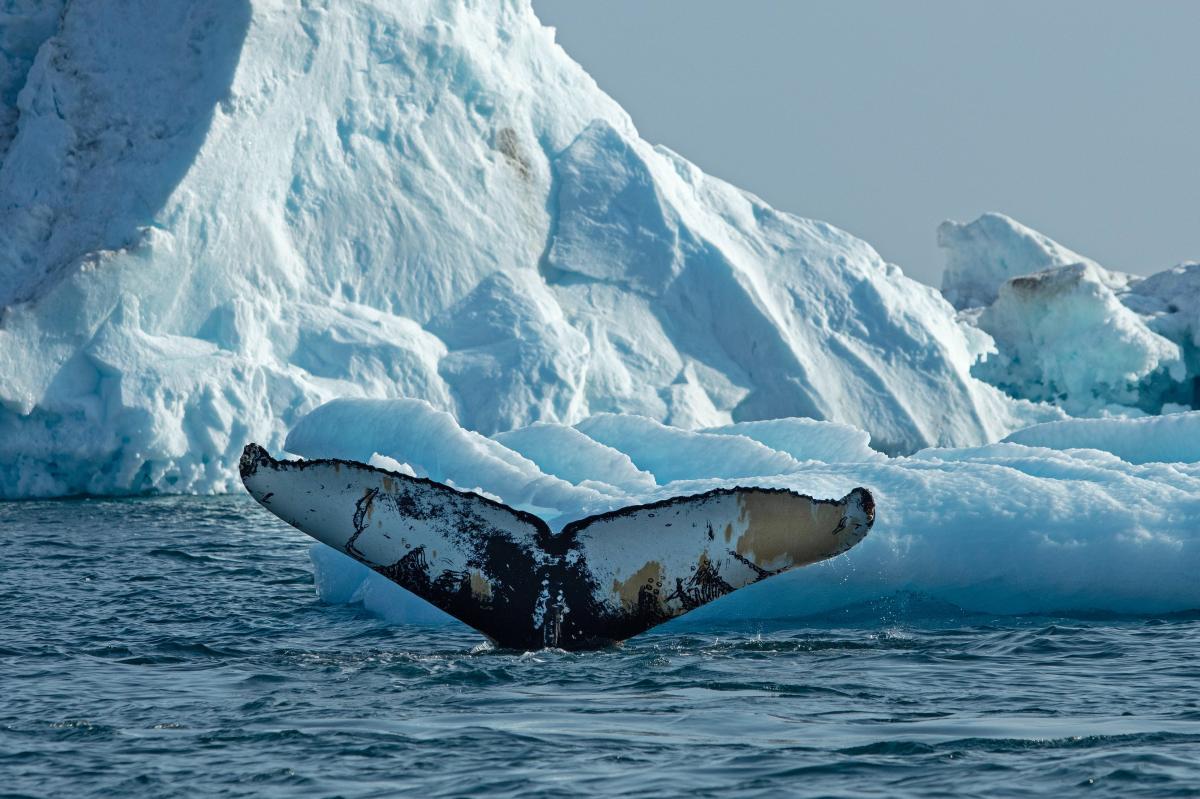
A new study has documented thousands of baleen whales gathering in “feeding frenzies” far above the Arctic Circle as warming waters redraw the marine food map.
The research, published in the journal Frontiers in Marine Science, tracked a mass migration of fin whales, humpback whales, and common minke whales into coastal East Greenland waters that were ice-locked just decades ago. Professor Mads Peter Heide-Jørgensen, from the Greenland Institute of Natural Resources, led the investigation alongside colleagues in Greenland, Denmark, and Iceland.
Heide-Jørgensen said: “We show that rising ocean temperatures and declining sea-ice cover have facilitated the widespread occurrence of baleen whales along the East Greenland coast, as far north as 70°N.”
“This has led to regular mixed ‘feeding frenzies’ of fin whales, humpback whales, and common minke whales – species which historically were only rarely observed in coastal East Greenland.”
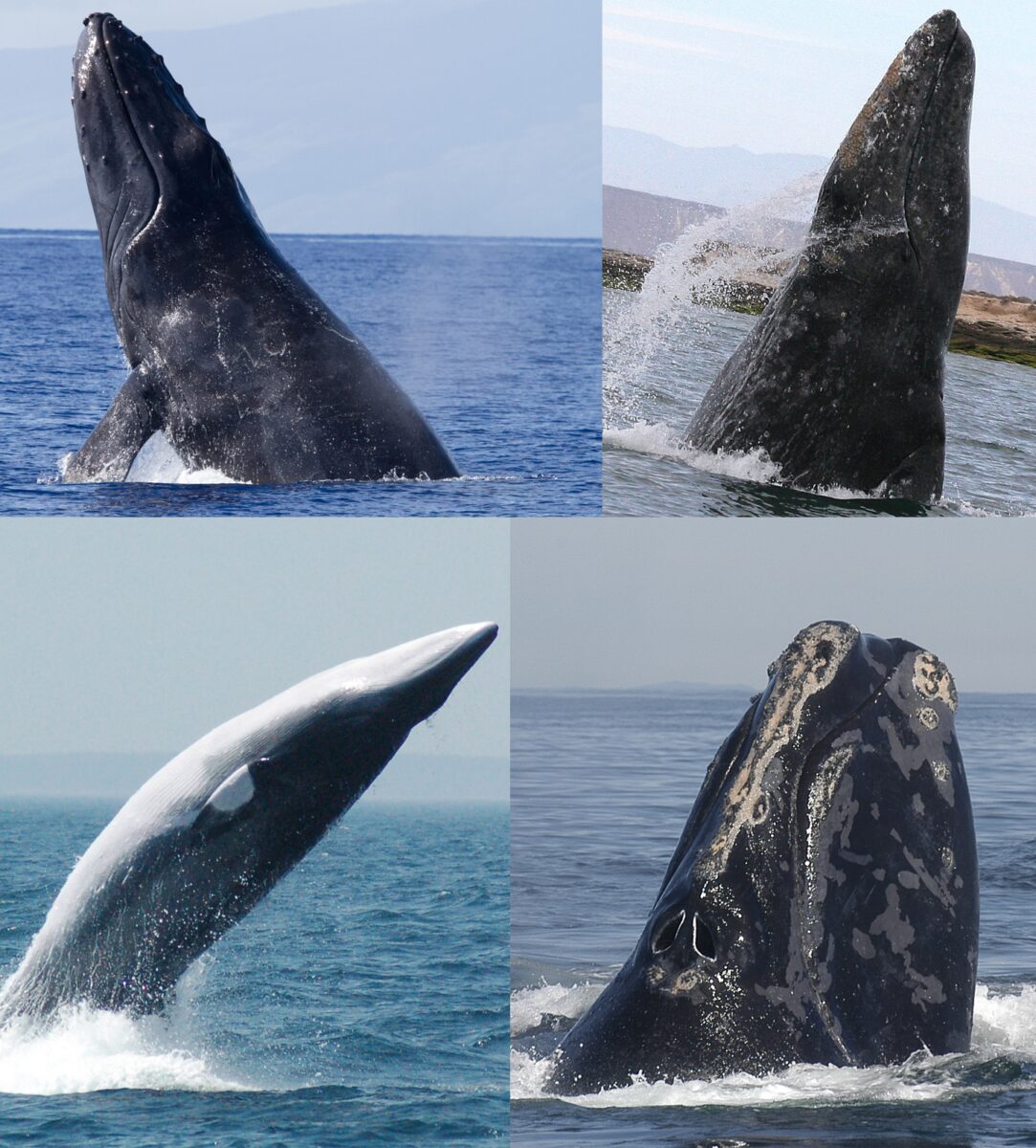
The Arctic and North Atlantic rank among the fastest warming regions on Earth, with sea surface temperatures east of Greenland climbing roughly 2°C since the 1990s. Summer ice edges retreated dramatically northward after the mid-2000s, slashing pack ice along Greenland’s east coast and opening passage for temperate species.
The research team assembled what they call a “unique record” spanning nearly four decades. They conducted systematic aerial surveys up to 30 miles offshore in August 2015 and 2024, added airborne observations from summer 2022, gathered testimonies from Inuit hunters between 2023 and 2025, and incorporated ship-based sighting data stretching back to 1987. Fifteen satellite-tagged whales tracked between 2019 and 2025 supplied movement data, which the team fed into a mathematical model alongside historical sea-surface temperature, salinity, and icepack measurements.
The numbers tell a stark story. Ship surveys spotted zero humpback whales until 2006, then seven in 2007, 26 by 2015, and more than 150 by 2024. Minke whale encounters jumped from sporadic pre-1995 to 10-to-20 per year after 2001. Fin whale sightings climbed sharply across the same period.
In August 2025, a ship crew reported “exceptionally large” aggregations of up to 50 baleen whales simultaneously near 69°N, north of the Arctic Circle. The 2015 and 2024 aerial surveys documented near-continuous distribution of all three species between 60°N and 70°N.
Heide-Jørgensen and his colleagues estimate that in summer 2024 alone, no fewer than 4,000 humpback whales, 6,000 fin whales, and 6,000 minke whales visited the Greenland Sea. The trio hunts primarily capelin, a cold-loving forage fish that has shifted its feeding grounds from warmer waters north of Iceland toward the Greenland Sea since the mid-2000s. The whales, the researchers concluded, have “moved in for the kill.”
Heide-Jørgensen said: “There is little doubt that the three baleen whale species summering in East Greenland coastal waters do so primarily to feed.”
The bonanza carries ripple effects. No commercial capelin fisheries operate in the region, so human competition remains absent for now. But the whale influx is reshaping the food web from top to bottom.
Heide-Jørgensen said: “East Greenland is undergoing a major ecological regime shift.”
“Ice-associated species such as narwhals are increasingly sharing their habitat with, or being displaced by, temperate baleen whales that generally avoid ice-covered waters.”
He added: “This marked change in species composition demonstrates how climate-driven changes are reorganizing the East Greenland marine ecosystem, potentially with long-lasting consequences.”
Scientists had already identified the Arctic as ground zero for climate-driven species redistribution, but the scale and speed of the whale migration caught researchers by surprise. What began as scattered anecdotal sightings hardened into systematic evidence that entire populations are relocating within a single generation. The researchers note that while most species suffer from global warming effects, these baleen whales count among the “few lucky winners” — at least for now.
The research team plans continued monitoring of the Greenland Sea ecosystem as temperatures keep climbing.