


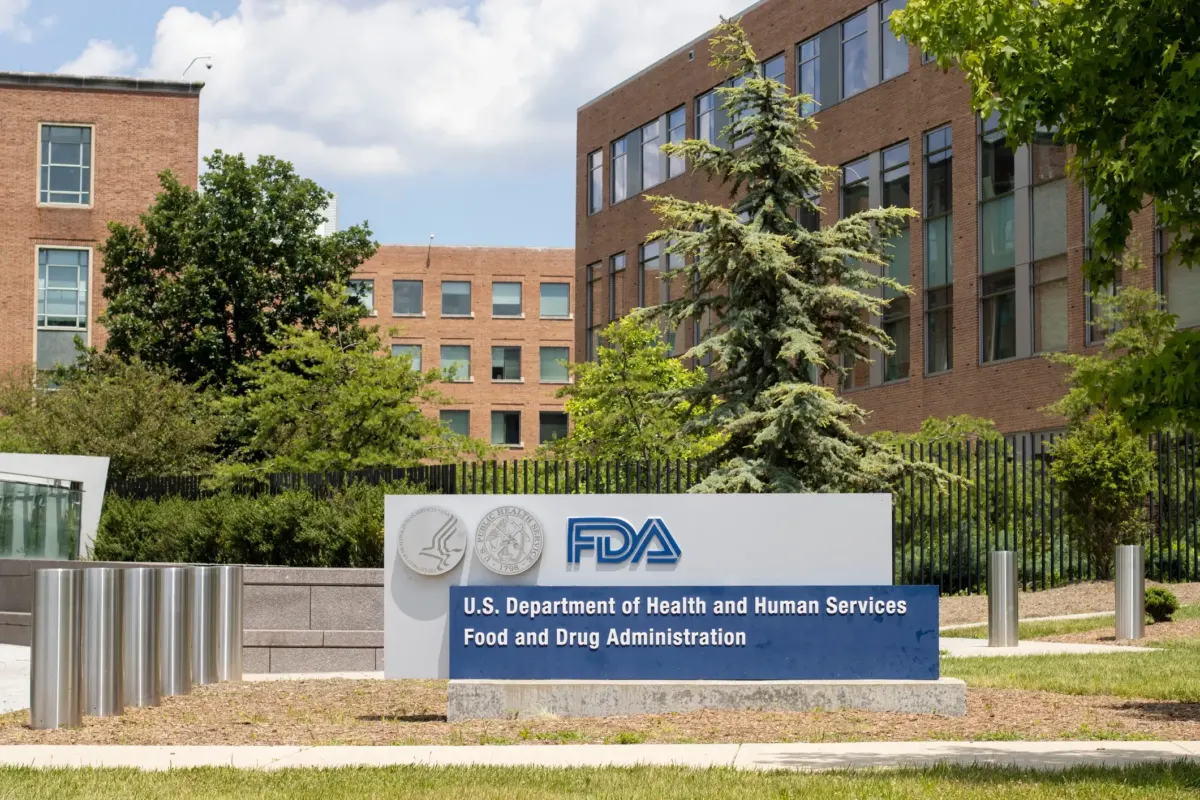
The FDA approved a new pancreatic cancer pill this week after trial results showed it nearly doubled patient survival.
The Food and Drug Administration signed off on Rasonque, known chemically as daraxonrasib, on Wednesday. The daily pill was developed by Revolution Medicines for people with advanced pancreatic cancer who have already been through at least one prior treatment, such as chemotherapy.
Among 500 patients tracked in a late-stage study, those given Rasonque alongside standard chemo survived for an average of 13.2 months. That is roughly double the survival time of patients who received chemo on its own, according to data that first circulated within the oncology community back in April.
Dr Rachna Shroff, who leads the division of haematology and oncology at the University of Arizona Cancer Center in Tucson, said she broke down when she first saw the trial’s early data.
‘It’s that big of a game changer for those of us who treat pancreatic cancer,’ she said. ‘It’s unprecedented.’

Taken once a day as a tablet, Rasonque targets a fault in a gene called KRAS. That mutation is present in almost every case of pancreatic cancer, and also common in lung, colorectal and ovarian tumours.
Under normal circumstances, KRAS behaves like a switch that tells cells when to grow. The mutated version gets locked in place, letting cancer cells multiply unchecked. Researchers spent years trying to build a drug capable of flipping that switch back off, and past efforts repeatedly came up short.
Channing Der, a pharmacologist at the University of North Carolina at Chapel Hill, described the approval as a ‘monumental moment for the treatment of pancreatic cancer’ in emailed comments. He added that pancreatic cancer is ‘the third leading cause of cancer death in the U.S. And the deadliest of all cancers,’ calling this breakthrough ‘just the beginning of more advances to come.’
The American Cancer Society projects over 67,000 new pancreatic cancer diagnoses across the US this year. There is currently no screening test for the disease, and symptoms in the early stages are frequently too subtle to catch before it spreads. Just eight percent of patients with pancreatic adenocarcinoma, the disease’s most common form, live for five years or longer after diagnosis.
The drug carries notable side effects. Documented reactions include a blistering rash, sores across the mouth and throat, plus vomiting and diarrhoea.
Former Nebraska Senator Ben Sasse, who took Rasonque as part of a clinical trial, spoke about the rash on a podcast earlier this year.
He branded it ‘nuclear.’
The company says over 2,000 people have accessed Rasonque already, through an early-access scheme it rolled out in May, ahead of this week’s formal sign-off. Revolution Medicines has yet to confirm how much a course of the drug will cost patients.