

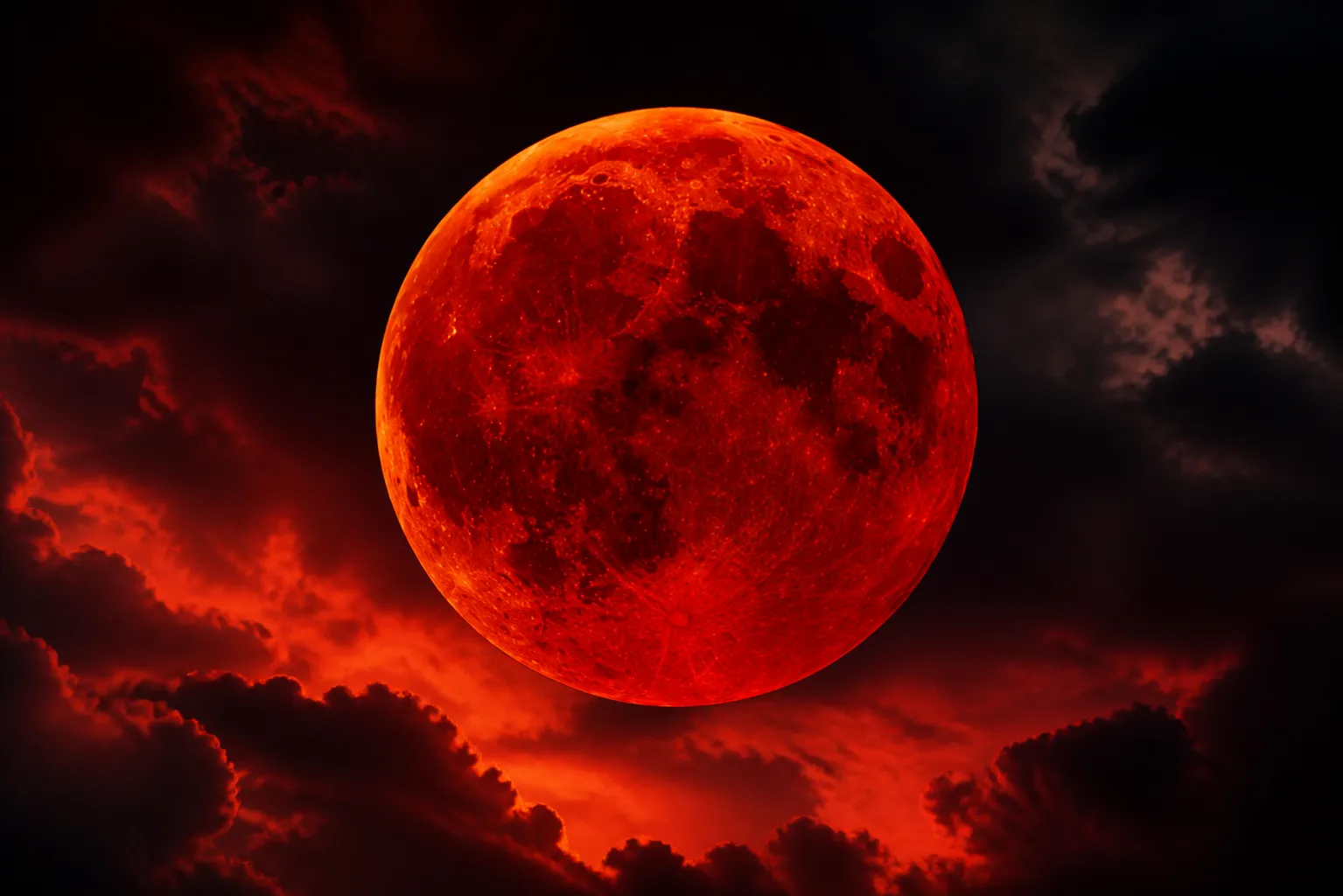
A rare blood Moon will darken and redden skies across the Americas late this August, and astronomers say escaping city lights is the single most important step for viewers.
The deep lunar eclipse arrives overnight on August 27 and 28, with roughly 96 percent of the Moon’s surface slipping into Earth’s shadow Sky at Night Magazine. Unlike a solar eclipse, where the Moon blocks the Sun, this event occurs when Earth passes directly between the Sun and the Moon, cutting off sunlight that normally reflects off the lunar surface.
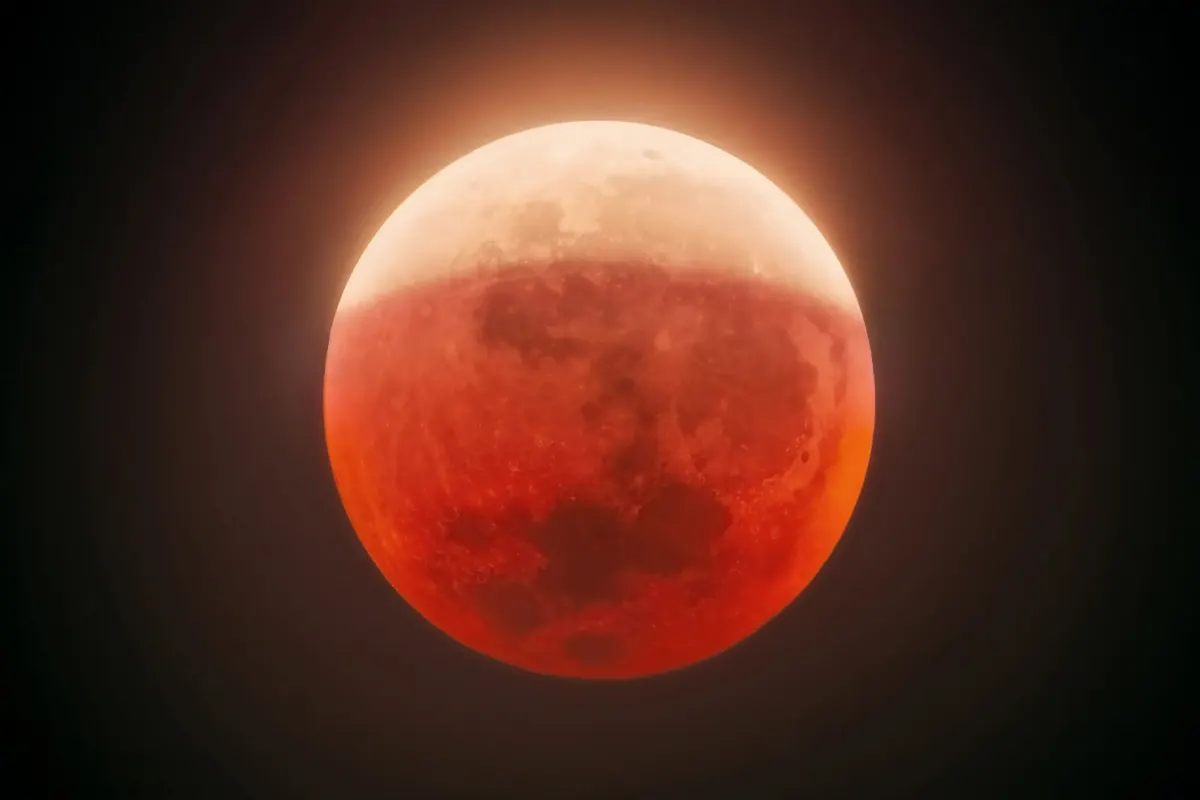
The resulting color shift transforms the familiar silvery orb into a striking red-copper shade. That reddish hue emerges because Earth’s atmosphere scatters blue-wavelength light—the same physics that makes daytime skies blue—leaving more red-spectrum light to bend around our planet and illuminate the Moon.
For anyone planning to watch, light pollution stands out as the critical obstacle. Artificial lighting in built-up areas interferes with night-sky visibility and can dull or obscure the eclipse’s dramatic color change. Observers seeking the clearest view should travel to less densely populated areas where darker skies allow the phenomenon to appear at full intensity.
The full eclipse will be visible throughout South America and across the eastern half of North America. Western North America, Europe, and Africa will catch partial views of the event rather than the complete sequence.
Timing favors night owls in the Americas. The color change is expected to begin around 11:20 p.m. And continue until approximately 1 a.m., with maximum coverage occurring around 12:12 a.m. Eastern Time, reports said.
Experienced skywatchers recommend arriving at viewing locations roughly 30 minutes early to let eyes adjust to darkness. They also advise avoiding bright phone screens during the event, since even brief exposure to artificial light resets the eye’s adaptation and diminishes faint-sky detail.
The blood Moon carries weight far beyond astronomy. Christian texts describe the Moon turning to blood on the day of Jesus’s crucifixion, and NASA has confirmed that a lunar eclipse occurred on Friday, April 3, 33 AD. The Quran references similar celestial events before the birth of the Prophet Mohammed and on the day his son Ibrahim died. These long associations explain why humans across millennia have watched such moments with wonder and interpreted them as portentous.
This August event will not achieve totality—at about 96 percent coverage, a thin sliver of the Moon will remain outside Earth’s full shadow. That still leaves enough depth for vivid coloration, especially under dark rural skies where the copper-red tone can develop fully without competing glow from streetlights and buildings.
No special equipment is required to view a lunar eclipse, unlike solar eclipses where protective filters are mandatory. Binoculars or small telescopes can enhance the view but are not necessary for experiencing the color transformation. Cloud cover remains the only uncontrollable variable, with clear skies essential for any observation.
The next comparable lunar eclipse visible across broad portions of the Americas will not arrive until 2028, making this summer’s event a relatively brief window for observers who miss it.