

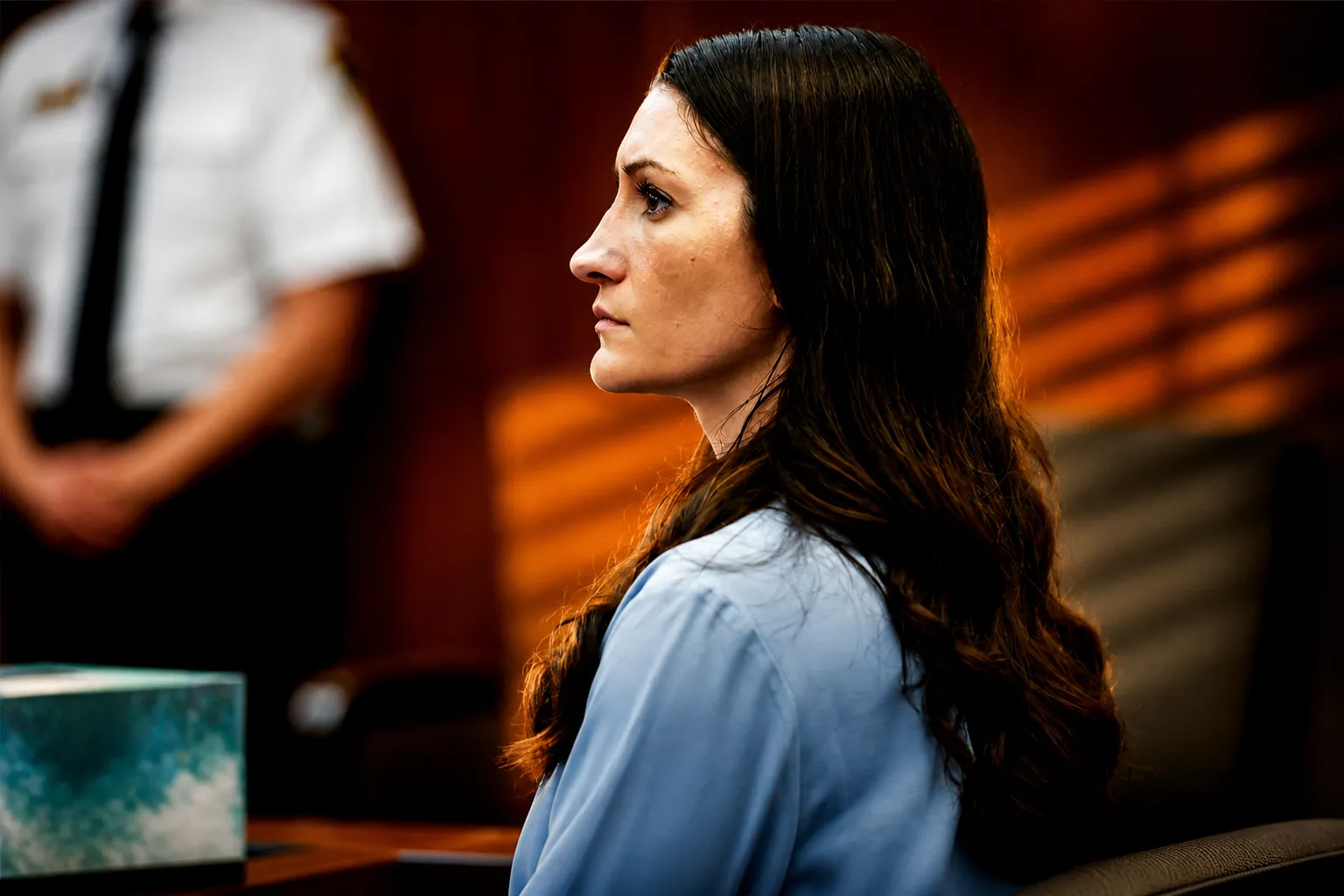
The jury in Lindsay Clancy’s murder trial told the judge they were deadlocked after more than 18 hours of deliberation.
The nine women and three men, weighing the fate of the 36-year-old former labor and delivery nurse, sent a note on Monday, September 1, saying they could not reach a unanimous decision. Judge William Sullivan summoned them back to the courtroom and ordered them to continue working through the five-week case that featured over 80 witnesses and more than 300 exhibits.
“I’ve got your question and the question is: ‘After many hours of deliberation we are unable to come to a unanimous decision’,” Sullivan said in court. “I brought you back out because I know that this was a long trial. I know there were over 80 witnesses, there were over 300 exhibits, but because of that I’m going to ask you to go back out, keeping in mind all of the instructions that I gave you, to go out and continue your deliberation at this time.”

The panel faces five possible outcomes: not guilty, not guilty by reason of insanity, first-degree murder, second-degree murder, or manslaughter. Clancy does not dispute that she killed her three children — Cora, Dawson, and baby Callan — in the basement of their Duxbury, Massachusetts home in January 2023. Her defense argues she was suffering from postpartum psychosis and could not distinguish right from wrong.
If the jury remains deadlocked after further deliberation, Sullivan could issue what is known in Massachusetts as a Tuey-Rodriguez instruction, commonly called the “dynamite charge.” Boston attorney Peter Elikann explained that this judicial tool is designed to break impasses.
“It really pushes the jury and urges them to try to work out a unanimous decision,” Elikann said. “It’s almost equivalent to a pep talk by the judge encouraging them to go back and try harder.”
Boston lawyer Brad Baiely added that outcomes vary by judge, but typically, if a jury reports being deadlocked a second time after receiving the dynamite charge, “the judge is constrained to grant them a mistrial.” The jurors recessed for the day without reaching a verdict.

Clancy’s mental state in the weeks before the killings has been central to the case. She gave birth to Callan, her third child, and posted on social media about feeling “dialed in” six weeks later, crediting exercise, nutrition, and mindset changes for making “all the difference.” But as her maternity leave ended, anxiety about returning to Massachusetts General Hospital mounted. She visited two psychiatrists and received a generalized anxiety disorder diagnosis, along with multiple psychiatric medications.
In a phone note revealed in court documents, Clancy wrote: “I think I sort of resent my other children because they prevent me from treating Cal like my first baby. And I know that’s not fair to them. I know that. I was feeling so depressed last evening when Cora and Dawson came home from school, I know it runs off on them, so we had a pretty rough evening, I want to feel love and connection with all my kids.”
She underwent an evaluation at the Women and Infants Hospital Center for Women’s Behavioral Health but was not diagnosed with postpartum depression, according to prosecutors. After her husband Patrick told police she was having suicidal thoughts and thoughts of harming the children, Clancy admitted herself to McLean Hospital for five days. Clinicians discharged her after determining she posed no imminent danger, prosecutors said.
On January 24, 2023, the day of the killings, Clancy appeared normal to family friend Kyle Carney at dinner. That afternoon, she texted Patrick about takeout from ThreeV restaurant, called in the order, and asked him to pick up Pedialax liquid stool softener. When Patrick returned home at 6:09 p.m. With the food and medication, he found silence. He discovered blood upstairs, then found Clancy outside. She told him: “I tried to kill myself.” When he asked where the children were, she responded: “In the basement.” Patrick descended to find Cora and Callan on the den floor and Dawson in his home office; prosecutors said he was heard “screaming in agony” on the 911 call. Cora and Dawson were pronounced dead that evening; Callan died later after being flown to another hospital.
Clancy, left paralyzed below the waist from injuries sustained in a fall, later told Patrick in a call monitored by a defense psychologist that she had experienced “a moment of psychosis” and heard “a man’s voice telling me to kill the kids and kill myself.” She also used a whiteboard to ask hospital staff: “Do I need an attorney?”
Patrick Clancy has publicly defended his wife, telling The New Yorker: “I wasn’t married to a monster – I was married to someone who got sick.” The couple also filed a civil lawsuit against medical providers, alleging failure to properly diagnose and treat her “severe postpartum psychiatric condition.”
The jury is scheduled to resume deliberations Tuesday.