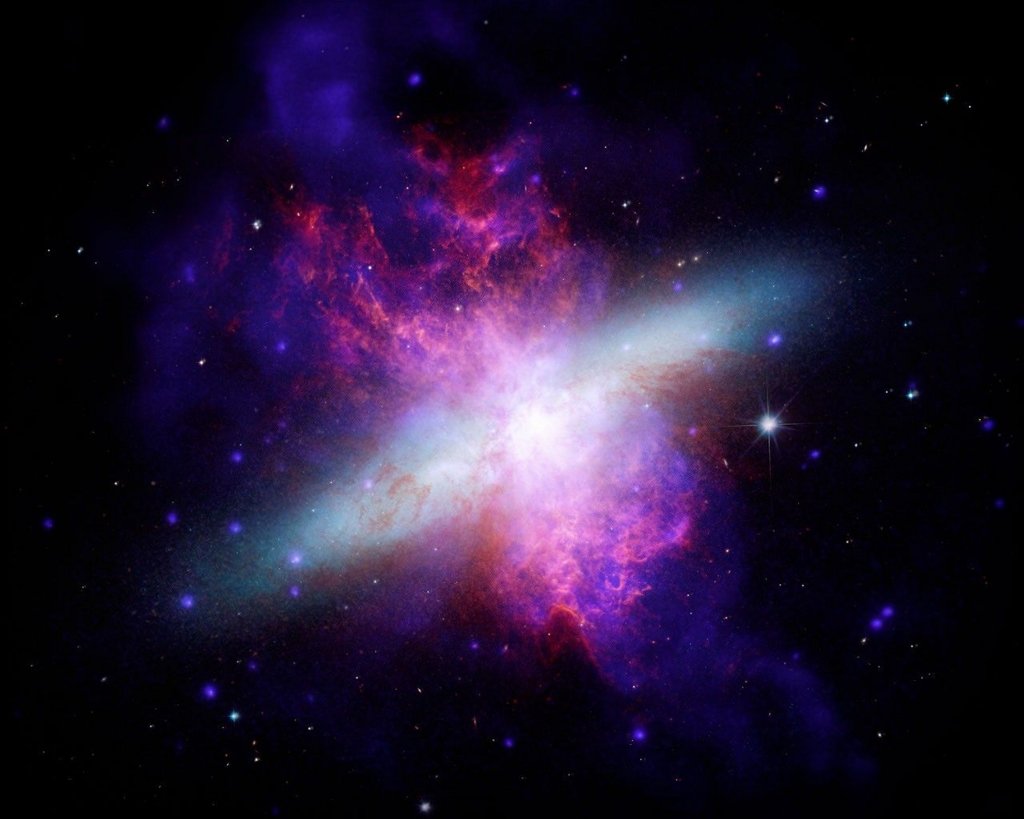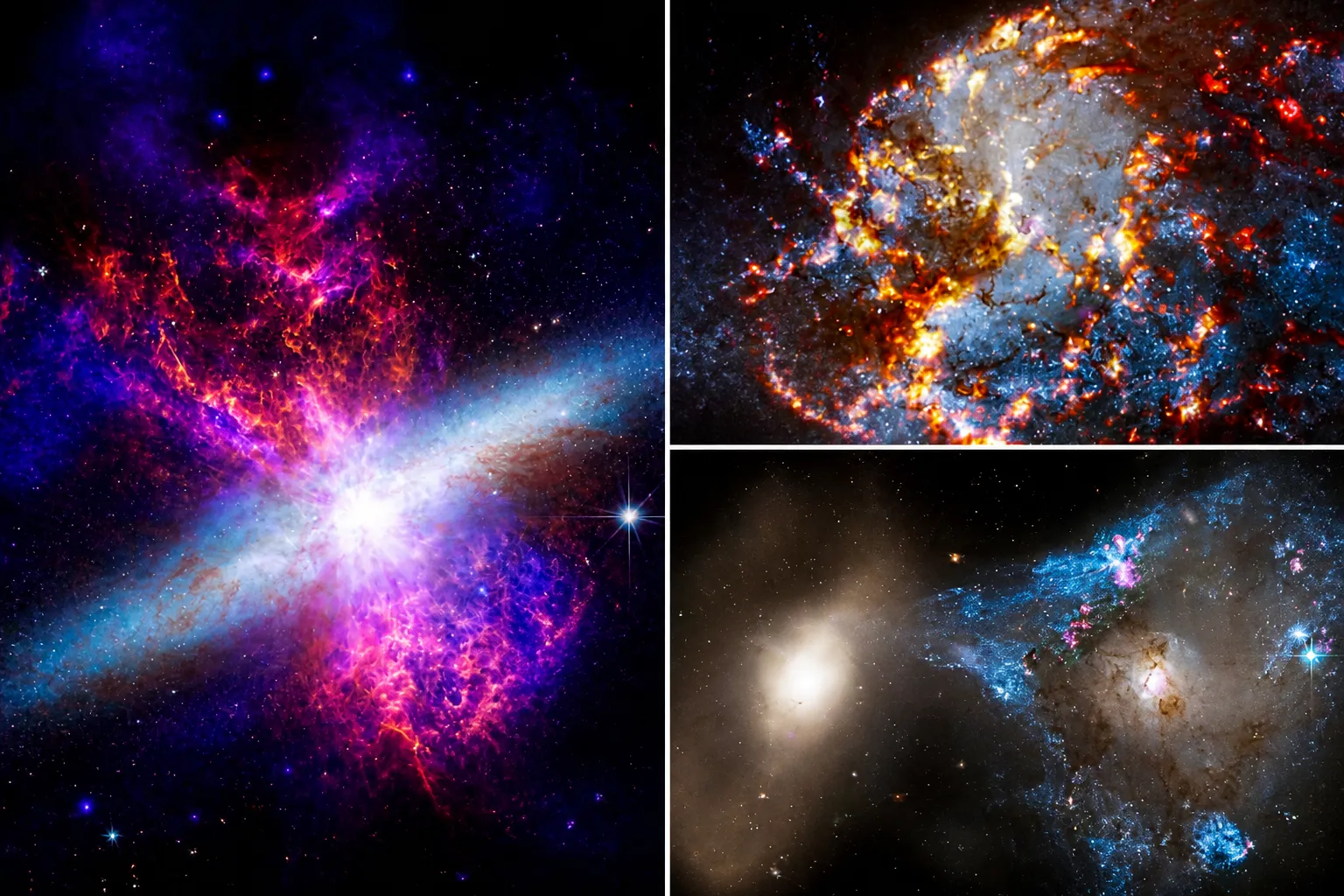
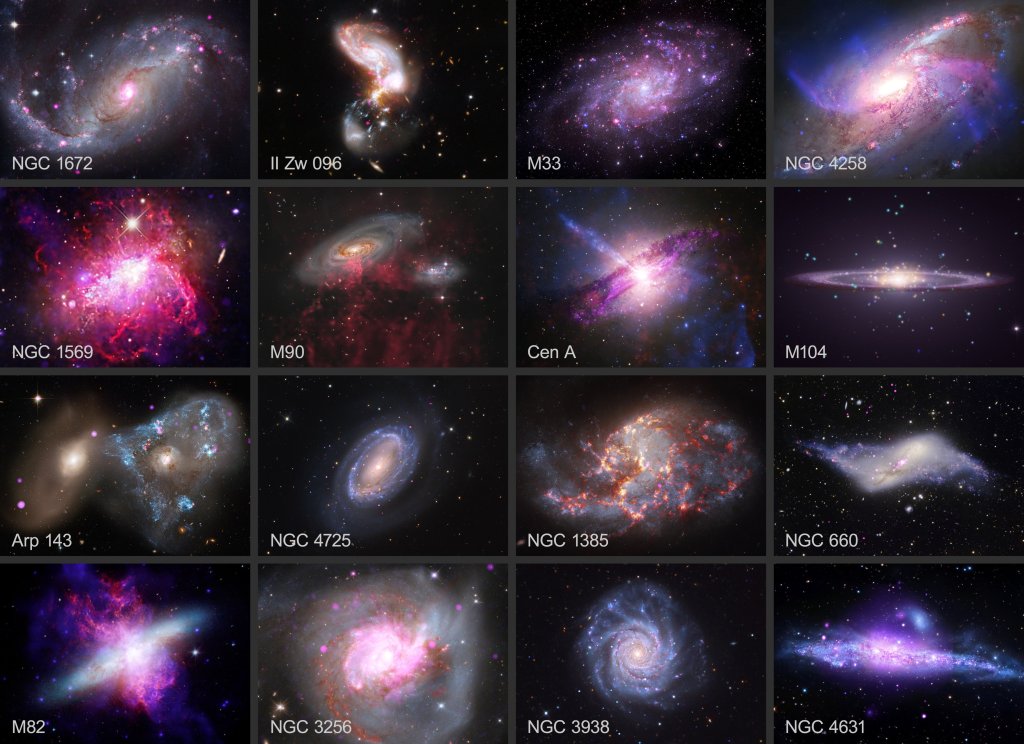
NASA has released a new gallery pairing decades of X-ray imagery with light captured by the world’s most powerful telescopes.
The 16-image collection, published by the Chandra X-ray Center, draws on data accumulated during the Chandra X-ray Observatory’s 25 years in orbit. Each composite layers that high-energy X-ray information with observations from NASA’s James Webb and Hubble Space Telescopes, the Imaging X-ray Polarimetry Explorer, the Neil Gehrels Swift Observatory, the Nuclear Spectroscopic Telescope Array, and additional ground-based and space-based instruments.
Megan Watzke, of the Chandra X-ray Center, said: “Galaxies are like cosmic gems, each with characteristics including size and shape that make them distinct.”
The project frames these distant galaxies as tools for understanding the Milky Way’s own history and trajectory. By examining the variety of galactic structures on display, researchers hope to place our home galaxy in sharper context.
“Just as gems reveal the history of Earth through how they were forged over billions of years, these galactic gems are a way to study Earth’s place in our home galaxy of the Milky Way,” Watzke continued.
The Chandra Observatory has spent decades collecting the X-ray data that forms the backbone of these images. That long baseline allows scientists to capture high-energy phenomena invisible to optical telescopes alone, including the superheated material swirling around black holes and the remnants of exploded stars.
Watzke added: “By looking outward to other galaxies, we learn more about our own – including clues to its past and future.”
The gallery’s release highlights what NASA describes as a core principle of galactic astronomy: that studying the diversity of galaxies elsewhere illuminates the specific conditions that shaped our own cosmic neighborhood. The combined observations span wavelengths from infrared through X-ray, building portraits no single telescope could achieve independently.
The 16 images showcase galaxies of varying sizes, shapes, and energetic signatures, demonstrating the range of galactic evolution across the observable universe.
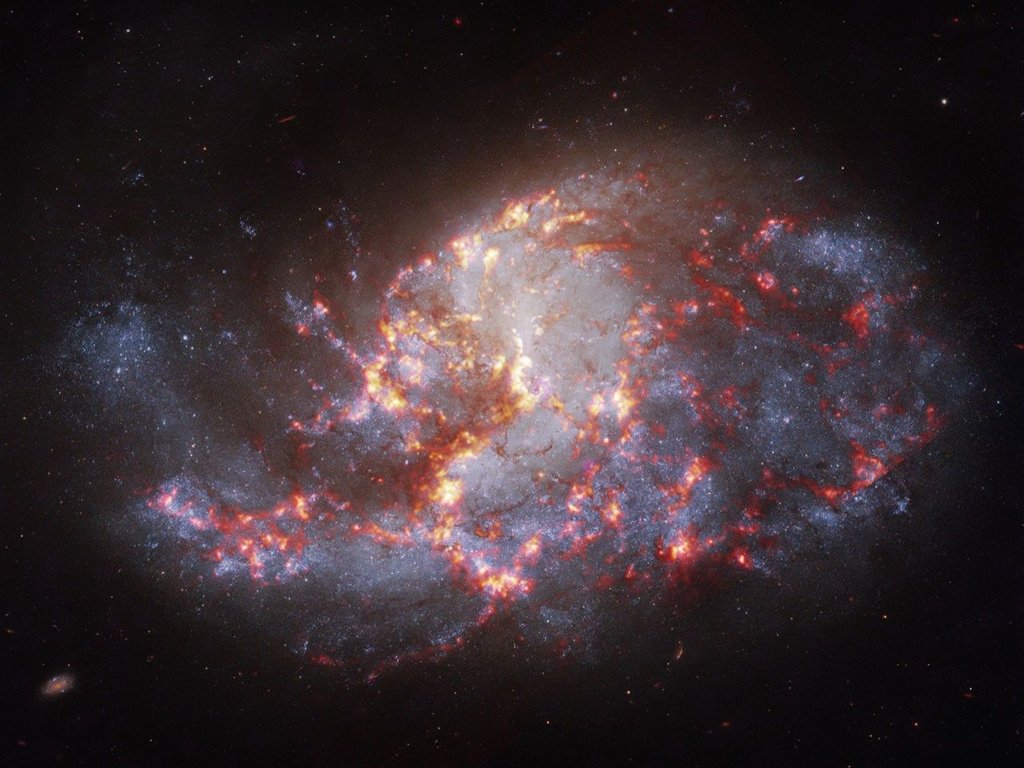
The multi-telescope approach reflects a growing trend in observational astronomy, where data from separate missions are synthesized to create more complete pictures of celestial objects. The James Webb Space Telescope’s infrared sensitivity, Hubble’s optical clarity, and Chandra’s X-ray vision each contribute distinct information about temperature, composition, and structure.
IXPE, launched in 2021, adds polarization data that reveals how X-rays are oriented as they travel through extreme magnetic fields. NuSTAR focuses on the highest-energy X-rays, while Swift monitors the sky for sudden bursts of radiation and tracks their afterglows.
Together these instruments have produced composite images that translate invisible wavelengths into visible color, assigning different hues to data from each telescope so viewers can distinguish the contributions.
The gallery arrives as Chandra continues operations more than two decades after its 1999 launch, well beyond its original five-year design lifetime. The observatory remains one of the few tools capable of resolving X-ray sources with the precision needed for detailed galactic studies.
NASA maintains that such cross-mission collaborations maximize the scientific return from its fleet of space telescopes, each representing billions of dollars in investment and decades of engineering.
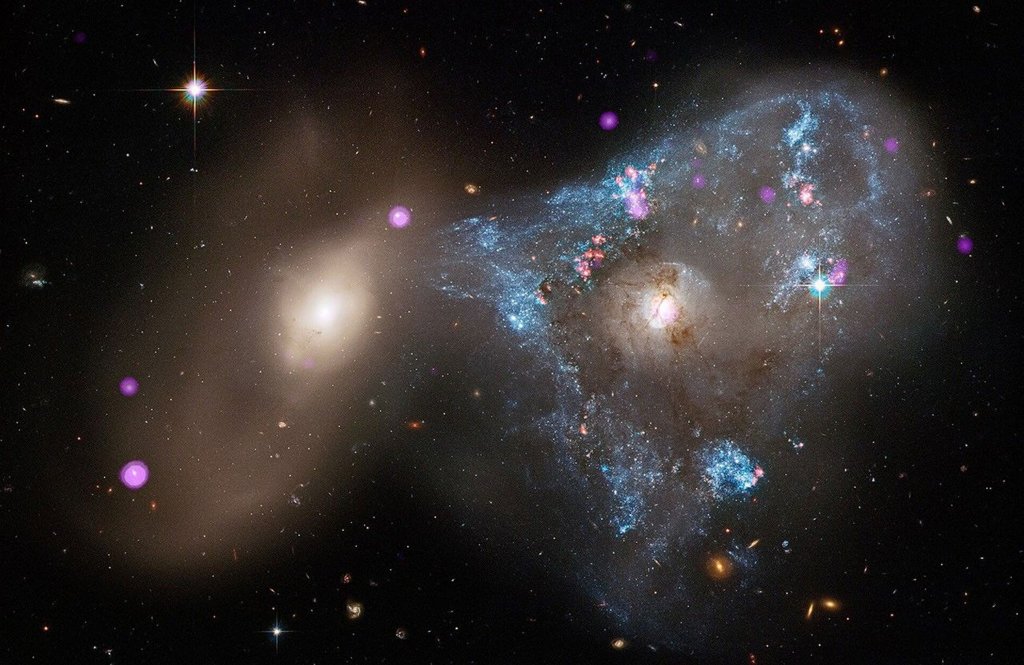
The full gallery of 16 galactic images is available through NASA’s Chandra X-ray Center website.