

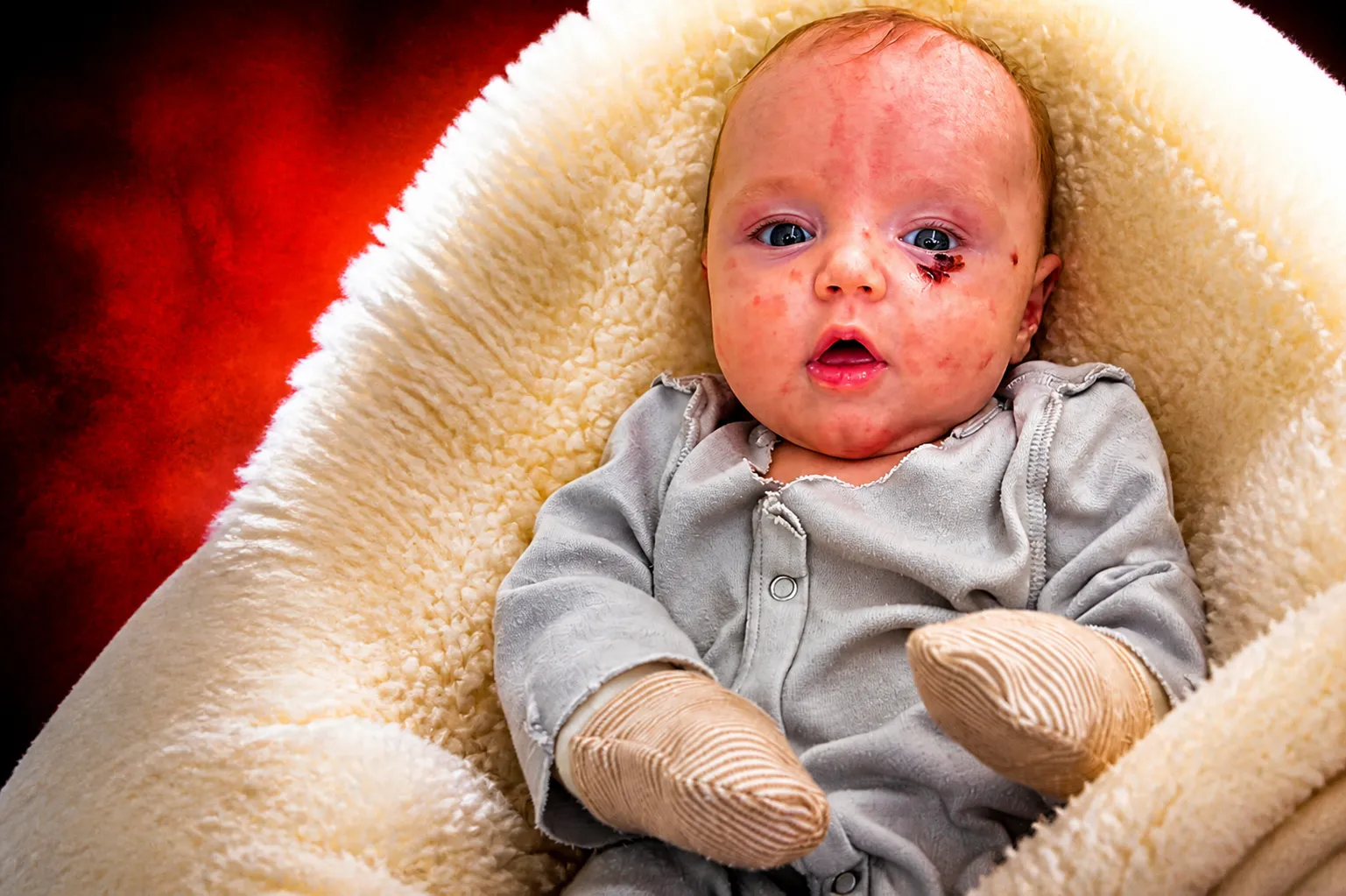
Ciara Burnside has spoken out about the rare genetic condition that leaves her unable to hold or bathe her five-month-old son without fear of causing serious damage to his skin.
Burnside, 30, of Bedfordshire, UK, and her fiancé Lewis Archer are now full-time caregivers to Ralph, who was born in March and within minutes needed intensive care. The couple later learned they are both silent carriers of a mutation of the COL17A1 gene, which causes their son’s intermediate junctional epidermolysis bullosa (JEB), a severe subtype of a condition known widely as “butterfly skin.”
The fragility of Ralph’s skin has reshaped nearly every aspect of daily life for the family. Even routine acts that most parents take for granted carry acute risk.
“We have also syringe-fed Ralph, so we sat there for over an hour, slowly dripping the milk into his mouth,” Burnside said of the painstaking feeding process. She added: “Unlike most parents, we can’t really leave him unattended for more than a minute because, even with very soft mittens on, rubbing his face can cause significant damage incredibly quickly.”
The family’s world contracted further from typical new-parent outings. “We rarely leave the house due to the heat and fear of damage from the car seat,” Burnside said.

Burnside first noticed something wrong immediately after delivery. Ralph had “big red patches” on his hands and feet, and within hours blistering spread across his entire body. She recalled her first moments of alarm in a TikTok post: “There were big red patches on his fingers and on his feet, and I remember saying to the midwife, ‘What’s wrong with him?’.”
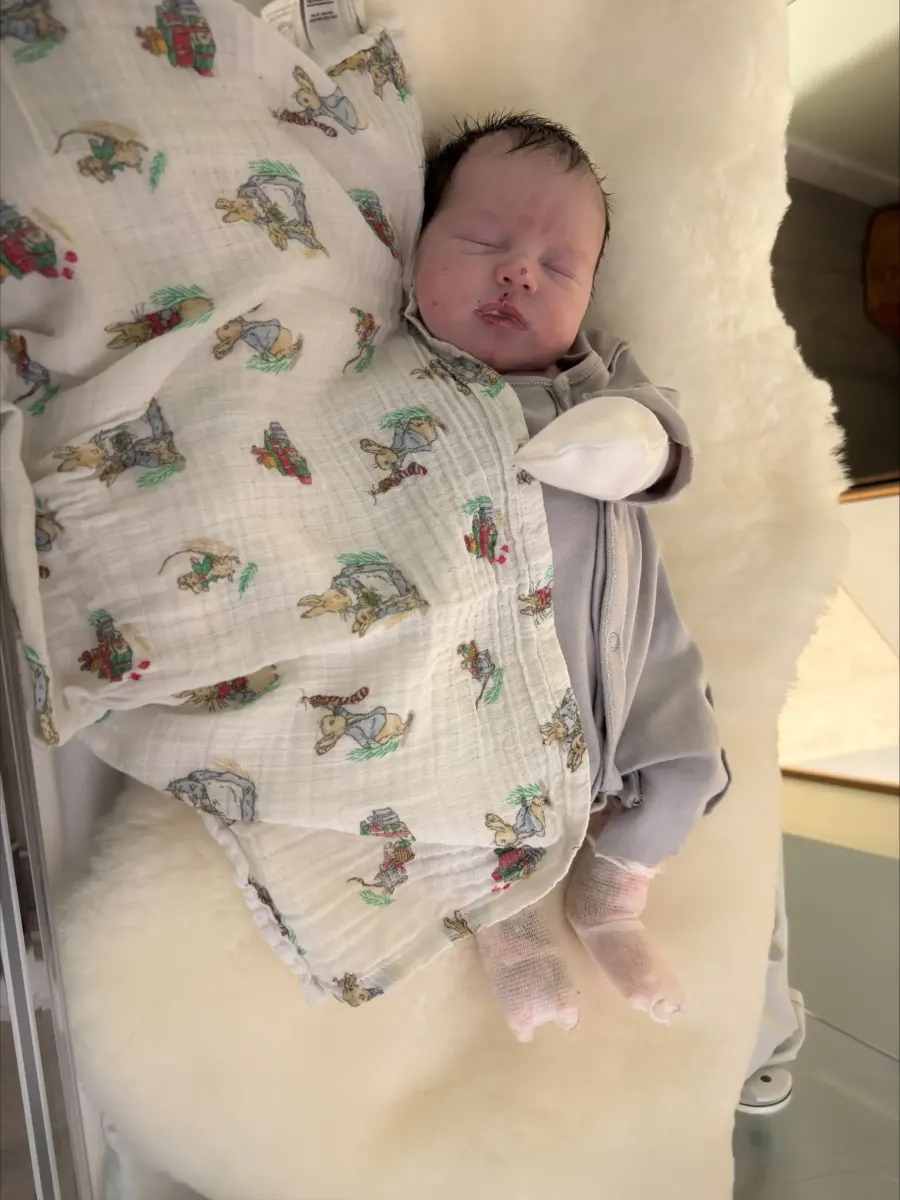
The diagnostic journey moved rapidly from there. Two months after birth, Ralph received his official diagnosis. The day after, a consultant provided Burnside and Archer with literature on epidermolysis bullosa. A specialist from Great Ormond Street Hospital visited the following day to explain the full implications.
The consultation delivered devastating uncertainty. “They said to us there is a specific type where he may not survive,” Burnside said. “After that, my partner and I just shut down… we were crying and were very, very upset.”
According to the Mayo Clinic, epidermolysis bullosa is a rare condition that causes fragile, blistering skin which may appear in response to minor injury, even from heat, rubbing or scratching. In severe cases, the blisters may occur inside the body, such as the lining of the mouth or stomach. The condition has no cure but could improve with age.
For Ralph, the internal threat matches the external one. His parents administer acid reflux medication to prevent blistering in his esophagus, along with paracetamol for pain management, morphine, and regular dressing changes. The medication regimen aims to stop the same damage that happens on his skin from occurring inside his body.
The prognosis offers measured hope amid the vigilance. “He will likely make it to adulthood because his prognosis is not the most severe,” Burnside said, “but they’ve told me that there is a chance he will lose his hair and fingernails. They can’t tell me much else, other than we have to be proactive in stopping complications early. We just have to take each day as it comes.”
Burnside, who posts awareness videos under @ciaraburnside on TikTok, has also launched a petition urging the UK government to increase funding for epidermolysis bullosa and related conditions. The family is additionally exploring IVF with genetic testing for healthy embryos as they consider future children.