

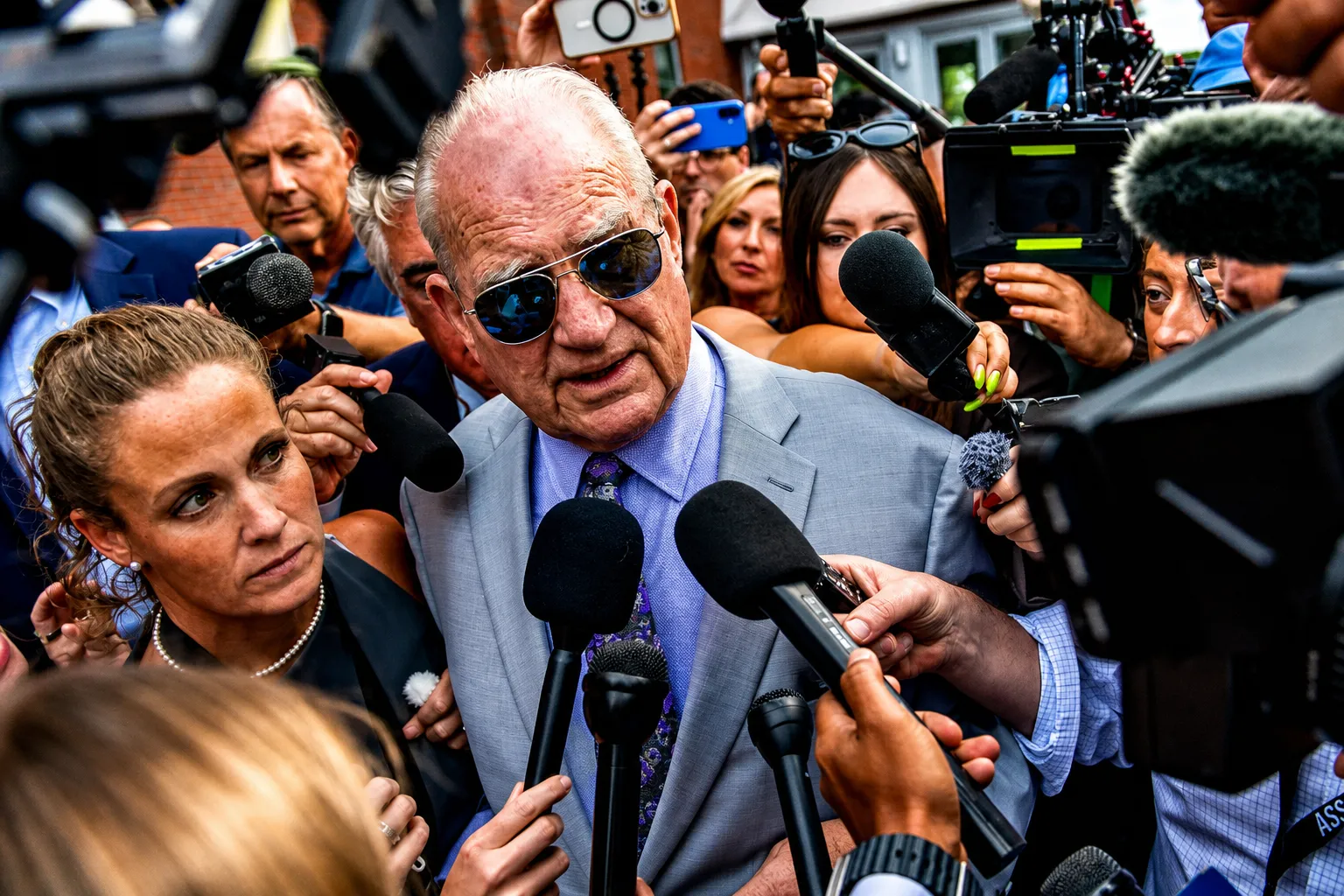
Kevin Reddington has publicly asked Donald Trump to pardon Lindsay Clancy after her triple-murder trial ended in a mistrial.
The defense attorney, who represented Clancy throughout the proceedings, made the appeal during a Tuesday appearance on Good Morning America. Reddington directly addressed the president in emotional terms, framing his client as someone who had endured extraordinary suffering.
“Mr. President, I would hope that you would consider this young lady and the person she is, what she’s been through, and consider a pardon,” Reddington said on the ABC morning program.

Clancy, a former nurse from Duxbury, Massachusetts, faced charges in the deaths of her three young children. The case drew national attention as it raised complex questions about postpartum mental health and criminal responsibility. Prosecutors had argued that Clancy deliberately planned and carried out the killings, while the defense maintained that she was experiencing severe psychiatric distress at the time.
The trial collapsed after jurors repeatedly signaled they could not reach consensus. The panel went home following a fifth day without returning a verdict, prompting the judge to declare a mistrial. The impasse came after earlier indications on the fourth day that the jury had already become deadlocked.
Reddington’s televised plea to Trump represents an unusual legal strategy, shifting the focus from the courtroom to executive clemency. Presidential pardons in state cases are exceptionally rare, as such authority typically rests with governors rather than the president, though the specific jurisdictional circumstances of Clancy’s case were not immediately clarified in the initial coverage.
The mistrial leaves prosecutors with decisions about whether to pursue a retrial, a determination that would need to come from the Plymouth County District Attorney’s office. Legal observers note that hung juries often result in either dismissed charges or new trials, depending on prosecutorial resources and assessment of the evidence.
The case originated in January 2023, when Clancy’s children—five-year-old Cora, three-year-old Dawson, and eight-month-old Callan—were found dead at the family’s home. Clancy survived after jumping from a window, sustaining injuries that required hospitalization. She was subsequently charged with two counts of murder, one count of strangulation, and three counts of assault and battery with a dangerous weapon.
Prosecutors told jurors that Clancy had deliberately and meticulously planned the killings, pointing to internet searches and her actions in the hours before the children’s deaths. The defense countered that she was suffering from postpartum psychosis and had been overmedicated, rendering her unable to form the intent required for murder.
The trial’s collapse after days of jury deadlock stunned observers who had followed the proceedings closely. Each day without a verdict heightened speculation about whether the panel could overcome its divisions on the central questions of Clancy’s mental state and culpability.
Reddington’s decision to appeal directly to Trump on national television rather than waiting for prosecutorial or judicial processes to conclude suggests the defense team sees limited favorable options in conventional legal channels. The attorney’s choice of Good Morning America as the venue for his plea ensured maximum visibility for the request.
The former president has not publicly responded to Reddington’s appeal. Trump’s approach to clemency during his first term included controversial pardons for political allies and celebrities, but also some cases involving sentence commutations that drew bipartisan support.
Clancy remains in custody as legal proceedings continue. The Plymouth County District Attorney’s office has not announced whether it intends to retry the case or seek a plea agreement that would avoid a second trial.
The broader context of the case has fueled ongoing public debate about how the criminal justice system handles mothers who kill their children while experiencing severe mental illness. Advocates for postpartum mental health awareness have closely watched the proceedings, hoping the case might illuminate gaps in psychiatric care for new mothers.
Reddington’s pardon request adds a political dimension to what had been primarily a local Massachusetts criminal matter, potentially drawing national attention to prosecutorial decisions that lie ahead.
The next court date in the case has not been scheduled.