

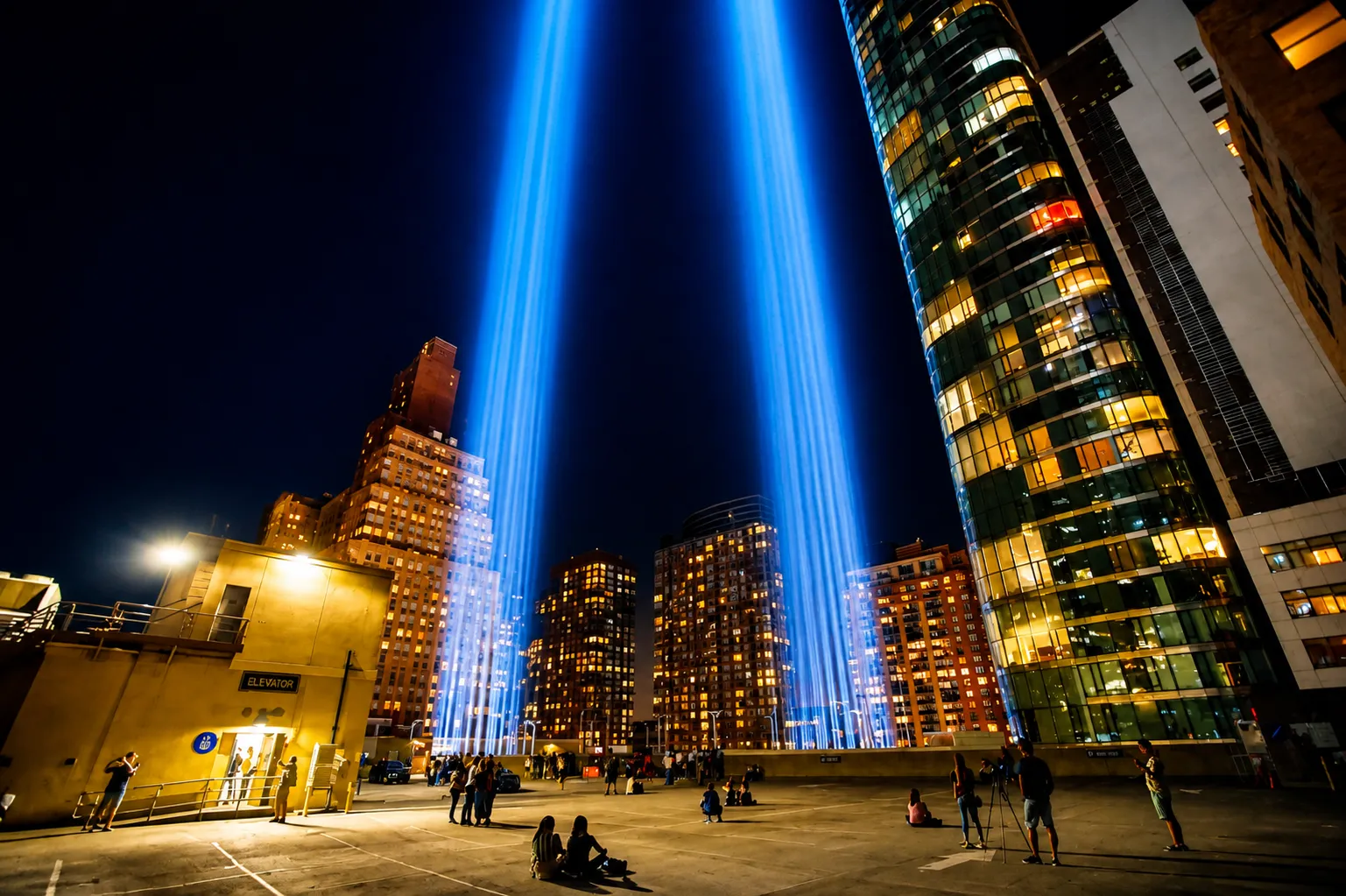
Mount Sinai doctors say the toxic legacy of September 11 is still claiming new victims a quarter-century later.
Dr. Raja Flores, chair of thoracic surgery at Mount Sinai, has spent more than two decades tracking how the disaster’s environmental poisons work through the body on a delayed fuse. “Environmental exposures are a different animal,” he said. “They don’t hurt you on that day. They hurt you 20 years later, 30 years later.”
That creeping timeline is why the hospital’s World Trade Center Health Program Clinical Center of Excellence remains active 16 years after its founding, providing free medical monitoring, treatment, mental health services and benefits counseling to tens of thousands of responders. The patients include law enforcement officers, emergency medical workers, construction and ironworkers, and asbestos handlers.
William Corrar, a retired FDNY captain now enrolled in the program, remembers the warning signs immediately. “We all know that smell and the dust was here for months,” he said. “I knew it wasn’t good for me.” He worried especially about the young firefighters and police officers at Ground Zero, many in their early 20s. “They have a lot of years in front of them with these toxins in their bodies.”
Corrar’s own fears proved justified. Eight years ago, after a Barrett’s esophagus diagnosis, he developed swallowing problems. An endoscopy revealed esophageal cancer, a disease with an overall five-year relative survival rate of roughly 22%. During their first appointment, Flores walked into the examination room and delivered one word: “Curable.” Corrar credits Flores and his nursing team for guiding him through treatment.
Dr. Michael Crane, a professor and deputy director of the WTC program, traced Mount Sinai’s expertise to deeper roots in occupational health. The institution’s work began with Dr. Irving Selikoff, a pioneer in asbestos epidemiology and worker safety who started his research and clinical involvement in asbestos exposure there in the 1950s. “These folks dove in head first into this work, doing the same type of protection and evaluation,” Crane said of his post-9/11 colleagues. “They realized pretty much immediately, this is going to be a very long term issue and with thousands of people.”
The physical toll extends across multiple systems. Patients in the program have developed upper and lower respiratory illnesses, gastrointestinal problems, musculoskeletal disorders, and various cancers. Now, Flores said, he is seeing significant numbers of patients with lung cancer and reflux, which can progress to esophageal cancer. The monitoring of the World Trade Center cohort has allowed doctors to recognize patterns in how these diseases develop over time, turning individual treatment into collective medical knowledge.
The damage has never been limited to the body. Mental health conditions among responders include post-traumatic stress disorder, depression, adjustment disorders, anxiety and panic disorders, and substance abuse disorders.
Dr. Craig Katz, a clinical professor of psychiatry, had started directing the psychiatric emergency room at Mount Sinai just one week before the attacks. With a background in disaster mental health, he understood that reaching responders required going to them directly. Donning hard hats, he and his colleagues went to Ground Zero to talk with workers and assess their condition on the ground, an approach he said helped destigmatize mental health care among responders.
Katz also identified the integration of mental health treatment with physical care as the program’s “magical ingredient.” “This pairing has been such a unique opportunity to, in a sense, treat the whole person,” he said. “Because otherwise in medicine, to some degree, we can often wind up in our own little silos, and that is not to the benefit of our patients.”
The program’s multidisciplinary structure brings together oncologists, occupational health specialists, psychiatrists, surgeons and researchers. Katz recalled writing the first grant for its mental health services while staying at a Philadelphia hotel for a conference. “I had no vision that it would be here all these years later,” he admitted.
That sustained presence has yielded measurable progress. “We see how what we would treat 10 years ago, now we’re better at it because we understand it,” Katz said. “And when you have a better understanding, you can provide a better treatment.”
What began as an urgent response to an unprecedented disaster has evolved into a model of long-term care built on the understanding that environmental exposures unfold across decades rather than days.
“9/11 did not end in 2001,” Flores said. “It continues today.”
The WTC Health Program will continue its monitoring and treatment operations as new patients develop conditions linked to their exposure at Ground Zero.