

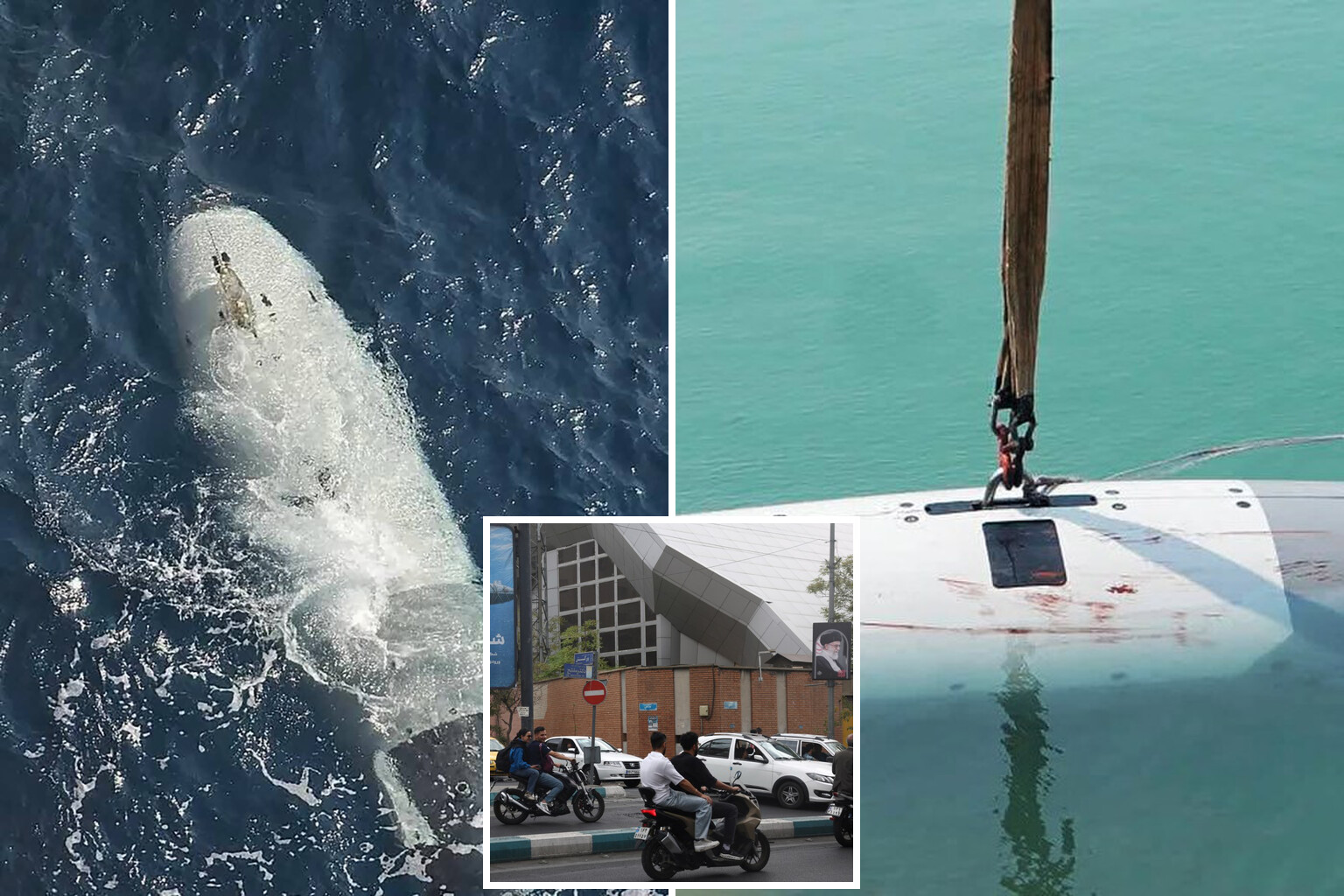
Iran’s Revolutionary Guard has paraded a captured American underwater drone on state television and vowed to mine it for secrets.
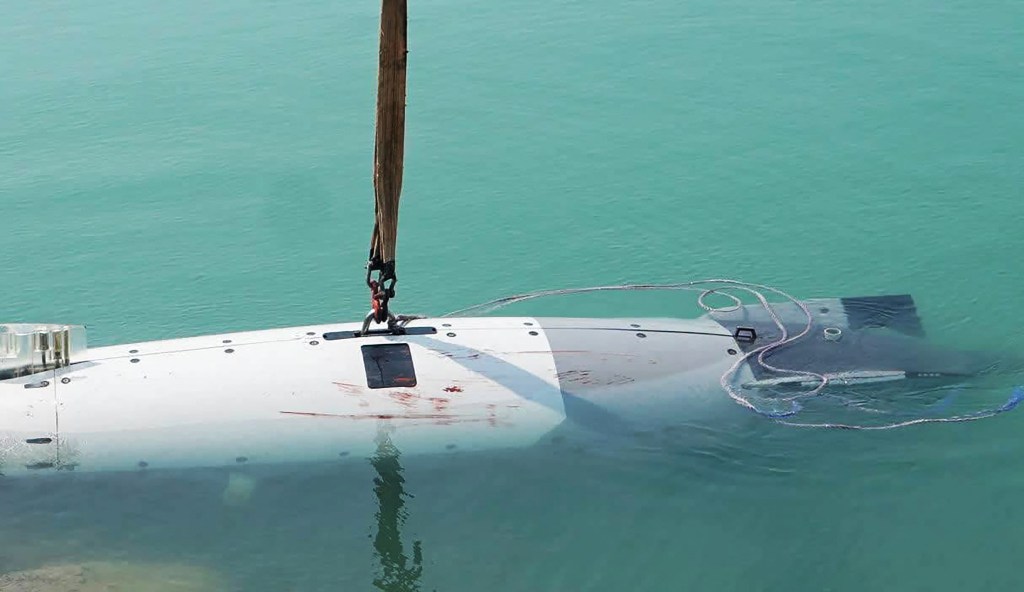
The 19-foot, 3-ton Anduril Dive-LD was seized near the entrance to the Strait of Hormuz on Tuesday, according to both US and Iranian accounts that otherwise diverge sharply. The autonomous sub, valued at roughly $2.5 million, can dive nearly 20,000 feet and is designed for reconnaissance, mine-clearing and hunting enemy submarines.
US Central Command spokesman Navy Capt. Tim Hawkins said the drone was already disabled when Iran took it. “The defective drone was an older model that neither collected sensitive data nor carried any classified sonar or radar equipment,” he said.
CENTCOM said the sub had malfunctioned and was “essentially dead in the water for more than a day” before Iranian forces grabbed it.
The Revolutionary Guard offered a far more theatrical description of events. Iran’s Islamic Revolutionary Guard Corps claimed it got the drone in a “complex intelligence and operational mastermind operation at dawn today.”
Retired Army Major Gen. Gordon B. “Skip” Davis, now with the Center for European Policy Analysis, said losses like this come with the territory of drone warfare. “We will lose exquisite (and not so exquisite) tech when employing it against adversaries,” he said.
Davis noted that sophisticated adversaries like Iran “have the capability to reverse engineer material designs and some of the electronics,” though its encrypted software is probably out of reach.
Even without full replication, Davis warned, Iran could try to “leverage the captured tech with Russia for support to develop a more sophisticated domestic” capability.
Federico Borsari, a CEPA fellow focused on transatlantic defense, outlined specific components Iran could study: the drone’s power supply, navigation, communications, sonar and optical sensors used for hunting mines. “That could help Iran improve its own underwater drones or develop ways of detecting and disrupting US vehicles in the future,” he said.

Naval warfare specialist Steven Wills of the Center for Maritime Strategy identified a different kind of threat. The biggest risk, he said, is that Iran could use the sub “to penetrate US data networks that support such drone operations.”
“That’s of more value than the drone itself, unless it carried some payload of use to the Iranians,” he added.
The seizure fits a pattern of Iran attempting to harvest Western military technology. In 2011, Iran tried to capture a US reconnaissance drone. In 2022, Iranian forces attempted to tow away a high-tech Saildrone surface drone, only to back away after US military intervention. This week, the Revolutionary Guard also claimed it destroyed a “Saildrone-type” craft, saying it was “thwarting its aggressive mission.” A US official told The Post “all of our Saildrones are accounted for and fully operational.”
Fred Fleitz, who spent 19 years at the CIA and now serves as vice chair for national security at the America First Policy Institute, downplayed the strategic damage. With most of its own navy destroyed and Tehran facing new sanctions meant to strangle its economy, Iran isn’t in a good position to take full advantage of its find, he said.
“It’s a cost of doing business, especially this type of drone that’s designed to operate in dangerous areas,” Fleitz said. “When you go to war you’re going to lose equipment. As we use more and more drones, these things are going to happen.”
The seizure comes amid heightened tensions, with the US and Iran trading strikes while President Trump demands Iran reopen the strait and end its nuclear program.