

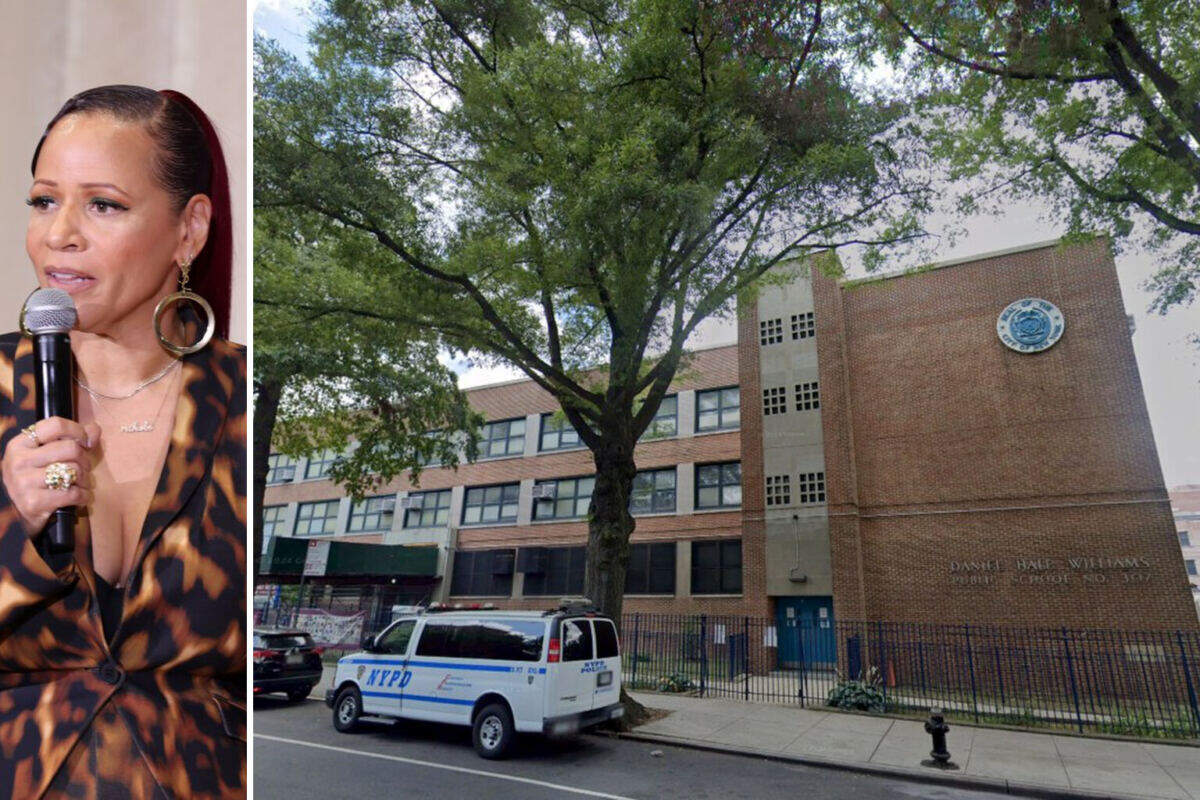
Nikole Hannah-Jones is facing fierce backlash after revealing she deliberately sent her daughter to struggling New York City schools as a personal statement on segregation.
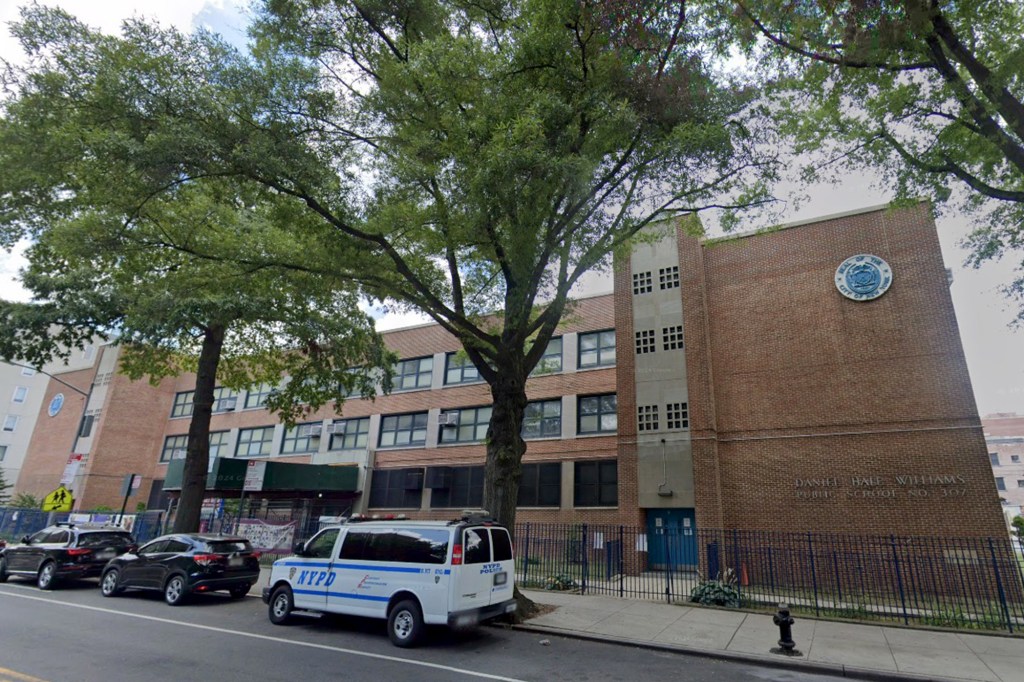
The outlet Magazine writer, 50, who created the outlet’s Pulitzer-winning 1619 Project, published a raw essay Sunday confessing that her now-16-year-old daughter Najya lacked basic academic skills when she reached high school. Hannah-Jones and her husband, who bought a $1.5 million brownstone in Brooklyn’s Bedford-Stuyvesant neighborhood in 2018, had the means to choose elite schools but instead enrolled Najya in mostly low-income, predominantly Black institutions including PS 307 and Urban Assembly Unison.
“We thought by sending Najya to a mostly low-income and black school, we could help improve it for all the children there,” Hannah-Jones wrote in her Times Magazine piece. She acknowledged her daughter confronted her directly about the choice, asking what she had accomplished by refusing to pick the “best” school available.
“The honest answer is, I don’t know,” Hannah-Jones admitted in the essay. “When it comes to the choices my husband and I have made about public education, these days I feel that I failed both my values and my child.”
The Atlantic writer Thomas Chatterton Williams, 44, a faculty member at Bard College, was among the most prominent critics to respond publicly. On X, he shared his own father’s contrasting approach to education.
“I am so thankful my dad wasn’t trying to prove any points to himself or the world and just wanted to send my brother and me to the safest and best schools he could afford (which were not the best around and it tormented him that he couldn’t do more, so he taught us and our friends at home),” Williams posted.
“He did this because he’d been forced into segregated, under-resourced schools before civil rights and knew you have one shot at an education and this isn’t a game,” Williams continued.
Jack Despain Zhou, founder of the Center for Educational Progress, a nonprofit think tank, delivered a blunt assessment on the same platform. He argued Hannah-Jones had violated a fundamental parental obligation by prioritizing activism over her child’s needs.
“You have a duty to your children. It is wrong to use them as vehicles for activism instead of fighting for their interests,” Zhou wrote.
Still, Zhou offered measured praise for Hannah-Jones’s transparency about the outcome. “I don’t want to take a victory lap here, because NHJ could have simply never written this article, and it’s incredibly important that she did,” he added.
The controversy has reignited long-running debates about integration, school choice, and whether affluent families who advocate for public education should themselves remain in the system they critique. Hannah-Jones’s essay arrives as the 1619 Project continues to generate political pushback, with multiple Republican-led states moving to restrict its use in school curricula.
Hannah-Jones’s admission that Najya was “hopping mad” at her for putting “other kids” before her own education has particularly stung readers who accuse her of treating her daughter’s future as expendable. Social media reaction has been sharply divided between those condemning her choice and others defending her willingness to expose its costs.
The 1619 Project, which reframes American history around the consequences of slavery, launched in 2019 and expanded into a bestselling book and Hulu documentary series. Hannah-Jones, who won a Pulitzer Prize for commentary on the project, joined Howard University’s faculty in 2021 after a public dispute with the University of North Carolina over tenure.