


Christa Pike’s legal team says the Tennessee death row inmate likely suffered brain damage after state officials botched her lethal injection execution.
Pike, 50, was strapped to a gurney in the Riverbend Maximum Security Institution’s death chamber just before 7:30 p.m. CDT Wednesday, roughly an hour after the Supreme Court had overturned her stay of execution. The Department of Corrections administered two doses of pentobarbital, the highly potent sedative used in Tennessee’s single-drug protocol, but both failed to kill her.
During the procedure, Pike chillingly lifted her head and asked whether the pain she was feeling was normal, according to her attorneys’ account. When the second dose also failed to stop her heart, her lawyers filed an emergency motion for a stay so she could receive medical care, which District Judge Clifton L. Corker approved. She was then rushed to a hospital and “being provided life-saving measures,” her legal team said.

Dr. Joel Zivot, an Emory University School of Medicine professor retained by Pike’s legal team as a medical expert, said that the amount of pentobarbital in her blood likely never reached a level high enough to stop her breathing and heartbeat.
“It’s very possible that as a consequence of the delay of the beginning of resuscitation she will have a brain injury,” Zivot explained.
Pike’s attorneys pointed to a cascade of failures they had previously warned about. “We take no pleasure in being right, but the concerns raised by Ms. Pike proved to be true: difficult vein access, blown veins, degraded pentobarbital, no emergency medical care available when things inevitably go wrong, all under a protocol that remains veiled in secrecy,” the legal team said in a statement.
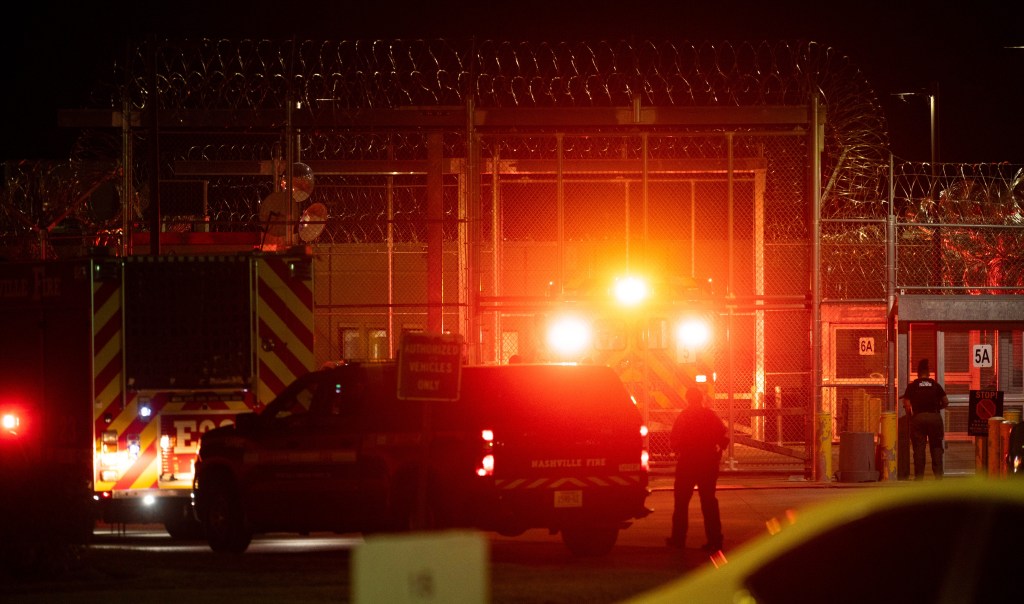
The state’s protocol allows for a second dose of the fatal drug to be administered if the first dose doesn’t have the intended effect, but does not clarify what happens if a second dose fails. Pike’s attorneys also blasted Tennessee officials for ignoring their concerns in advance of the execution.
Tennessee Gov. Bill Lee announced that “a comprehensive, third-party review to determine exactly what occurred” has been ordered, and the state’s lone execution slated for this year has been postponed. Pike’s legal team responded sharply to the overall outcome. “Tonight the State of Tennessee once again failed to carry out a lawful execution,” her attorneys said in a statement.
Pike was sentenced to death for the 1995 murder of Colleen Slemmer, a fellow Job Corps student in Knoxville. Prosecutors said Pike, then 18, and an accomplice lured Slemmer to a remote spot, where Pike beat her with a chunk of asphalt and carved a pentagram into her chest. Pike would have been just the 19th woman executed in the US since 1976, compared to 1,663 men during the same period.
Pike’s execution had initially been halted by a lower court before the Supreme Court cleared the way for it to proceed, setting up the chaotic evening that ended with her hospitalized rather than dead.
Tennessee has not set a new execution date as the third-party review proceeds.