


Christa Pike, 50, survived two lethal injection attempts on September 30 before Tennessee’s governor halted all executions in the state.
Pike had been scheduled to become the first woman executed by Tennessee in more than 200 years. Journalists inside the chamber reported she was “snoring loudly” for up to 40 minutes after the first dose of pentobarbital was administered. The drug failed to kill her, and a second attempt also proved unsuccessful before officials called off the execution entirely.
Dr. Jonathan Groner, Emeritus Professor of Clinical Surgery at Ohio State University College of Medicine, explained how pentobarbital functions when used in executions. “It is a short acting barbiturate. It is used to treat seizures and can be used for ‘medically induced coma’ for patients with severe head trauma,” he said.
“It can also be used for procedural sedations. It is no longer used for general anesthesia,” Groner continued.
According to Groner, the sedative becomes “less effective” if it leaks from the vein or if the IV fails to enter a blood vessel properly. In those cases, “the drug will end up under the skin instead of in the circulation,” rendering it ineffective. When administered correctly, a person should stop breathing and die within 15 to 20 minutes, he noted.
Regarding pain, Groner said it is “unlikely” to cause discomfort if done correctly, but “highly likely if administered improperly.”

Matt Wells, Deputy Director of Reprieve US, had warned of precisely this outcome months earlier. In July, Wells said: “Two months ago, Tony Carruthers was strapped to a gurney for over an hour while prison staff stabbed him with needles more than a dozen times as they failed to establish an IV line.”
“This is not an isolated incident,” Wells added. “Our research showed that more than a quarter of botched lethal injections in the modern era lasted over an hour.”
Wells continued: “The fact that Tennessee is doubling down on this broken execution method, so soon after torturing a man in the chamber, is beyond belief. There is a high risk that Christa Pike could suffer a prolonged and agonizing death.”
A 2019 federal court ruling in Ohio addressed the specific horror of pulmonary edema, a condition that has occurred during multiple lethal injections. The court found: “All medical witnesses to describe pulmonary edema agreed it was painful, both physically and emotionally, inducing a sense of drowning and the attendant panic and terror, much as would occur with the torture tactic known as waterboarding.”
Pike was transported to a hospital following the failed execution, with her last confirmed status being alive and under medical care. Tennessee Governor Bill Lee subsequently ordered a third-party review of the state’s execution protocols and canceled the year’s final scheduled execution.
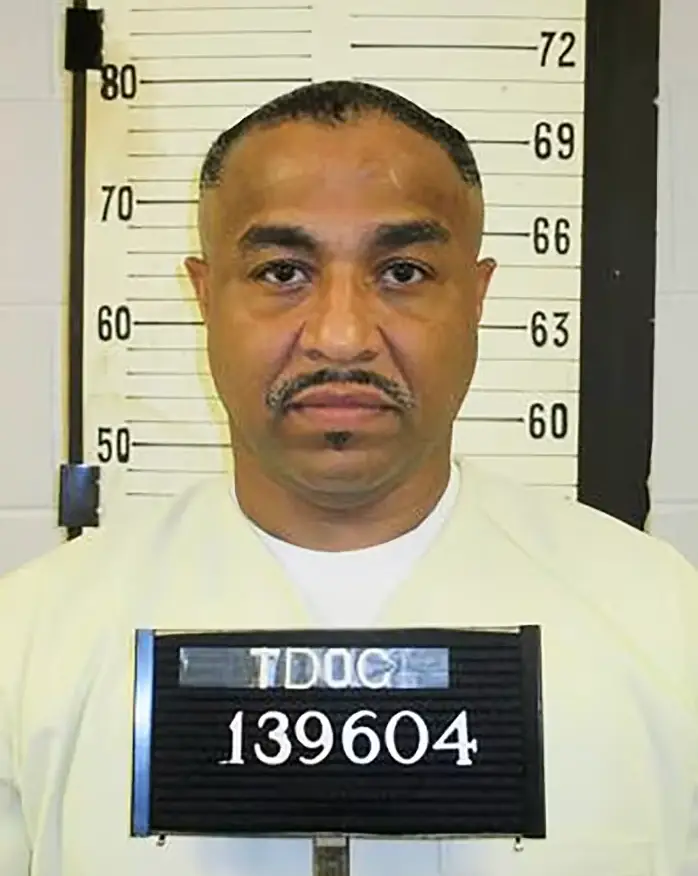
Pike was convicted for the 1995 torture and murder of Colleen Slemmer, a fellow Job Corps student in Knoxville. Prosecutors said Pike, then 18, and an accomplice lured Slemmer to a remote spot, where they beat her with a chunk of asphalt and carved a pentagram into her chest. Pike has spent nearly three decades on death row, making her one of the longest-serving female death row inmates in modern American history.
The governor’s review is underway as Tennessee’s remaining execution dates remain suspended.