

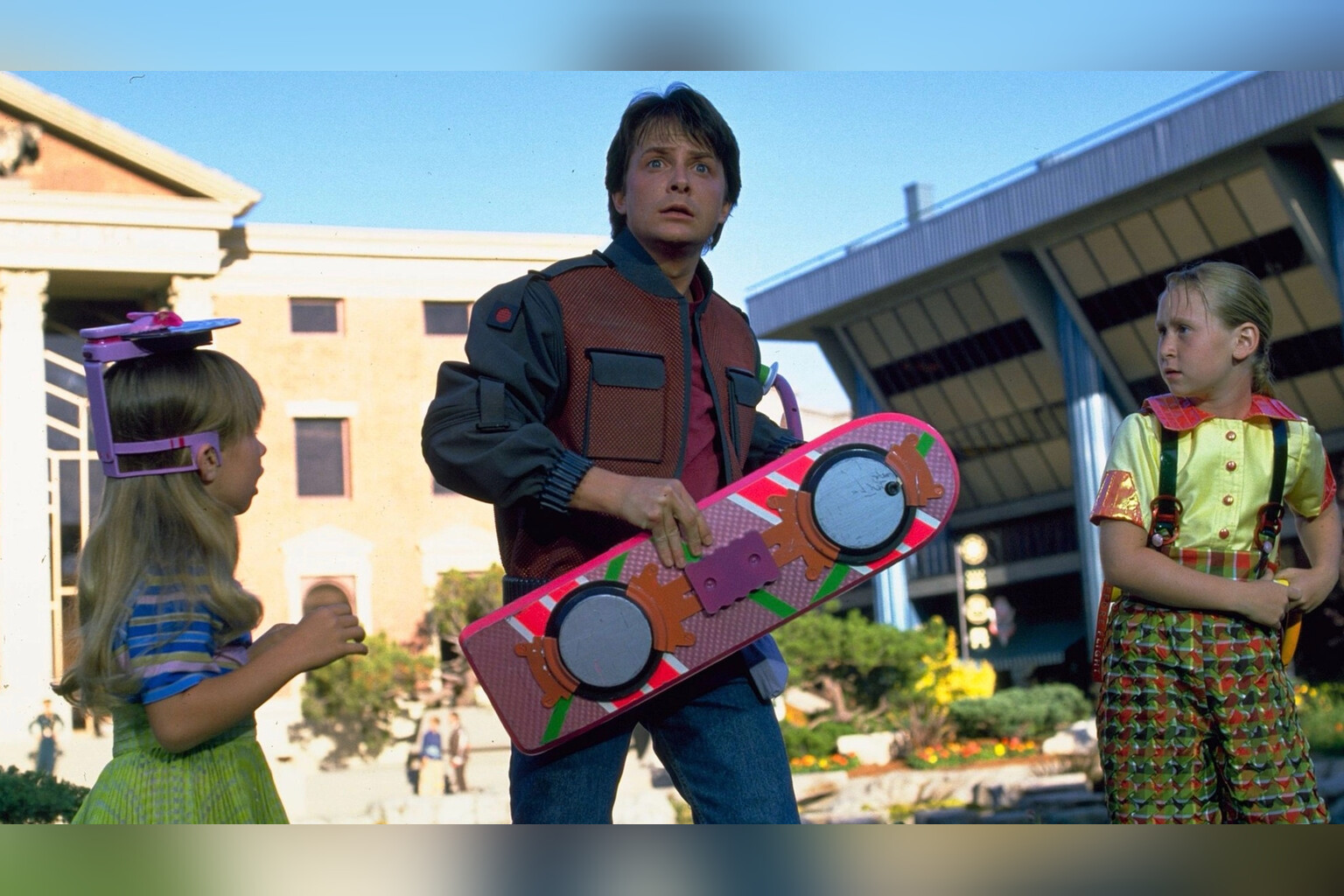
Back to the Future Part II’s 2015 predictions look startlingly accurate three and a half decades after the film’s release.
The 1989 sequel, directed by Robert Zemeckis, sent Marty McFly and Doc Brown hurtling into October 21, 2015 — a date that arrived ten years ago and sparked annual reappraisals of what the movie got right. Michael J. Fox’s character encountered a world of flying cars, hoverboards, and automated dog-walkers, yet the film’s quieter technological forecasts have aged into everyday reality.
Voice-activated home control serves as perhaps the most invisible success. The McFly household features lights and appliances that respond to spoken commands, a sequence that plays as comedy when Jennifer accidentally triggers them. That same capability now powers millions of homes through Amazon’s Alexa, Apple’s Siri, and Google Assistant, with smart speakers and displays routine purchases rather than futuristic novelties.
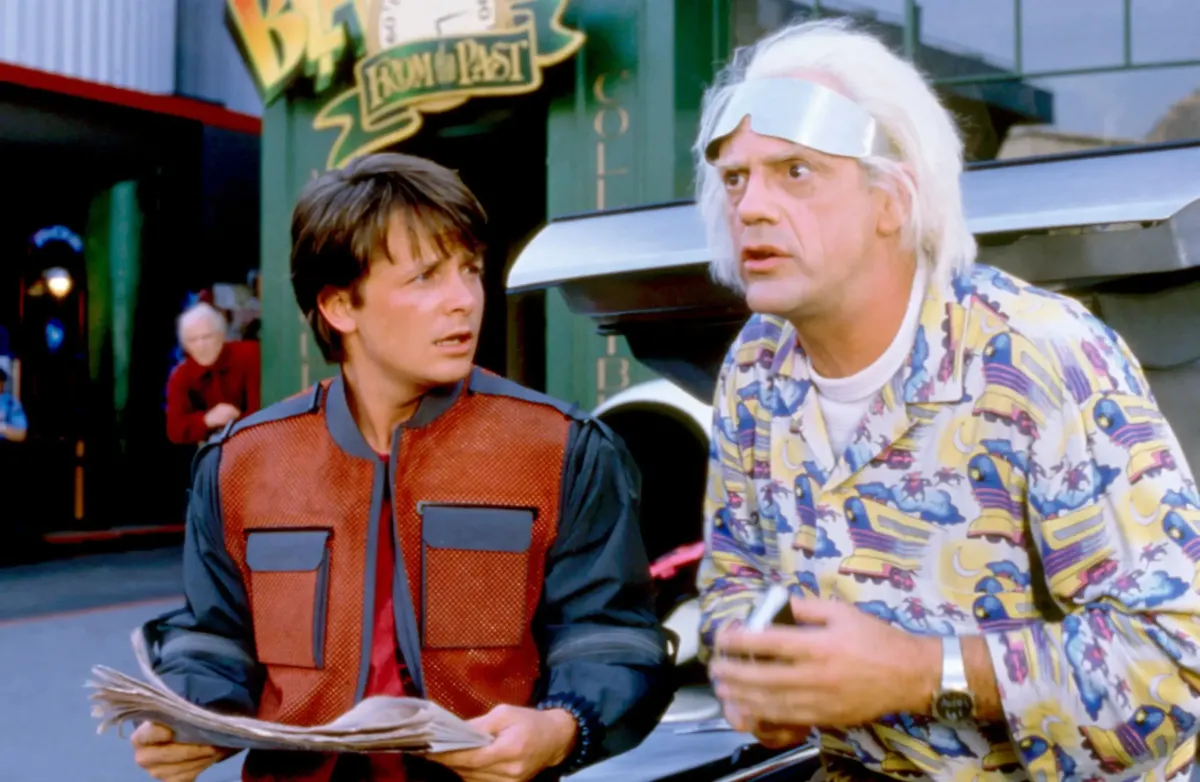
Video communication represented one of the sequel’s most visually memorable predictions. Characters appear on large screens for face-to-face conversations across distances, a concept now so ordinary that platforms like FaceTime, Zoom, and Microsoft Teams sustained global business and social life through the pandemic years. The film’s bulky CRT monitors have slimmed to pocket-sized rectangles, but the underlying behavior matches exactly.
Marty’s smart glasses generated renewed attention with Apple’s Vision Pro launch and Meta’s ongoing eyewear experiments. The character’s frames display incoming calls and video feeds directly in his field of vision, functionality that modern headsets approximate with mixed-reality overlays and camera integration. The aesthetic remains deliberately clunky in the film — a 1980s vision of 2010s design — yet the conceptual parallel holds.
Holographic imagery provided one of the sequel’s showiest moments, when a massive digital shark lunges from a cinema marquee toward a terrified Marty. That particular application remains theatrical, but hologram technology has migrated into concert resurrections of deceased performers, political campaign appearances, and museum installations where projected figures address live audiences.
The film’s synopsis establishes the narrative stakes that enable these future glimpses: “Marty McFly, who has just returned to the year 1985 from the year 2015 after time travelling, must travel back to the year 1955 after Biff uses a sports almanac to change various events in 1985.” The alternate-1985 timeline that results offers a darker counterfactual, though the technology-focused 2015 sequences dominate popular memory.
Wearable technology beyond glasses surfaces in other background details — characters sport automated clothing adjustments and biometric monitoring that prefigured fitness trackers and smartwatches. The film never lingers on these elements, treating them as unremarkable features of daily life, which itself constitutes a subtle predictive success.
Hoverboards and flying cars, the predictions most frequently cited in popular culture, remain unrealized at commercial scale. Several companies have demonstrated prototype personal aircraft and magnetic-levitation skateboards, but neither approaches the accessibility the film imagined. The DeLorean’s fusion-powered flight, modified for 2015 traffic lanes, stays firmly in the realm of dramatic invention.
The gap between cinematic prediction and engineering reality has not diminished the film’s reputation among technology observers. Its accurate forecasts about interface design and communication patterns — the ways humans would interact with machines rather than the machines themselves — demonstrate a sophistication unusual in science-fiction worldbuilding.
The 2015 target date passed without universal recognition, though anniversaries since have prompted retrospectives examining which elements materialized. The film’s production designers consulted with technology researchers in the late 1980s, incorporating speculative but grounded concepts alongside deliberately fantastical spectacle.
That deliberate mixture — plausible near-future alongside playful impossibility — may explain the film’s enduring relevance as a cultural benchmark. Audiences can measure actual progress against its vision while forgiving its excesses as genre entertainment.
The trilogy’s first installment remains the critical favorite, yet Part II’s structural ambition and temporal complexity have gained defenders in subsequent decades. Its future sequences, initially criticized as overstuffed, now read as prescient in their attention to how technology reshapes ordinary domestic spaces.
October 21 continues to circulate as an unofficial commemoration date for fans, with social media resurfacing comparisons between film and reality. The specific calendar reference, chosen arbitrarily during production, has acquired significance through repetition rather than narrative importance.