

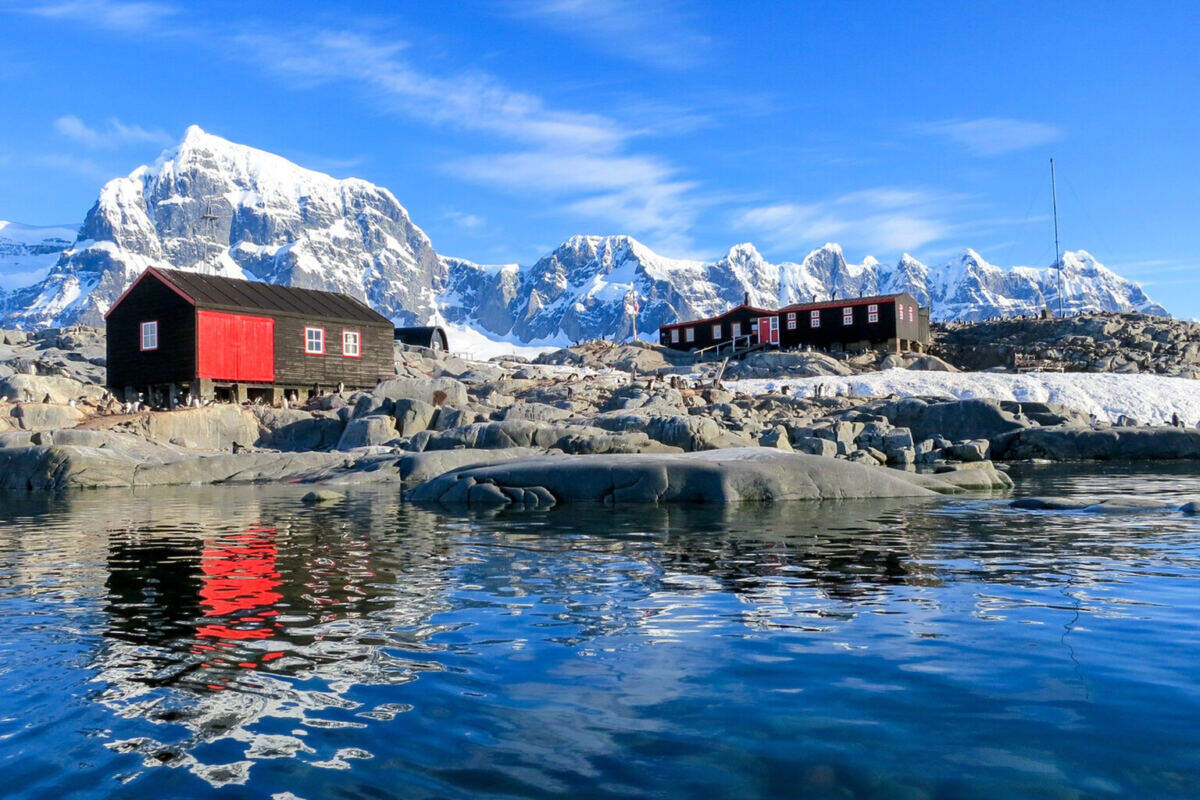
Carole McCullough and George Clarke have revealed what unnerves them most about spending five months at Port Lockroy, the historic British base that hosts the world’s southernmost post office.
McCullough, a former Royal Air Force officer with 18 years of service, will lead the team at the Antarctic Peninsula outpost. Clarke, whose background spans the arts, music events and construction, is returning for his third season running the postal operation.
“I’m probably most nervous about the journey there,” McCullough admitted. “Crossing the Drake Passage is notorious, and I get seasick, so that’s definitely playing on my mind.”
The Drake Passage, the stretch of water between South America and Antarctica, has earned its fearsome reputation among mariners. For McCullough, the crossing represents the first major hurdle before she even sets foot on the island.
Once arrived, she expects the remote environment itself to pose fewer problems. She has previously worked in isolated settings and shared accommodation with strangers, experience she believes will help her adjust to the close-knit team dynamic.
Clarke’s outlook stands in marked contrast. “To be honest, my overwhelming feeling isn’t nerves, it’s excitement,” he said. “Every season is different. Conditions change constantly and there are always surprises, so I’m mostly just excited to get back and get stuck into it all again.”
The pair will live without running water or flushing toilets, sharing cramped quarters with their teammates while surrounded by roughly 1,000 gentoo penguins. The birds, Clarke noted, shape daily life in unexpected ways.
“The noise and the smell,” he said, when asked what might surprise outsiders about the experience. “There are only six people on the island, but we’re sharing it with around 1,000 penguins. They make a lot of noise and, frankly, quite a lot of smell.”
Despite his enthusiasm, Clarke acknowledged certain hardships. “Time alone can be hard to come by,” he said. “And of course, I’ll miss family and loved ones. It’s a long way from home.”
McCullough pinpointed a different deprivation. “I think what I’ll miss most is being able to go for a run and clear my head,” she explained. “But then again, stepping outside into Antarctica every day should make up for that.”
The Antarctic summer brings another challenge: daylight that barely seems to end. With the sun remaining visible for long stretches, the team must impose its own routine to ensure adequate rest.
“George had a great idea from a previous season of bringing one of those alarm clocks that gradually lights up, because otherwise you’re constantly moving between blackout curtains and full daylight,” McCullough said.
Clarke explained that closing the curtains in the evening helps simulate night inside the accommodation. Yet stepping outside the next morning can still feel disorienting when sunlight is already blazing.
“We have to remind ourselves that even if it’s bright daylight at 8pm, it’s still evening and we need to rest,” McCullough said. “Otherwise it would be very easy to stay awake constantly.”
For Clarke, the gradual return of darkness later in the season ranks among the most memorable phenomena. “One of the amazing moments towards the end of the season is when darkness starts returning,” he said. “Suddenly you realise you haven’t seen a sunset in months. When that golden hour finally arrives, it’s really special.”
The wildlife provides constant spectacle even during mundane tasks. “Honestly, just looking out of the window,” Clarke said, describing his favourite pastime. “Whether you’re in the museum, the post office or washing up, you can look outside and see whales passing by, seals in the water or penguins wandering past the door.”
“The remarkable thing is that eventually it becomes normal, and that’s what makes it so special.”
McCullough traced the site’s origins to Operation Tabarin, a British wartime operation established in 1944. “It’s essentially a time capsule from the 1940s and 1950s,” she said. “To become part of that story and help preserve it for future generations is really exciting.”
The buildings preserve bunk rooms, a kitchen and a workshop alongside original objects including food tins, hand tools and coal stored in the bunker. McCullough noted that many visitors are surprised to discover there is a museum in Antarctica at all.
Both recruits were drawn to the opportunity through the UK Antarctic Heritage Trust, which cares for six historic sites in the region. McCullough spotted the job advertisement and found herself increasingly drawn to the charity’s mission.
“The remoteness is a huge part of the appeal,” she explained. “Antarctica is somewhere people dream of visiting one day.”
“The more I learned about the charity and what it does, the more I realised what a privilege it would be to become part of that history,” she added.
Clarke had already absorbed that perspective during previous postings. “Going to Antarctica is a once-in-a-lifetime opportunity, and working for the UK Antarctic Heritage Trust is incredibly special,” he said. “When I was offered the chance to go back again, it was too good to pass up.”
Team members can send a personal box ahead containing comforts from home. McCullough’s includes cup-a-soups, birthday presents and plenty of Freddo bars.
The roles are not restricted to scientists, Clarke emphasised. “If you’ve ever dreamed of going to Antarctica, you should apply,” he said. “Most opportunities to go there require specialist scientific skills, but these roles are open to people from all sorts of backgrounds.”
“What you really need is a sense of adventure and the ability to live closely with other people.”
McCullough concurred about the unconventional nature of the undertaking. “Well, they’re right, it is a little bit mad,” she said.
“But if you make it to Antarctica, it’s a genuinely extraordinary experience,” she continued.
Daily responsibilities include welcoming visitors, boarding ships and postmarking postcards, though the work shifts constantly with the weather. “There really isn’t a typical day because the weather can change in an instant,” Clarke explained. The team also pitches in with chores and assists carpenters conducting conservation work on the historic structures.
The summer posting will span five months at the remote peninsula base.