

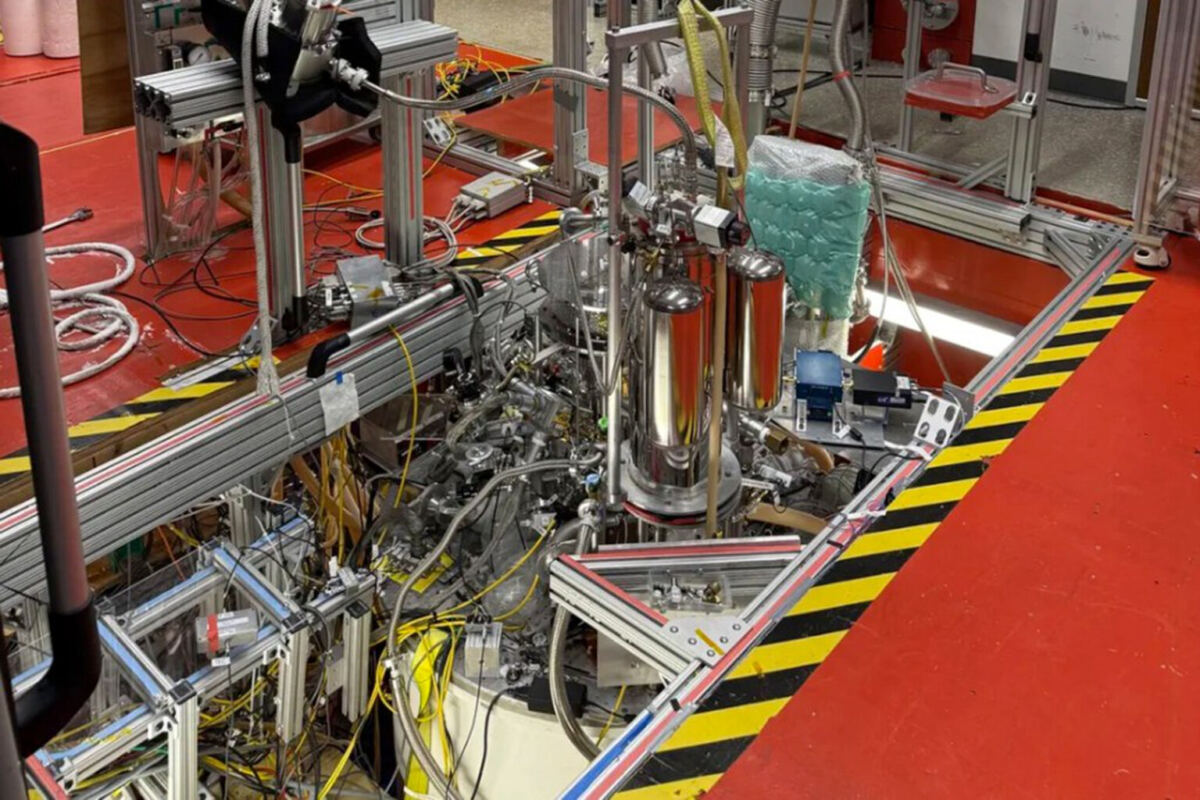
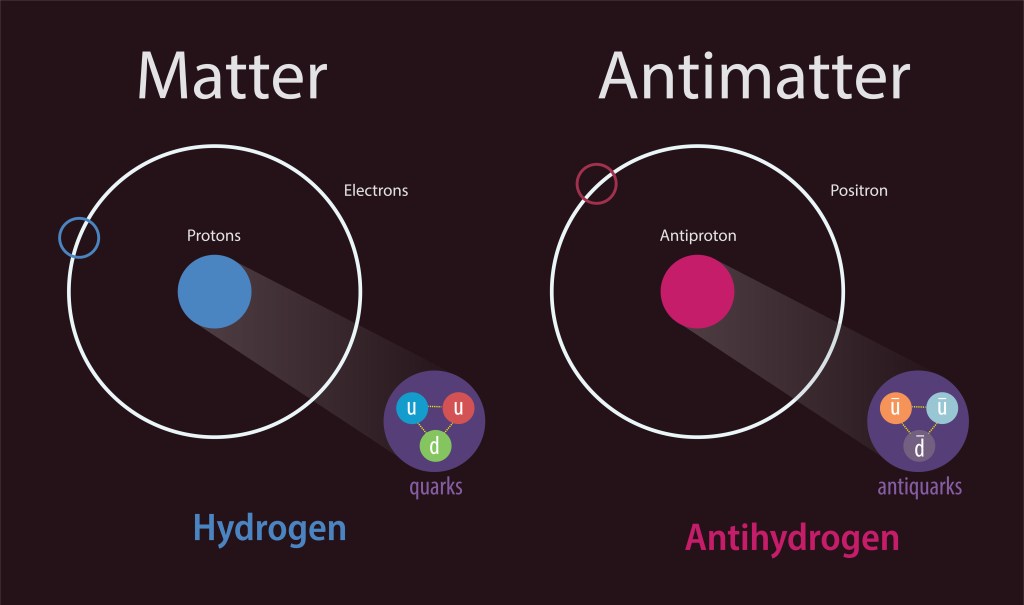
A Northwestern University team has trapped a single antimatter particle for months using extreme cold and magnetic suspension, a breakthrough that could test whether the elusive substance behaves differently from ordinary matter.
The experiment, led by physicist Gerald Gabrielse, marks the first time researchers have held a lone positron in its lowest energy state long enough to study it with unprecedented precision. Gabrielse, who has spent decades refining techniques to isolate antimatter, told Interesting Engineering that the feat required coaxing an incredibly fast particle to slow down and remain stable.
“We actually coaxed this very fast positron to sit there and behave for months at a time,” he said.
The team built a specialized device they call a “one-positron quantum cyclotron” to accomplish this. Operating at temperatures just 0.3 degrees above absolute zero — roughly negative 459.67 degrees Fahrenheit — the apparatus uses invisible magnetic and electric forces to levitate the particle in a vacuum, preventing any contact with ordinary matter that would trigger instant annihilation.
The positron was harvested from radioactive material, then painstakingly slowed and cooled until it could be captured. Gabrielse identified this deceleration as the most formidable technical hurdle the team faced.
Once immobilized, the particle remained suspended in midair for an extended period, allowing researchers to probe its properties with roughly thirty times greater precision than previous methods permitted. The findings were published in Physical Review Letters.
The stakes extend far beyond laboratory curiosity. The experiment addresses one of cosmology’s deepest puzzles: why the universe consists almost entirely of matter when the Big Bang should have produced equal amounts of matter and antimatter. Under standard models, the two forms should have annihilated each other billions of years ago, leaving nothing behind.
“Current theories suggest that there will be no difference in the two measurements,” Gabrielse said.
“If it turns out they are not equal, that would be the biggest discovery in physics in the last century,” he added.
So far, initial observations indicate the trapped positron behaves identically to its ordinary-matter counterpart, the electron. The new apparatus, however, opens the door to detecting even minute discrepancies that earlier instruments could not resolve.
The research emerges amid growing scientific scrutiny of conventional Big Bang models, with some theorists proposing alternative origin scenarios including a “bounce” mechanism within black holes.
The American Physical Society noted that the enhanced precision of Gabrielse’s device could prove decisive in settling long-standing questions about fundamental physics. Antimatter’s explosive interaction with ordinary matter makes any containment effort extraordinarily perilous; a single breach in the vacuum chamber or magnetic field would destroy both the sample and potentially damage surrounding equipment.
The Northwestern team spent years developing safeguards against such catastrophic failure. Their success in maintaining isolation for months represents a dramatic leap from earlier experiments that managed only fleeting captures of antimatter particles.
The cyclotron’s design exploits quantum effects achievable only at temperatures approaching absolute zero, where molecular motion nearly ceases and electromagnetic manipulations become exquisitely controllable. This extreme environment, combined with sophisticated vacuum technology, creates conditions stable enough for long-term observation.