

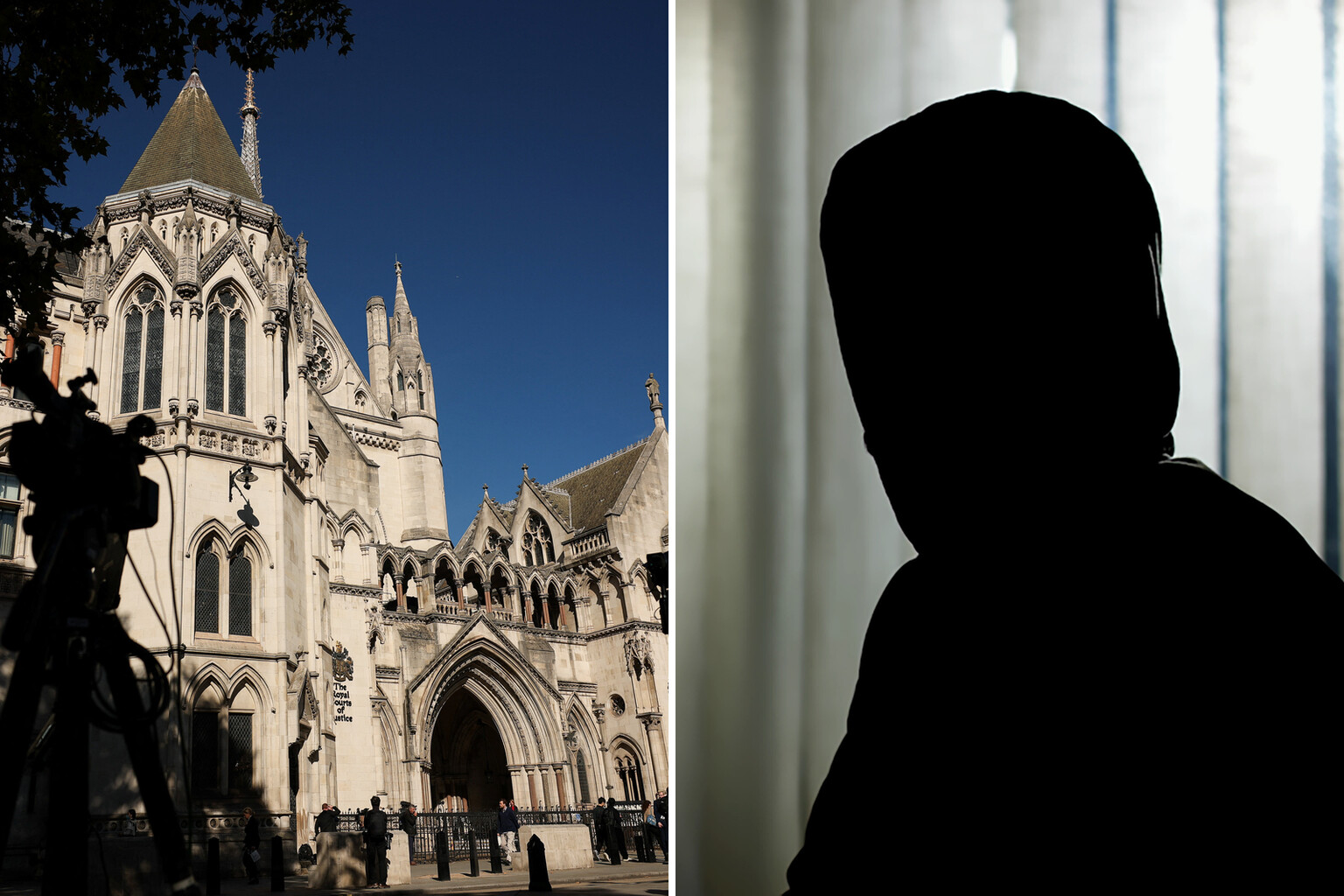
A male celebrity known only as PPT is battling in London’s High Court to prevent his name from being published amid sexual misconduct allegations.
The entertainer, whose identity remains concealed by court order, applied for an injunction on Tuesday as Guardian News and Media and ITN prepared to publish investigative reports. His legal team warned that publication would make him “highly likely” to attempt suicide.
Sara Mansoori KC, the barrister representing PPT, told the court her client had already tried to end his life twice after receiving requests for comment from the news organizations. He was hospitalized for months following the attempts, subjected to involuntary detention, and examined by more than 10 doctors.
“The claimant has attempted suicide twice as a result of these matters, been hospitalised for months, been the subject of involuntary detention and been examined by multiple — now more than 10 doctors,” Mansoori continued, adding that PPT “has no intention of returning to public life.”
Mansoori emphasized that the mental health concerns were not manufactured to block reporting. “This is not a case where an individual has spuriously raised ‘mental health’ concerns in the face of an impending publication that they do not wish to occur,” she told the court.
The barrister delivered a stark assessment of what she believed publication would mean for her client. She said the only reason the articles would not prove fatal is that PPT would be “locked up and prevented from his desire to end his life.”
PPT’s lawyers denied the core allegations outright. They told the court their client vehemently rejected claims that he used “his power and position as a celebrity to contact and forge relationships with young women and teenagers to try to have sex with them.” They framed his suicide risk as stemming from fear of “trial by media” rather than any acknowledgment of wrongdoing.
The news organizations mounted a robust defense of their reporting. Gavin Millar, representing ITN and GNM, revealed journalists had conducted a “wide-ranging and rigorous investigation” that gathered “numerous allegations” and included interviews with 100 people.
Millar stated that many of the women who came forward “have been traumatised by the claimant’s alleged conduct and have suffered mental health crises and mental illness as a result.”
The outlets argued there was no legitimate basis “to restrain the publication of public interest journalism” and contended that the celebrity’s suicide risk could be managed and lowered.
A medical report presented to the court indicated PPT could undergo treatment that would improve his mental health significantly, though it would not completely eliminate the risk.
Mr. Justice Nicklin, presiding over the case, acknowledged the public interest at stake. He described it as “a difficult and important” matter. The judge clarified that his role was limited to determining whether the claims could be published; he was not ruling on whether the allegations themselves were true. He also urged the public to refrain from speculating about the celebrity’s identity.
The case centers on competing claims of harm. PPT’s team points to documented psychiatric crises and repeated hospitalizations triggered by the prospect of exposure. The news organizations counter that their journalism serves the public interest and that multiple women have already suffered trauma they attribute to the celebrity’s conduct.
The allegations involve claims that PPT leveraged his fame to pursue sexual contact with young women and teenagers, though these remain unproven and are strongly denied through his legal representatives.
The hearing continues as Nicklin weighs whether an interim injunction should remain in place.