

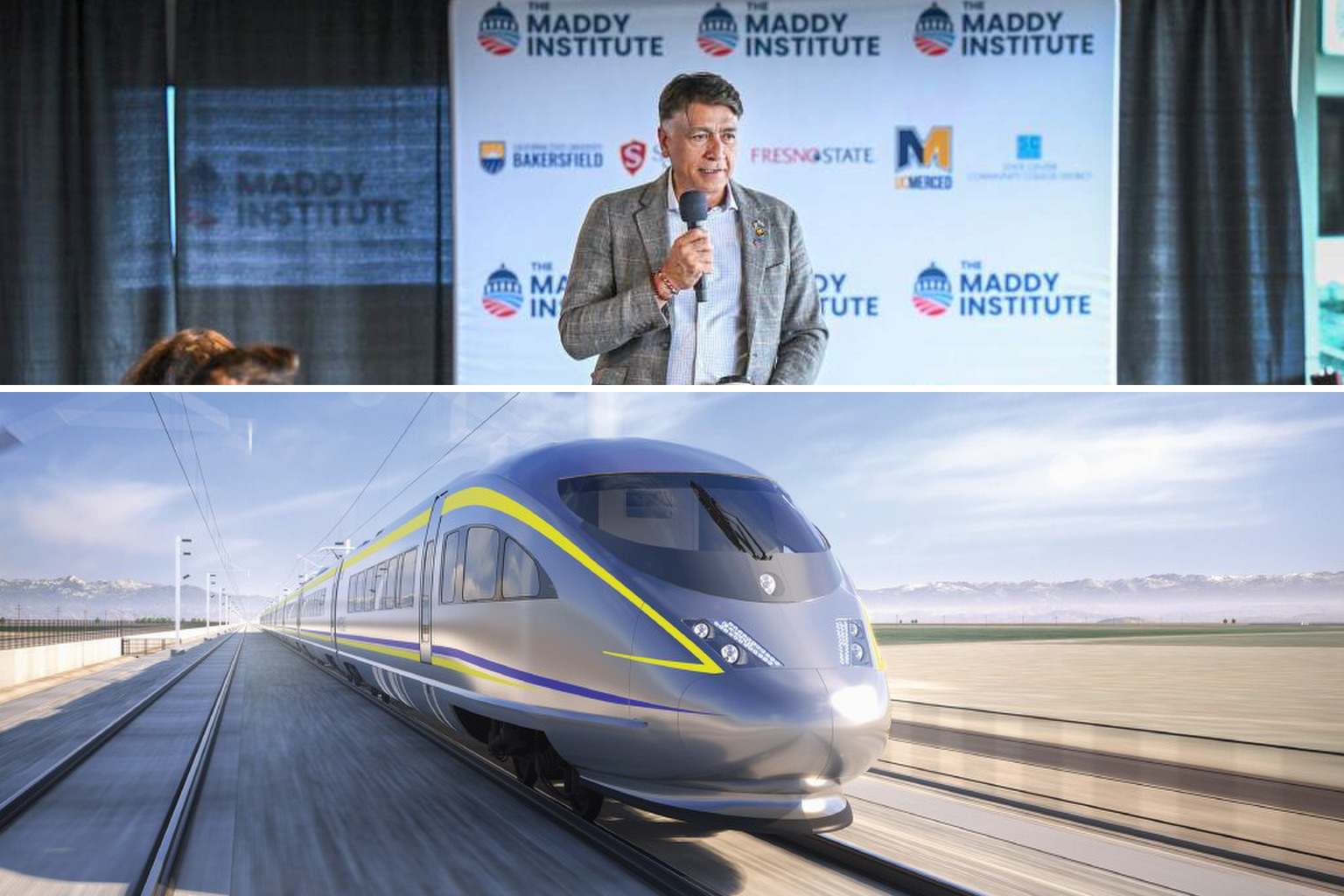
Ian Choudri has stepped down as chief executive of the California High-Speed Rail Authority.
Choudri, who led the state’s beleaguered bullet train project, submitted his resignation on Wednesday during a pivotal two-day board meeting in Sacramento. His departure leaves the $231 billion initiative without permanent leadership at a moment when its future remains deeply uncertain.
The CEO framed his exit as a personal crossroads rather than a concession to the project’s troubles. “This has not been an easy decision, as leading the Authority has been one of the most meaningful and rewarding chapters of my professional life,” he wrote in a resignation email.
No successor has been named, and the board gave no immediate indication of how it would fill the vacancy. The timing of Choudri’s announcement — mid-meeting, with oversight discussions still unfolding — caught observers by surprise and raised fresh questions about whether internal pressure hastened his departure.
The rail authority has spent years defending a project that has ballooned far beyond its original scope and budget. What began as a voter-approved plan to connect Los Angeles and San Francisco with 220-mile-per-hour trains has become a symbol of infrastructure overreach, beset by route disputes, environmental lawsuits, and repeated deadline collapses. Costs have surged past initial estimates by tens of billions of dollars while the first operational segment remains years away.
Choudri’s tenure was marked by these accumulating setbacks. The project, approved by voters in 2008 with a $33 billion price tag and a 2020 completion target, now carries a projected cost roughly seven times higher with no firm date for passenger service. Land acquisition disputes in the Central Valley, tunneling challenges through mountain ranges, and shifting political priorities in Washington have each compounded the delays.

The authority’s board convened its regular two-day session this week expecting to review construction progress and federal funding negotiations. Choudri’s resignation email arrived unannounced, transforming the meeting’s agenda and forcing directors to confront leadership instability atop the project’s other crises.
Board members did not immediately comment on whether they had sought Choudri’s departure or attempted to dissuade him. The authority’s public statements offered only confirmation of the resignation without elaboration on circumstances or next steps.
California’s bullet train has survived multiple near-death moments through sixteen years of political and financial turbulence. Governors have threatened to pull support; Republican congressional majorities have blocked federal appropriations; and state auditors have repeatedly warned that the authority lacks credible paths to complete even the initial Central Valley segment. Through each challenge, the project has persisted on incremental funding releases and revised construction schedules that critics dismiss as fantasy.
Choudri’s exit tests whether that resilience can hold without consistent executive direction. The authority has cycled through leadership before, but never at a moment when construction costs are climbing, federal partners are unpredictable, and public patience has worn so thin.
The outgoing CEO offered no public criticism of the project or its overseers in his resignation message, nor did he signal future plans. His email emphasized personal fulfillment over institutional grievance, a restraint that distinguished his departure from more combustible exits by previous public officials entangled in the rail initiative’s difficulties.
What happens next depends heavily on the board’s urgency in selecting replacement leadership and whether Sacramento lawmakers continue appropriating funds amid competing demands for housing, water infrastructure, and wildfire response. The authority’s next board meeting has not been scheduled.