

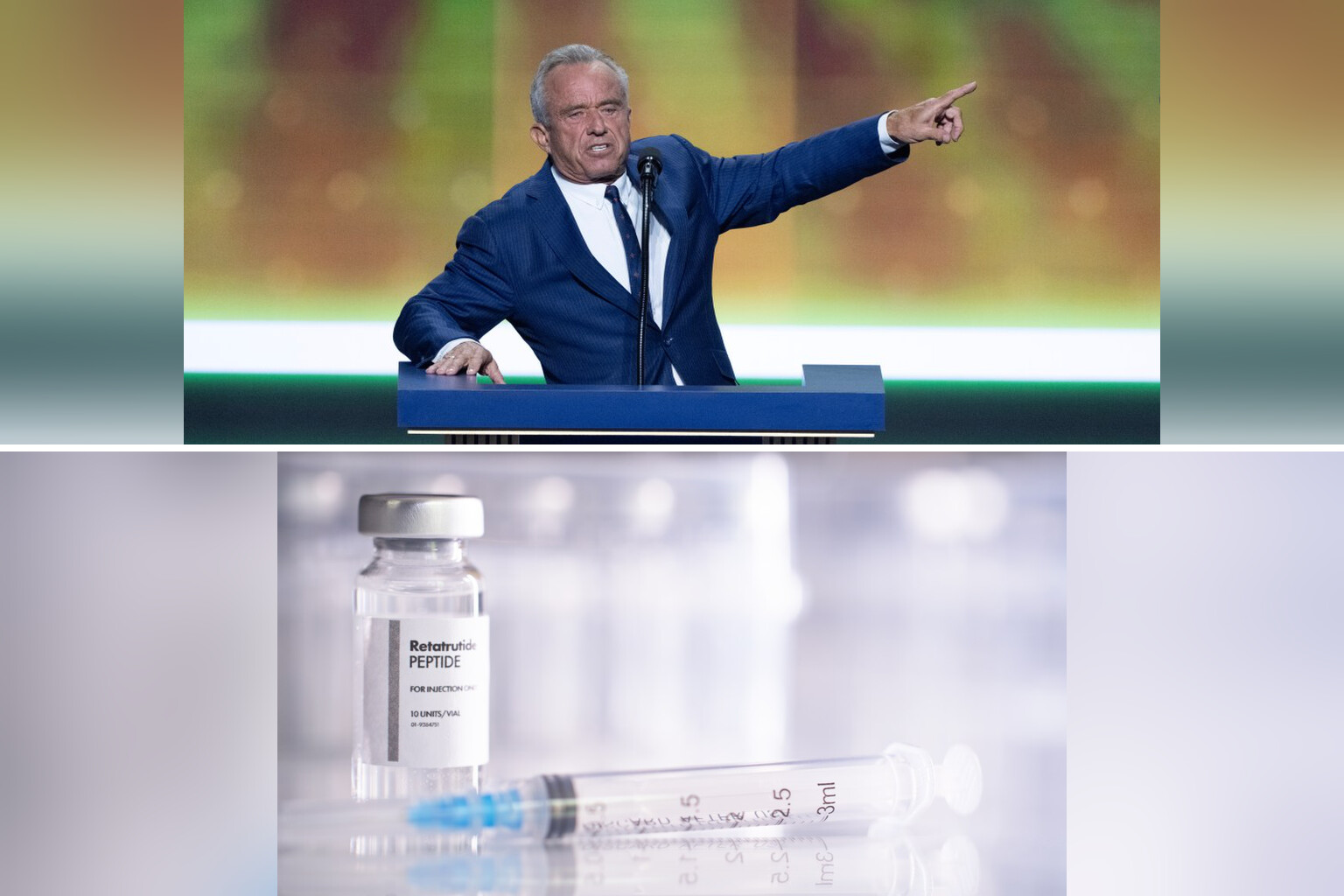
The Trump administration moved Wednesday to open the door to unapproved peptide injections, brushing aside objections from FDA scientists who warned the policy could flood the market with unsafe wellness drugs.
Robert F. Kennedy Jr., 71, the Health and Human Services secretary, posted the draft policy online through his department, covering six injectable peptides including BPC-157, TB-500 and KPV. The chemicals, promoted in wellness circles for muscle growth, injury healing and energy boosts, have never completed the FDA’s safety and effectiveness review. The government will accept public comments for two weeks before making the measure final.
Six people familiar with the policy’s development said that FDA scientific staffers had minimal input and opposed the changes outright. The document was written primarily by HHS officials, not the agency normally responsible for keeping unproven drugs off the market.

Kennedy has called himself a “big fan” of peptides and previously said he used BPC-157 to treat a muscle injury. In the document posted online, he determined the change “advances patient choice and freedom” while protecting Americans from peptides sold online that are “often made from ingredients of unknown origin and quality.”
The policy directs the FDA to stand down from enforcing its rules against specialty pharmacies that compound the six peptides. Under standard regulations, these chemicals would be considered illegal drugs. The shift marks a sharp departure from the FDA’s longstanding efforts to limit unproven wellness products, including peptides, stem cell therapies and supplements making unsupported medical claims.
HHS officials initially pushed for a more formal route: an FDA regulation that would add BPC-157 and other peptides to a list of substances deemed safe for compounding pharmacies. FDA officials warned that their scientific staffers had major safety concerns and would not back such a regulation. HHS pivoted to the current approach, which simply directs the FDA not to enforce its own rules.
FDA staffers ultimately provided technical assistance in drafting the plan, including safety guardrails such as requiring pharmacies to use peptide ingredients from FDA-registered factories, collect side effect information and verify purity. Dr. Peter Lurie, a former FDA official who now leads the nonprofit Center for Science in the Public Interest, pointed out that the FDA lacks authority under federal law to enforce those pharmacy requirements.
“This is a wink and nod to the MAHA faithful in the hope that they’ll show up at the polls,” said Lurie, referring to Kennedy’s “Make America Healthy Again” movement. He noted that the FDA has already approved rigorously tested drugs for the conditions these peptides target, including insomnia, anxiety, inflammatory conditions and migraines. As people “are diverted from those drugs toward this stuff, there will be more unnecessary pain and suffering,” he said.
The timing drew scrutiny from Lurie, coming days before the midterm election. The decision is the latest example of Kennedy reshaping US health policy in the MAHA mold, a movement whose biggest figures sell peptide injections and supplements.
Lee Rosebush of the American Academy of Peptide Medicine, which represents people who prescribe or sell peptides rather than a traditional medical professional society, said in an online post that HHS had taken “a huge step for patient and provider medical freedom.”
The peptide business has already attracted major telehealth providers. Hims & Hers recently announced plans to offer wellness peptides once government policy shifted, and Wall Street analysts estimate the market could exceed $2 billion. Many current peptide users bypass doctors and pharmacies entirely, ordering vials online from chemical manufacturers based in China. Sellers frequently label products “for research use only” to skirt FDA oversight.

The Alliance for Pharmacy Compounding, representing specialty pharmacies, said several details remain unclear, including when the policy takes effect and how it will interact with state pharmacy boards that traditionally regulate pharmacists. The group noted that decisions about regulating peptides and compounding pharmacies have almost always come from the FDA, which maintains an office dedicated to protecting consumers from unsafe compounded drugs.
That safety mission gained urgency after a 2012 fungal meningitis outbreak killed dozens and was traced to contaminated injections from a Massachusetts compounding pharmacy. The incident transformed compounding from a niche business into a multibillion-dollar industry under intensified scrutiny. In 2023, the FDA added more than a dozen peptides, including BPC-157 and TB-500, to its list of substances that should not be compounded, citing risks of allergic reactions, kidney damage and tumor growth.
At a July meeting, FDA staffers reiterated that more than half a dozen peptides up for reconsideration remained unproven for safety and effectiveness. But a panel of outside experts selected by Kennedy’s HHS voted to drop restrictions on the six peptides named in Wednesday’s document. The panel included several doctors, pharmacists and consultants working in the peptide field.
An HHS spokesperson defended the policy, saying the agency is “confronting the risks of black-market peptides” by giving Americans “a more controlled alternative through licensed US compounders.”
The two-week public comment period on the draft policy runs through the department.