

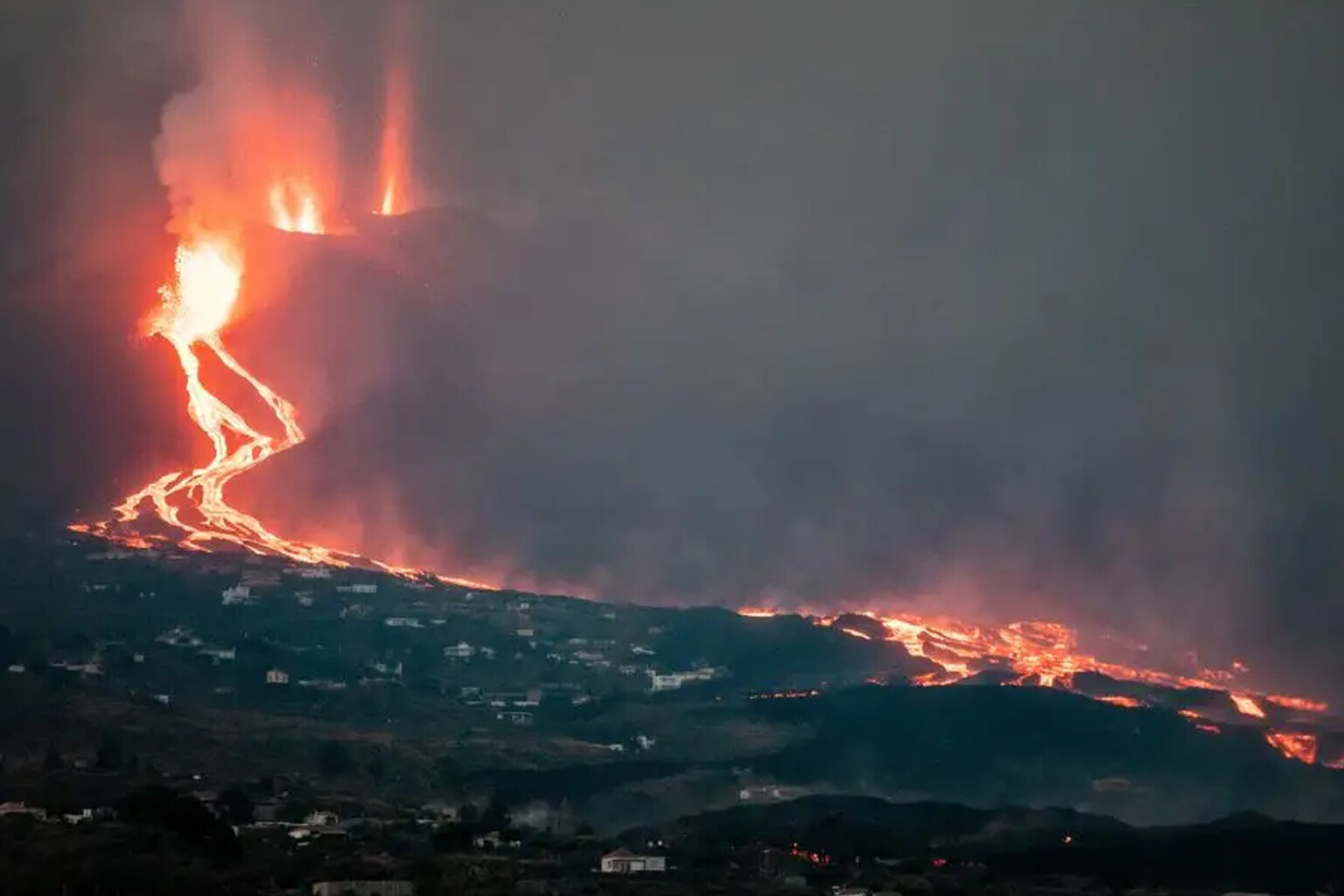
Volcanologist Bill McGuire has issued a fresh warning that a catastrophic Atlantic megatsunami could eventually strike the US East Coast.
McGuire, a professor who has spent years studying Cumbre Vieja on La Palma in Spain’s Canary Islands, wrote in BBC Science Focus that he expects part of the volcano’s flank will eventually crash into the North Atlantic. The active volcano, located on an island thousands of miles from American shores, has become the subject of intense scientific debate over the scale of potential destruction.
“Based on extensive studies, I expect this part of the flank will eventually crash into the North Atlantic, launching a megatsunami in the process,” McGuire explained in the magazine.
“There has been huge debate and discussion, sometimes quite heated, about the level of expected destruction, and – in particular – whether devastating waves will reach the coast of North America.”

One predictive model suggests a worst-case collapse would generate an initial dome of water almost a kilometer high, sending destructive waves directly toward Florida. Those waves could reach the Eastern Seaboard approximately nine hours after collapse, leaving minimal time for mass evacuation.
McGuire pointed to ancient evidence to bolster his case. “Huge boulders dumped on shore in the Bahamas are believed to have been carried there by ancient tsunamis sourced in the Canary Islands, suggesting that a Cumbre Vieja tsunami would have the potential to be hugely destructive even after crossing the Atlantic, but this is disputed by some,” he added.
“However, when it comes to disaster management, betting on the smallest outcome is rarely a good idea.”
The Tsunami Society has directly challenged such warnings, issuing a paper to address what it called unfounded reports about a future Atlantic catastrophe. “We would like to halt the scaremongering from these unfounded reports,” the committee stated.
The society continued: “While the active volcano of Cumbre Vieja on Las Palma is expected to erupt again, it will not send a large part of the island into the ocean, though small landslides may occur.”
They emphasized their skepticism with capital letters: “No such event – a mega tsunami – has occurred in either the Atlantic or Pacific oceans in recorded history. NONE.”
McGuire acknowledged the uncertainty of timing while maintaining his conviction about the eventual outcome. “I have no doubt this will be a cataclysmic event, but have no idea when it will happen – it could easily be centuries or even millennia down the line,” he said.
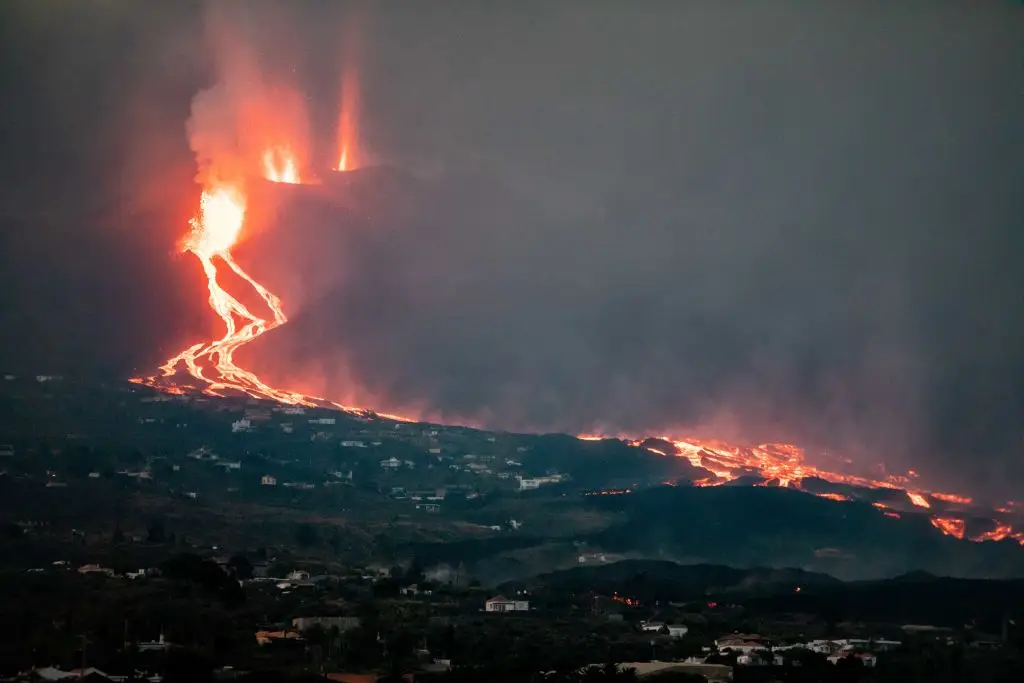
The scientific disagreement centers on whether the volcano’s western flank could detach in a single massive collapse or only through smaller, less dangerous landslides. McGuire’s warning joins a long history of volcanic monitoring in the Canary Islands, where geological instability has made La Palma a focal point for researchers studying Atlantic tsunami risks.