

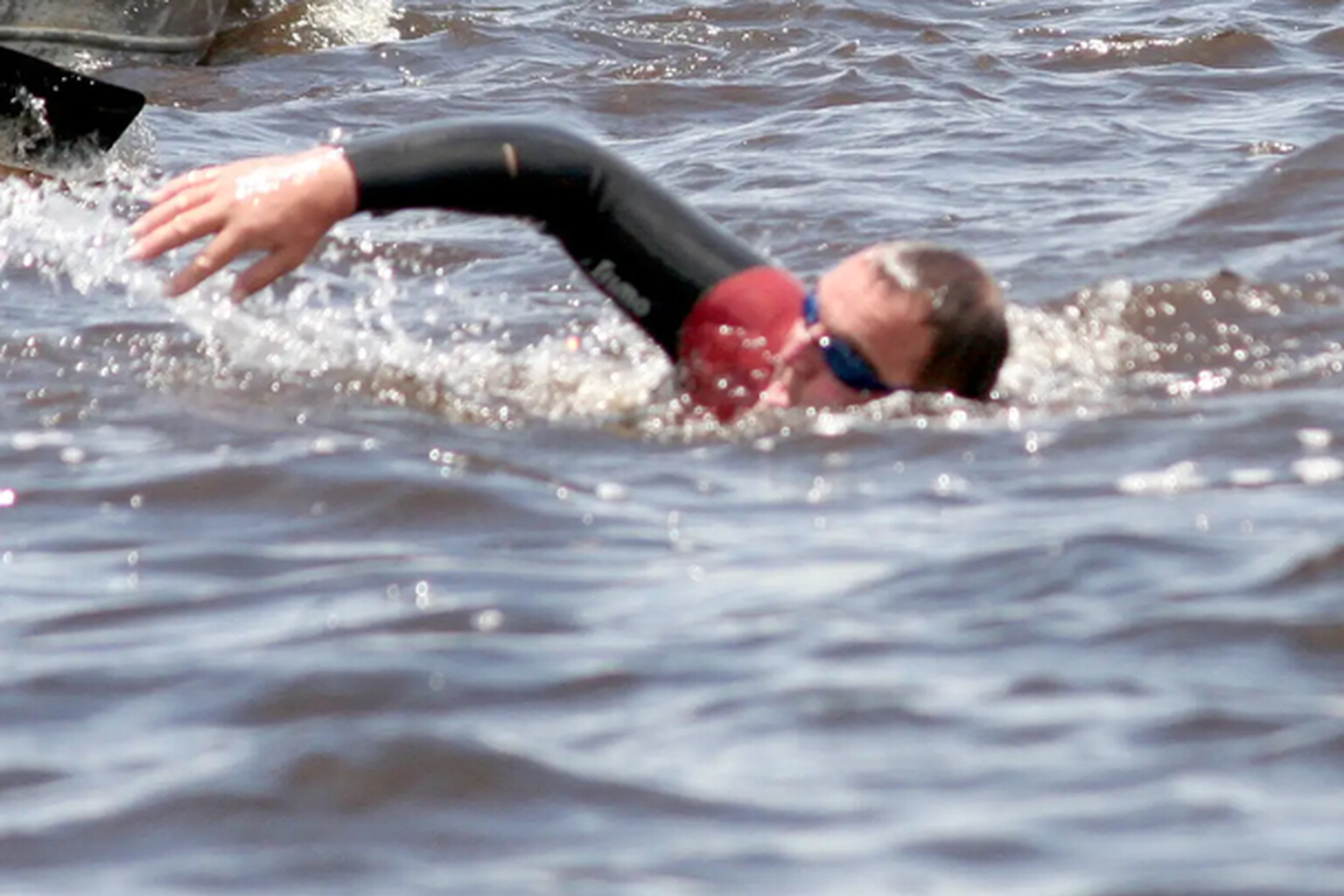
Martin Strel says dolphins answered his calls and fought off bull sharks during his historic Amazon swim.
The Slovenian endurance swimmer, now in his seventies, said that the encounter happened twice while he covered roughly 3,274 miles of the river in 66 days back in 2007. Strel, nicknamed ‘Big River Man,’ has also conquered the Danube, the Mississippi and the Yangtze, but the Amazon expedition remains his signature feat.
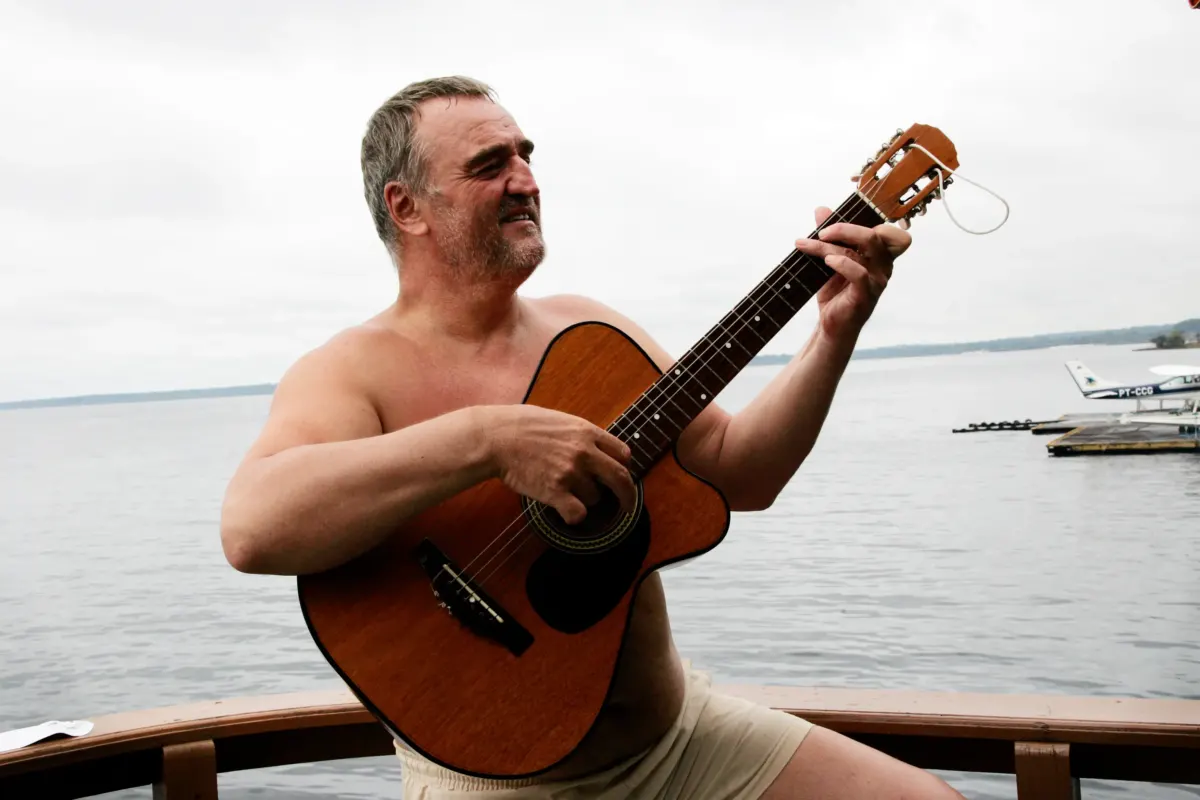
“Swimming with bull shark is very, very, very risky,” Strel said. What unfolded next still seems to astonish him. “Because I’m a musician, I felt like I understand the dolphins, and I was calling, and they helped me, they came helping me,” he recalled. “Can you imagine?”
According to Strel, the dolphins and sharks ended up in a fight right there in the water, with the sharks ‘so aggressive’ and the dolphins ‘very friendly’. The cameras missed it entirely. “It wasn’t time for filming, you know? This is a very special moment, a couple of minutes,” he said. He told his director he had missed a “very, very special moment for people, especially for kids,” though for Strel himself it was simply ‘another day, another day, working day for me’.
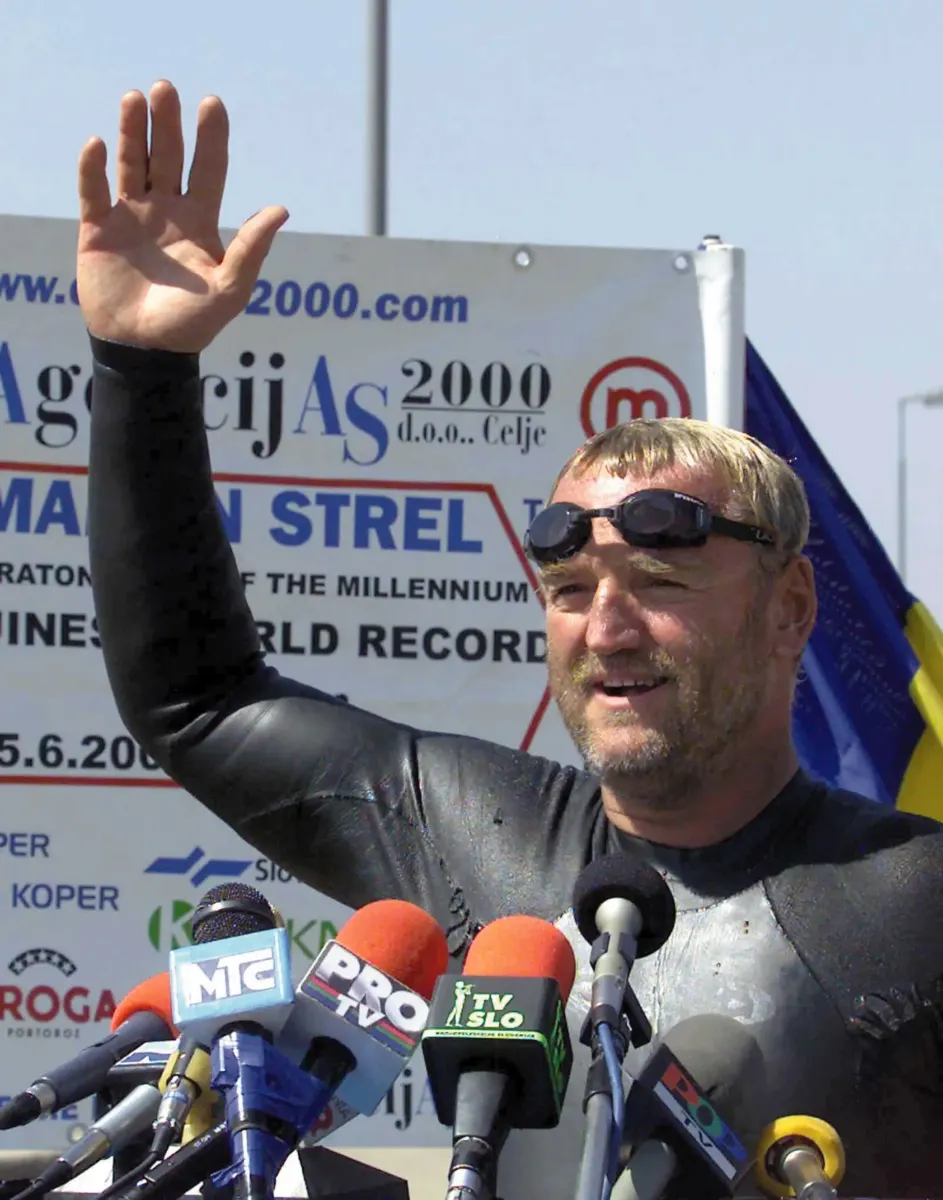
The routine was grueling. Strel and his team of around 50 people set off at 6 a.m. Each day, and he swam for roughly 12 hours, covering between 43 and 62 miles daily. The hazards came from every direction. On the second day, four dangerous snakes turned up on his 49-foot support boat, drawn to the warmth of the engine overnight. A bite would have meant a hospital trip. On the third day, he accidentally touched an 8-foot caiman lying behind the boat. “Can you imagine what a feeling it is,” he said. In his words, ‘one mistake’ could have ended everything.
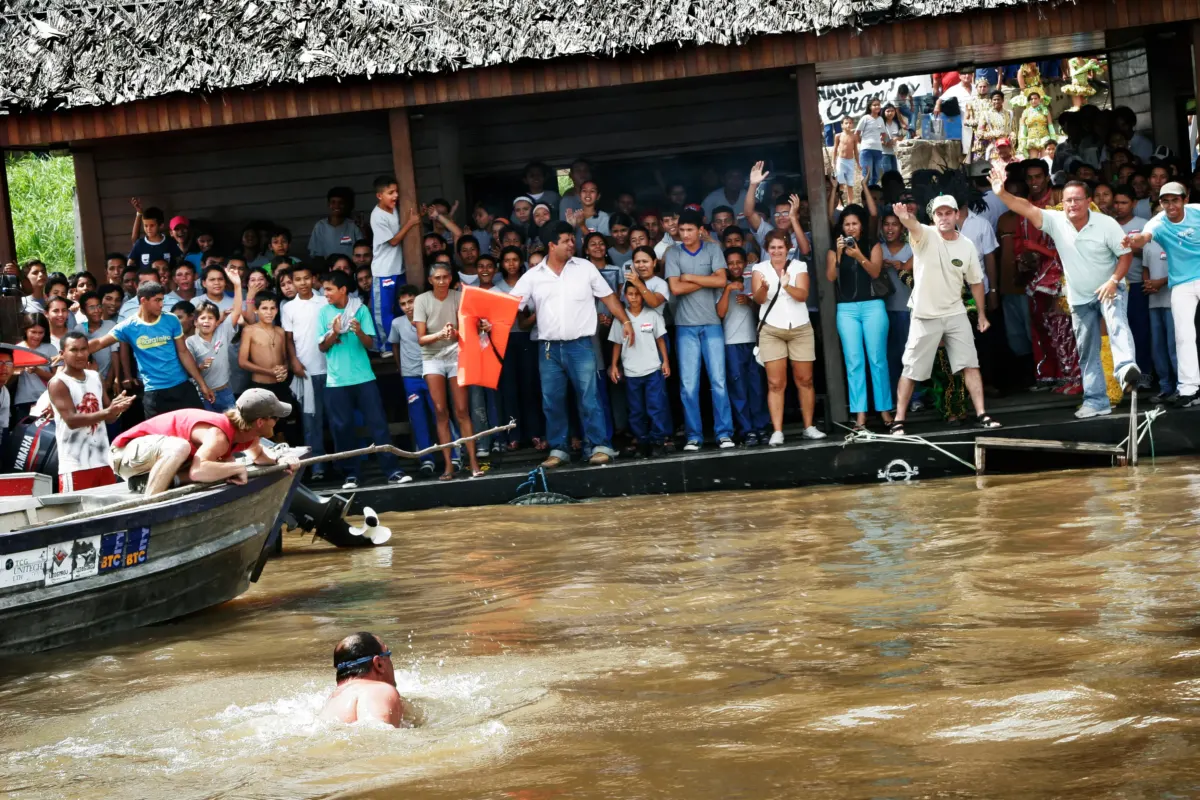
The piranhas attacked him ‘very hard’, opening up his back and leaving ‘blood everywhere’. He still carries the scars. During the call he held up a piranha of around 14 inches and described its teeth as ‘like a very short knife’. His team used buckets of blood to redirect the fish away from him.
Staying healthy worried him more than the predators. Strel said 23 members of his team ended up in hospital, which he blamed partly on American crew members arriving without the right vaccinations. His own Slovenian medical team, he said, had prepared him thoroughly.
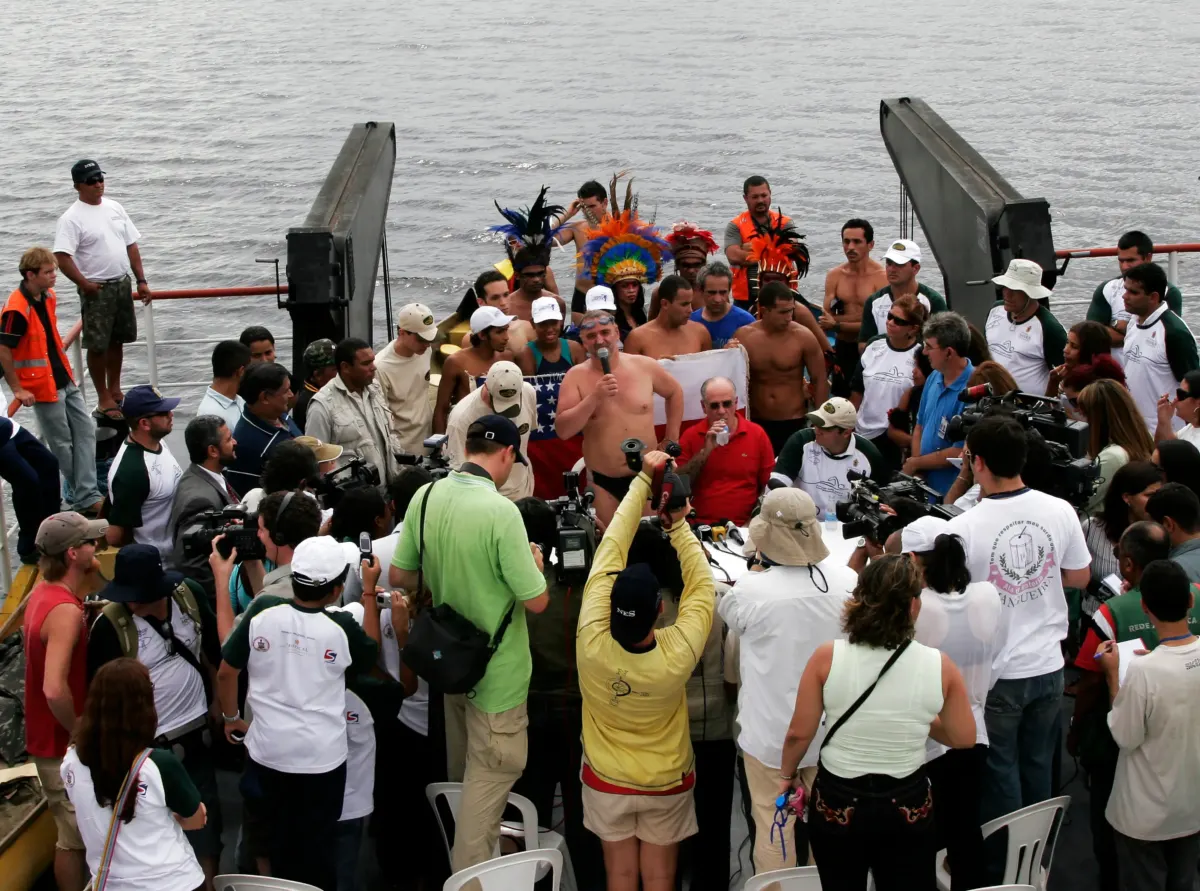
The water itself was treacherous. Storms whipped up waves of between 13 and 20 feet for 20 to 30 minutes at a time, three or four times a day. At river junctions, one current could flow beneath another and churn up chaotic white water where boats had sunk.
Pirates stalked the final stretch. Strel said they would not attack in daylight, so each night at 11 p.m. He moved up or down the river, returning to his original spot at 3 a.m. So they would find nobody there. He claimed he even invited them aboard. “I have whiskey, I have beer, I have cigarettes,” he said. They followed the expedition for the final 250 to 310 miles and finally attacked at around 1 a.m. On the last night, though military escorts and his security team ended it quickly.
The Amazon had been building toward his entire life. Strel grew up in Mokronog, a swampy small town in Slovenia, where he spent his childhood beside his mother as she washed laundry, building small dams and playing with snakes, crabs and fish. The Krka, a Slovenian river he swam as a boy, felt enormous then. “That was, for me, like Amazon,” he said. By the 1990s he was swimming seriously: 105 kilometers of the Krka in 28 hours in 1992, then the full 3,000 kilometers of the Danube in 2000. The Mississippi followed in 2002, roughly 3,800 kilometers over 68 days, and he was reportedly struck by lightning along the way before surviving. The Yangtze came in 2004, a river so polluted that doctors were reported to have cleaned his blood daily.
The Amazon made sense to him because it has no dams, allowing a nonstop swim, and it carried a message he wanted to deliver. He said his swims are about ‘peace and clean water’, and he pointed to the pressure on the Amazon rainforest, which he said keeps shrinking as land is cleared for soybeans and cattle. He warned about microplastics in drinking water and said he tells young people to remember one thing. “River is not a garbage bin, we need to take care of it and the natural world,” he shared.
He never felt the outcome was guaranteed, comparing the swim to a game of poker. “Every day was completely new day,” Strel said, adding that he considered himself ‘lucky’ to have finished. His journey became the 2009 documentary Big River Man, which he said premiered at the Sundance Film Festival in Park City, Utah. His book about the expedition, The Man Who Swam the Amazon, has been translated into 27 languages.
Strel revealed he still trains twice a day.