

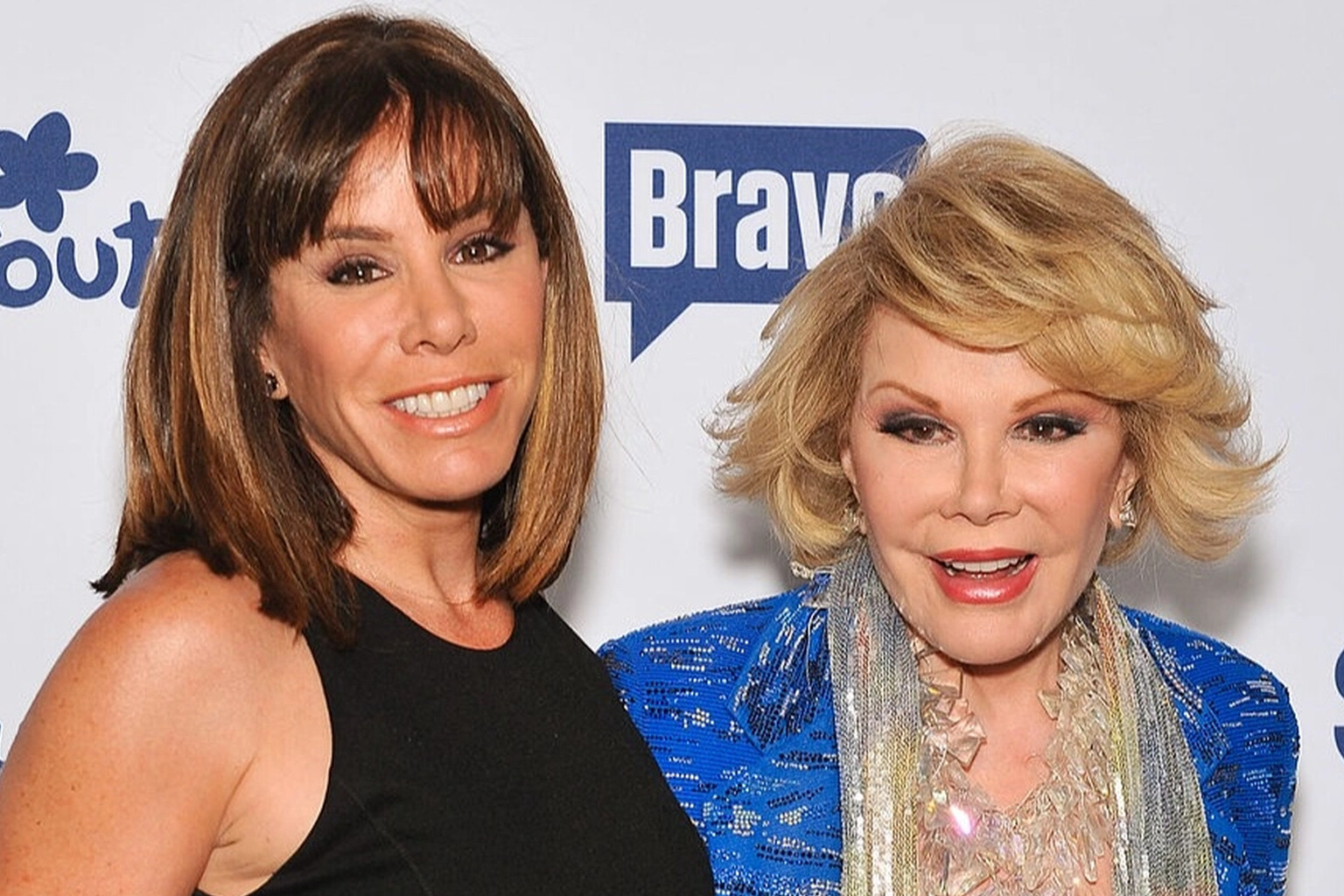
Melissa Rivers has revealed a surprising cosmetic side effect she experienced after shedding 25 pounds on the weight-loss drug Mounjaro.
Rivers, 58, said that her six-month course of the GLP-1 medication delivered dramatic results, but also triggered visible changes she had not anticipated. The TV correspondent and producer had turned to the drug after finding that menopause had stalled her metabolism and her usual routines no longer produced results.
“Everything that used to work wasn’t working any longer,” she said.
The unexpected consequence was temporal hollowing — a sunken, indented appearance in the temple region between the eyes and the hairline. Rivers explained that she had always monitored that area closely because she was naturally narrow there, but the weight loss intensified the issue considerably.
“I always had a close eye on my temples, even before the weight loss, because I’m narrow in that area naturally … but it just became a bigger issue afterwards,” she said.

To address the volume loss, Rivers underwent two cosmetic procedures. She received NuvaSculpt, a treatment designed to stimulate localized fat growth to restore facial fullness while tightening skin, and Xerf, which employs radiofrequency technology to boost collagen production and lift the skin.
“It made a world of difference,” she admitted.
Rivers has been notably candid about her Mounjaro use at a moment when GLP-1 medications have become both widespread and controversial in entertainment circles. Her willingness to discuss not only the weight loss but also the aesthetic trade-offs sets her apart from many celebrity users who have stayed silent about their regimens.
In a separate conversation with PEOPLE, Rivers reflected on how her mother, the late comedian Joan Rivers, would have reacted to the explosion of GLP-1 drugs like Ozempic and Mounjaro.
“Oh she would have thought Ozempic was the greatest thing since sliced bread,” Rivers said.
She elaborated on her mother’s likely enthusiasm: “Her two least favorite things were diet and exercise, so if she could find a way to avoid both? Awesome.”
The enthusiasm would have had limits, however. Rivers noted that certain contemporary trends would have drawn her mother’s sharp disapproval.
“She would not have bought into athleisure and people wearing sweatpants everywhere,” Rivers said.
She added, channeling her mother’s voice: “She’d be like no, you still get dressed, you pull yourself together, you put on a little lip gloss and then you go out.”
Joan Rivers, who died in 2014 at 81, built a decades-long career on caustic fashion commentary and unsparing self-deprecation about her own appearance, including numerous cosmetic procedures she discussed openly. That legacy of transparency about aesthetic interventions appears to have influenced her daughter’s own approach to discussing her treatments.
Rivers’ comments arrive amid ongoing debate about the normalization of GLP-1 medications, with public figures increasingly divided between those who celebrate the drugs and those who warn about potential risks, accessibility issues, or unrealistic beauty standards. By detailing both the benefits and the cosmetic complications of her experience, Rivers has offered a more textured account than typical celebrity endorsements or denials.
Rivers continues her work in television production and fashion commentary, channels she has maintained since her mother’s death and her own long-running role on E!’s red-carpet coverage.