

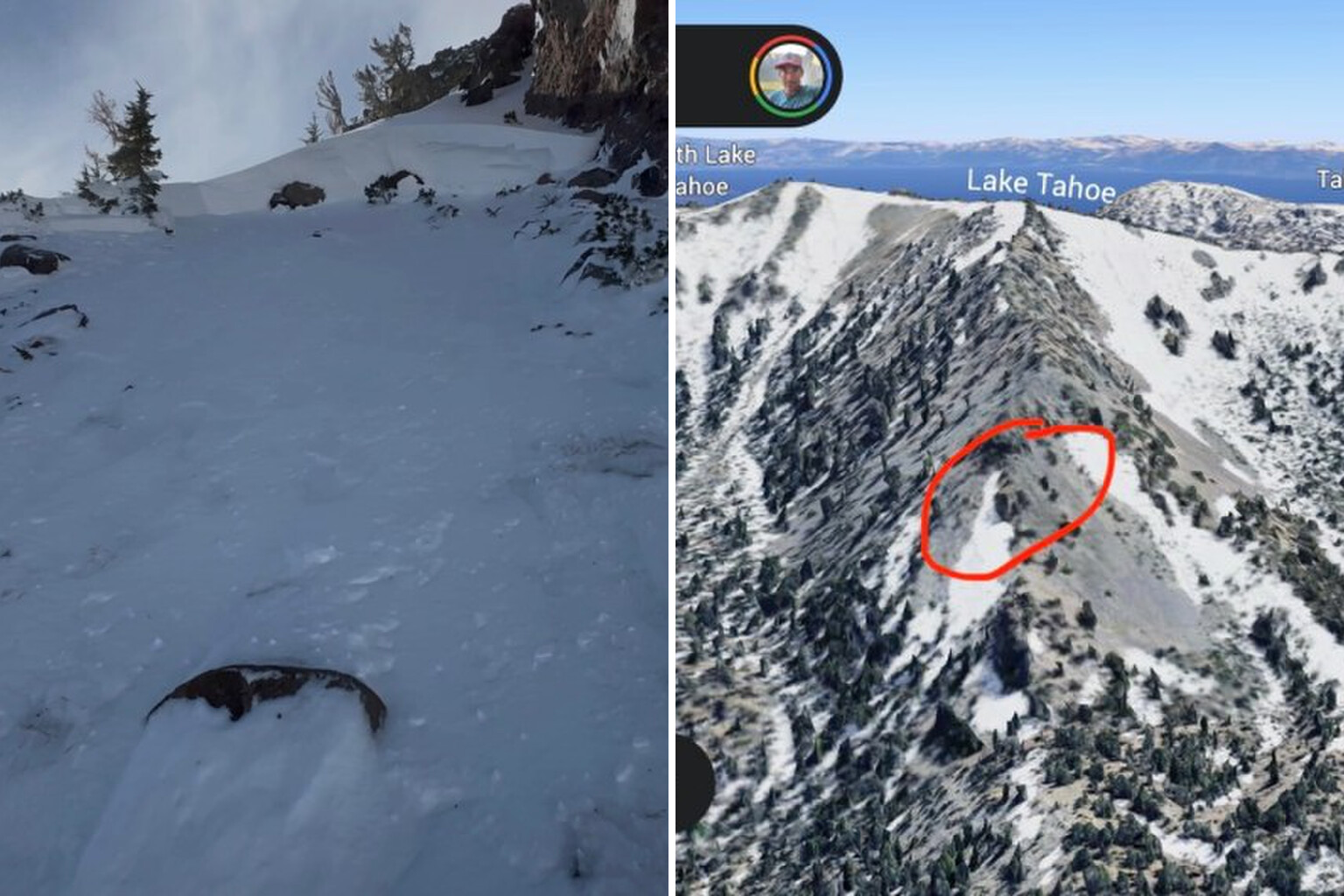
A backcountry skier who triggered an avalanche near Lake Tahoe on Sunday has filed a detailed self-report describing a 150-yard ride down a 9,300-foot slope and a fortunate self-rescue while buried to the thighs.
The incident unfolded on a north-facing ridge between the Broken Glass and Hourglass runs near Mount Rose Ski Resort, according to the victim’s account posted to an avalanche observation database. The skier, whose identity has not been publicly released, had already completed one descent and was preparing for another lap when the slope gave way.
“I had just descended Broken Glass without observing any signs of recent avalanche activity or snowpack instability,” the skier wrote in the report. “I was skinning back toward the Hourglass drainage for another lap when the avalanche occurred.”
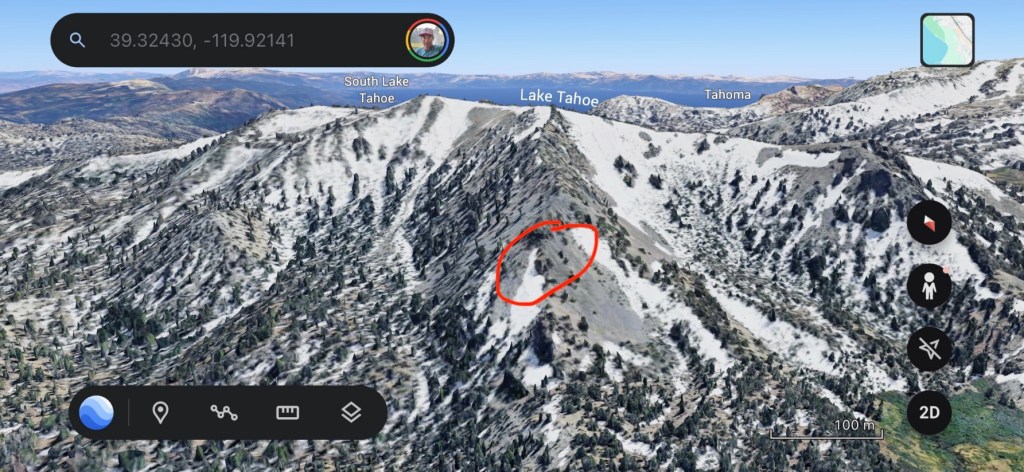
The fracture began roughly 30 feet above the victim and spread rapidly across the terrain. “Today, I triggered and was caught in an avalanche while traversing a slope with my skins on. The avalanche initiated approximately 30 feet above me and propagated widely across the slope,” the skier explained.
The crown of the slide measured about four feet deep at its thickest point and stretched approximately 50 yards wide, running clean to the ground in places. Wind loading had built dense, unstable slabs on the slope, a condition the skier noted while assessing the aftermath. “There was evidence of significant wind loading near the deepest portion of the crown,” the report stated.
Despite the violence of the slide, the skier remained near the surface throughout the descent and avoided complete burial. “I was uninjured and able to self-rescue,” the victim wrote, adding that they came to rest with only their legs trapped in snow.
The Sierra Avalanche Center had flagged precisely this type of hazard in the days before the incident. “With new snow load added on top of weaker old snow, backcountry travelers could trigger dangerous avalanches on northerly aspect slopes above about 8,000′-8,500′,” the center warned in a Friday advisory. The bulletin specifically cautioned against wind-loaded slopes and urged immediate retreat if travelers encountered cracking, collapsing snow, or blowing snow.
The center’s recommended strategy for minimizing exposure centers on selecting terrain under 30 degrees with no steeper connected slopes overhead or nearby.
An atmospheric river pushing into California over the weekend is dumping additional snow across the northern Sierra, with the National Weather Service forecasting accumulation through Monday. Snow levels are expected to remain above 7,500 feet during the initial heavy precipitation period before potentially dropping to 5,000-6,000 feet Monday night, which could spread scattered snow showers into higher mountain areas near Interstate 5 and eastern Los Angeles County, according to the NWS Los Angeles office.