

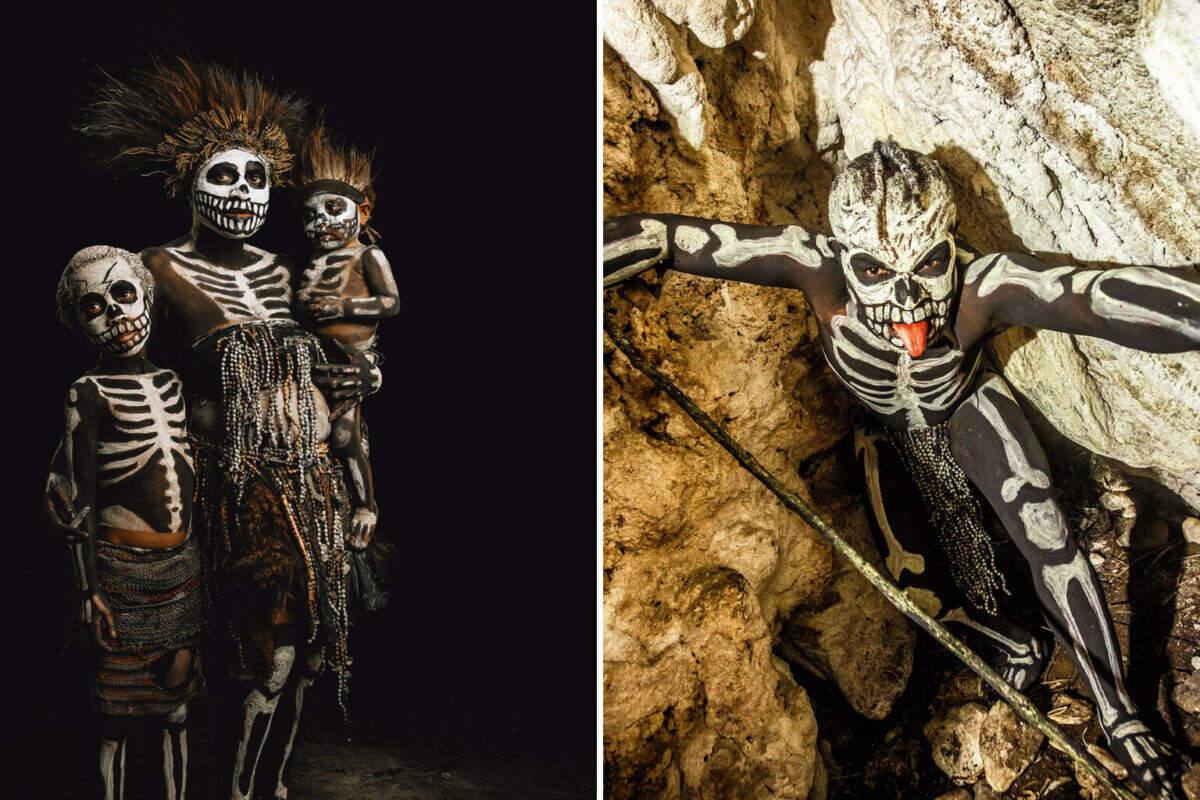
The Skeleton Tribe of Papua New Guinea has drawn global attention for its striking black-and-white body paint, but the real story behind the designs is far more layered than viral clips suggest.
David Dennis, 47, a photographer who founded Tribes of Papua New Guinea, says he has spent roughly a decade embedded with the community in Chimbu Province. He has worked to document and share their traditions with the outside world, including through social media that has sent visitor numbers soaring.
“The Skeleton Tribe did not originally paint themselves to frighten enemy tribes or other people,” Dennis said. The designs, he explained, trace back to an ancestral legend about a monster that haunted a mountain cave more than 200 years ago.
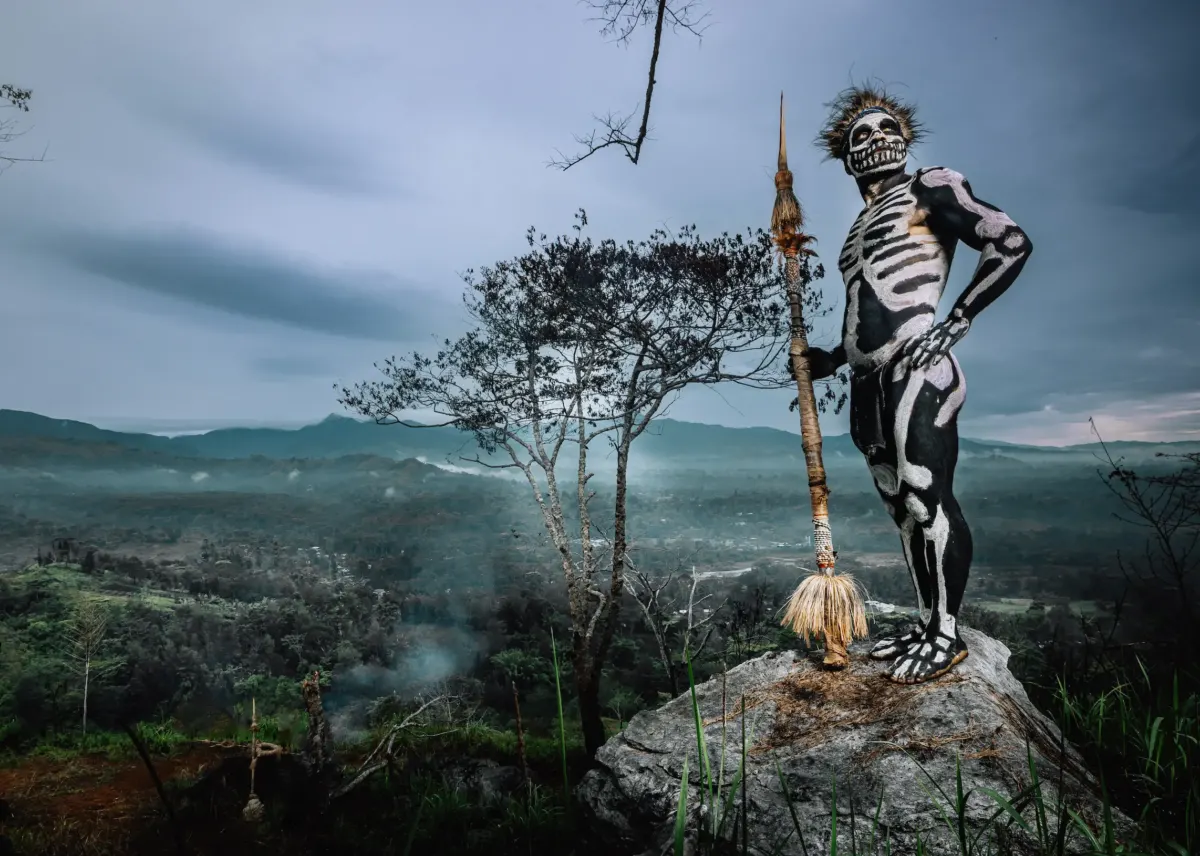
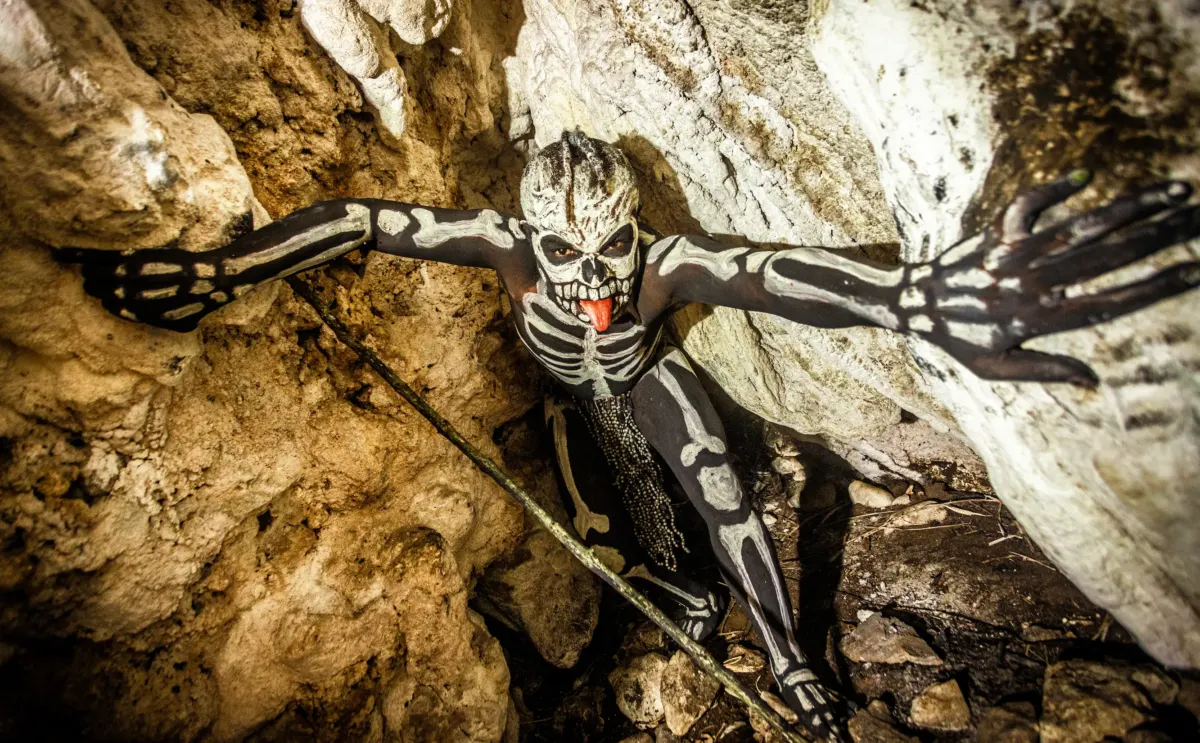
According to the oral history Dennis has collected, people from the valley began disappearing during hunting and food-gathering trips in the forest. A band of warriors tracked the disappearances to a cave in the mountains, where they found human skeletons scattered near the entrance. To approach undetected, they covered themselves in black ash and used clay to paint white bones onto their skin. When the monster emerged, the warriors rose from hiding, attacked by surprise, and killed it before returning to their village.
Dennis said the paint is “not simply a costume” but part of a living performance that resurrects the legend for each new audience. The tribe’s chief, Alphonse, told him that his father and grandfather had painted relatively simple, rough representations of human bones onto their bodies in earlier generations.
That changed in the 1970s, when Alphonse obtained a medical book from missionaries that included an illustration of a human skeleton. After studying it, he began experimenting with more detailed, anatomically recognizable bone patterns and gradually refined them into the designs visitors see today.
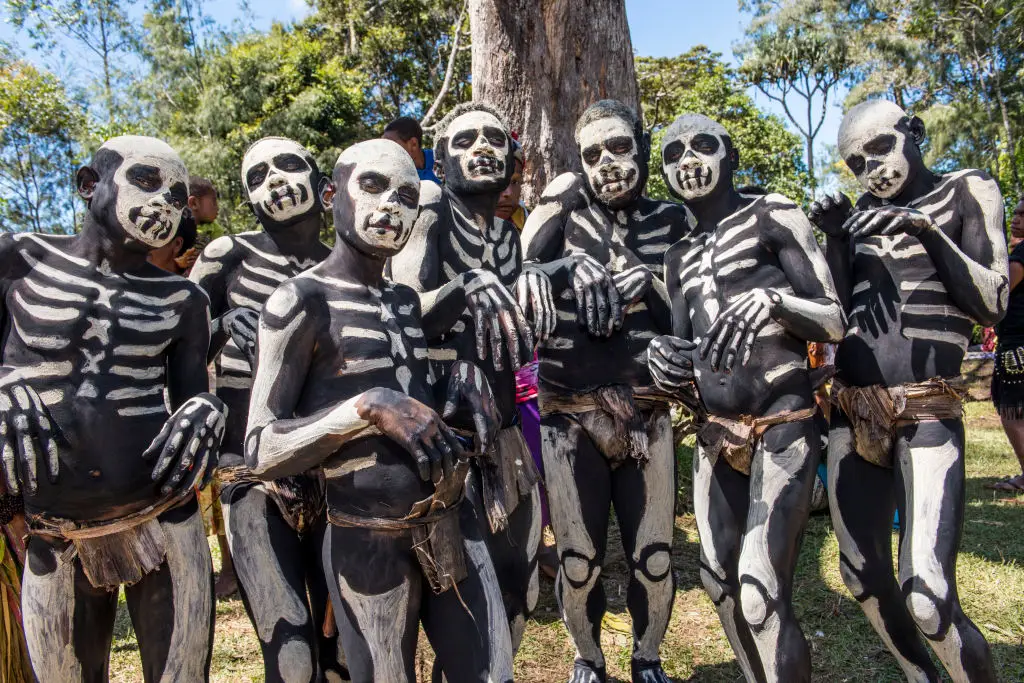
Around that same period, the first tourists began arriving to watch the performances. Dennis said the paintings grew more elaborate over the decades, but their core purpose remained fixed: keeping the ancestral legend alive for future generations.
The cave itself still stands in the mountains, though Dennis noted that the human bones once found inside have vanished. Local people told him they had been removed over the years. During his second visit to the area, Dennis arranged a photography session inside the cave with tribe members wearing their signature black-and-white paint.
When Dennis first arrived, the community received perhaps 20 visitors annually. Together, they developed the Skeleton Tribe Eco Lodge so travelers could stay directly in the village. Social media has since transformed their visibility, with many visitors now arriving hoping for photos or selfies.
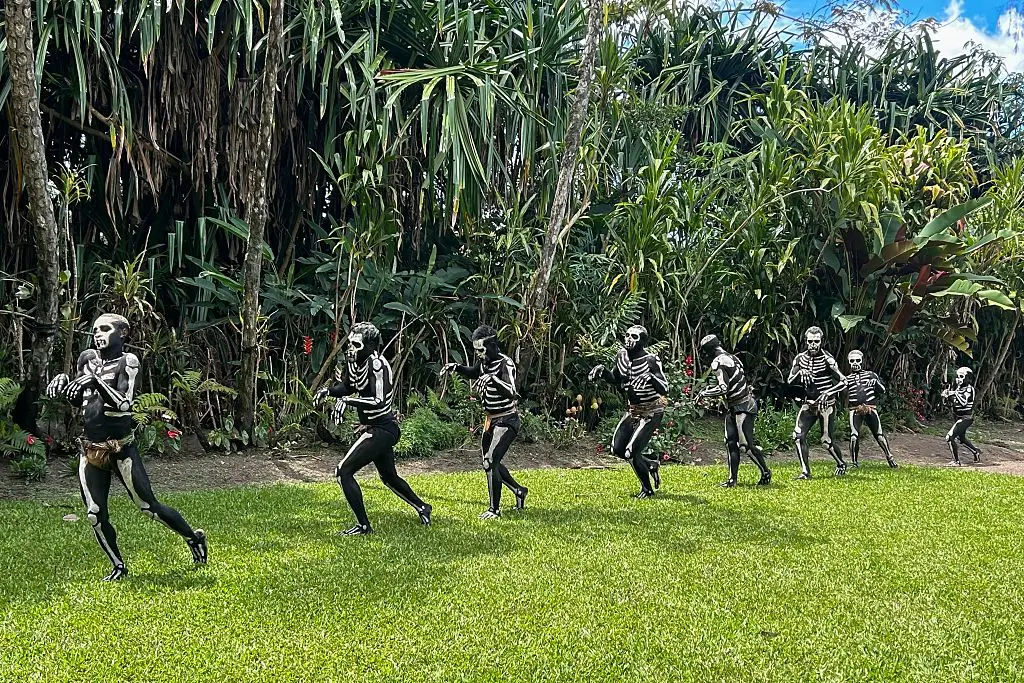
A half-day visit includes the performance recreating the legend, while longer stays at the lodge offer lessons in fire-making, food preparation, crop cultivation, and bow-and-arrow use. Dennis said four cultural eco-lodges have now been developed with local communities across the Highlands.
He also wants to correct two persistent misconceptions. People do not wear traditional costumes and body paint daily, he said, as these are generally reserved for occasions such as weddings, celebrations, and festivals known as sing-sings.
Nor, he insisted, are the performances fabricated for tourists. “Many traditions existed long before tourists arrived,” Dennis said, “and some were practised before Christian missionaries reached the communities.”
The transformation from rough clay markings to anatomically precise skeleton designs offers a rare case study in how outside materials can be absorbed into Indigenous practice without displacing its spiritual center. The medical book’s anatomical illustration became a tool for deeper cultural fidelity rather than a replacement for oral tradition.
Dennis continues to document and advocate for the tribe, balancing the economic benefits of tourism against the need to preserve the community’s autonomy over its own narrative. The lodge model he helped establish now serves as a template for other Highland communities seeking to engage with global visitors on their own terms.