

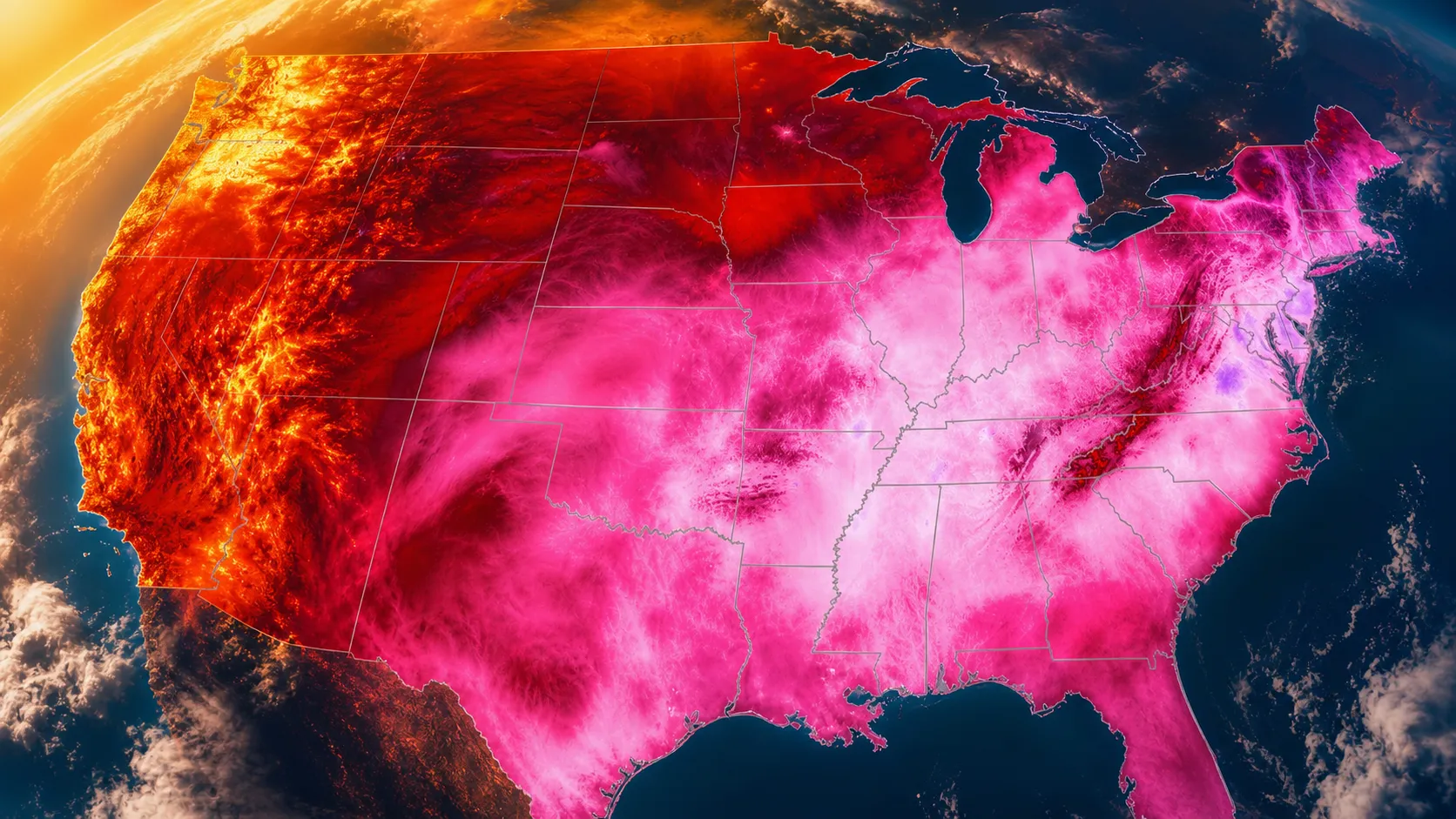
A massive heat dome is expanding across the central United States this week, bringing dangerously hot temperatures to millions of Americans and creating a range of serious health and safety threats. The expanding system will push temperatures well above 100 degrees across a broad swath of the nation from Texas to North Dakota, with heat indices reaching potentially dangerous levels in some areas.
The heat dome, an atmospheric weather phenomenon in which a ridge of high pressure traps hot air over a region and prevents it from dissipating, has already affected vast portions of the country. The current system is forecast to bring temperatures above 100 degrees from Dallas northward to North Dakota, with roughly 70 million people facing heat advisories. AccuWeather meteorologists warn that triple-digit heat will roast much of the central United States through the final days of July.
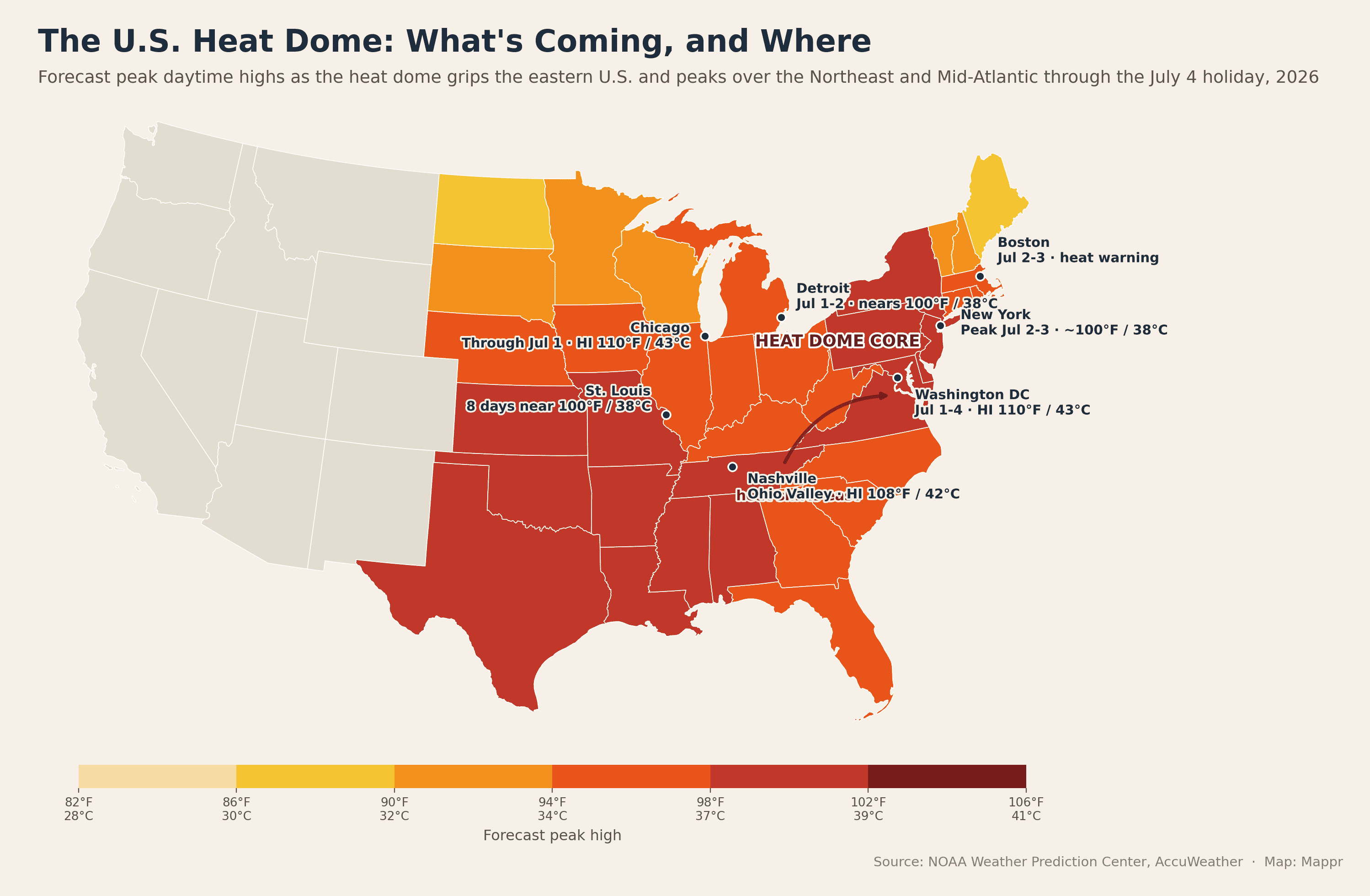
The intensity of this particular heat dome is striking. Forecasters note that temperatures are expected to be 10 to 15 degrees warmer than normal across the Rockies and Plains, with some areas experiencing temperatures 20 to 30 degrees above their seasonal averages. This follows another major heat event that struck the eastern United States in early July, when over 165 million Americans faced either major or extreme heat-related health risks. That earlier dome brought oppressive humidity and blistering highs that broke records across the mid-Atlantic and Northeast, with many locations experiencing heat indices exceeding 100 degrees and overnight temperatures that offered little relief.
Heat domes function by preventing the normal dissipation of warm air. The system traps hot air under what meteorologists call a high-pressure “lid,” suppressing clouds and precipitation while allowing continued solar heating. Unlike typical heat waves, a heat dome keeps rain from developing, which both prevents relief from the intense conditions and worsens drought circumstances across affected regions.
The health dangers posed by this expanding heat dome are severe and multifaceted. Children and the elderly, along with those with medical conditions, are especially at risk of serious conditions including heat stroke. Extended periods of extreme heat increase the risk of dehydration, heat exhaustion and heat stroke, particularly for outdoor workers and people with underlying health conditions. Heat stress can worsen existing heart disease, lung disease and kidney problems, with heat stroke being potentially life-threatening. Some urban areas have already reported record numbers of heat-related emergency department visits during the current heat events.
The infrastructure challenges posed by the widespread heat are equally concerning. Millions of Americans face the prospect of strained electrical grids as air-conditioning demand surges. During a heat wave earlier in July, one major grid operator reported a preliminary peak demand of 168,158 megawatts, a new record. Sustained heat waves can test grid reliability by driving electricity demand sharply higher during late afternoon and evening hours when solar generation drops but cooling demand remains highest.
The drought-stricken condition of large portions of the affected region amplifies the dangers. Much of the West and Great Plains remains in extreme or exceptional drought, with some areas of Oklahoma, Nebraska and Utah having experienced devastating wildfires in June that forced entire communities to evacuate. The combination of blistering heat, low humidity and gusty winds is elevating fire danger across the Great Basin and interior West. Studies show that approximately 42 percent of all land burned in the West from 2001 to 2024 occurred during or immediately after a heat wave, demonstrating the intimate connection between extreme heat events and wildfire activity.
Forecasters warn that some communities in the Rockies and nearby Plains may end up only a few degrees shy of their hottest temperatures ever observed. Salt Lake City is forecast to reach 106 degrees, which would tie for the city’s second-highest temperature since records began in 1874. Temperatures could reach 110 degrees in parts of Idaho, Montana and Wyoming, challenging all-time temperature records in locations such as Billings, Montana. By Monday, the Dakotas will be underneath what forecasters are calling the planet’s most powerful heat dome, with temperatures easily exceeding 100 degrees for many and potentially pushing toward 110 degrees in some areas.
Medical professionals are urging residents in affected areas to take precautions. The most important protective measures include staying hydrated, limiting outdoor activity during the hottest part of the day and seeking cool or air-conditioned spaces whenever possible. Experts also stress the importance of checking on neighbors, especially older adults or people living alone, as heat affects communities unevenly. Authorities warn that anyone experiencing symptoms of heat illness including vomiting, dizziness or confusion should seek medical attention immediately.
The occurrence of two major heat domes separated by only a few weeks is unusual even by the standards of a warming planet. Experts point to climate change as a significant factor in the increasing frequency and intensity of these events. Heat waves are now longer lasting, more intense and more likely to occur due to emissions from the burning of fossil fuels, with one rapid attribution study finding that the combination of extreme heat and high humidity seen in recent East Coast heat dome would have been impossible without greenhouse gas emissions.