

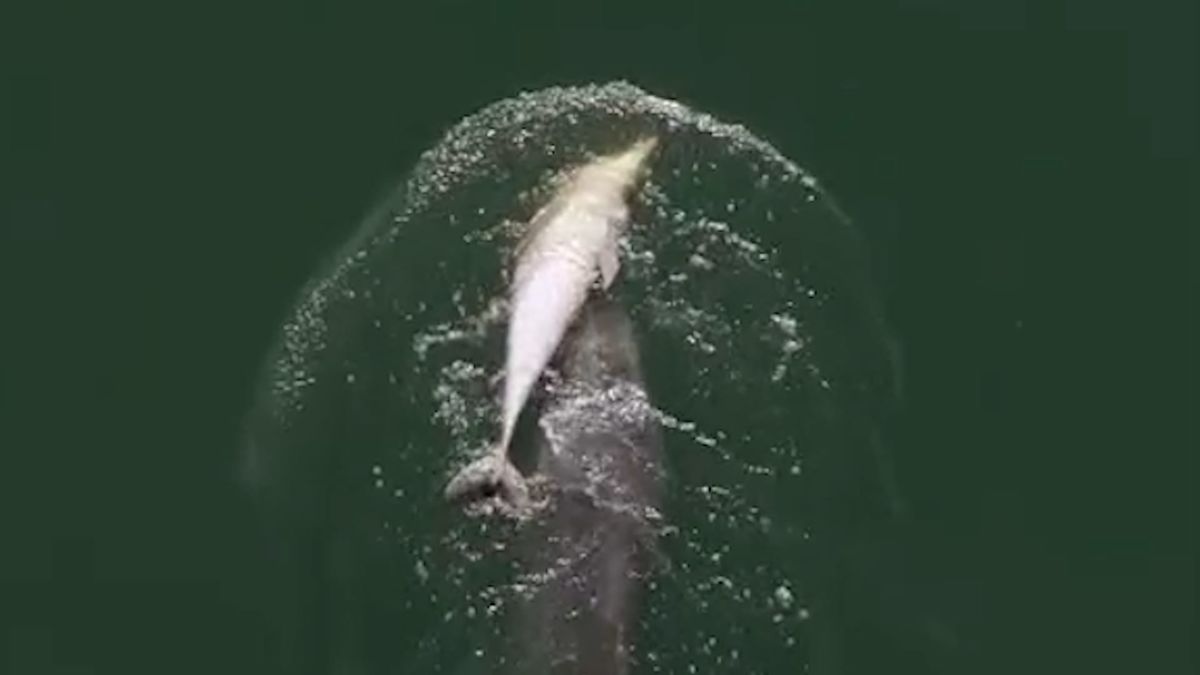
A video of a bottlenose dolphin named Fraggle carrying her dead calf through the waters of Western Australia has captured hearts worldwide, offering a rare glimpse into the emotional lives of marine mammals.
The heartbreaking footage was recorded in July by researchers at Geographe Marine Research, an Australian conservation organization, using drone technology in the Leschenault Estuary. The video shows Fraggle gently balancing and pushing the body of her two-week-old calf through the water as she swam alongside her pod over the course of six consecutive days.
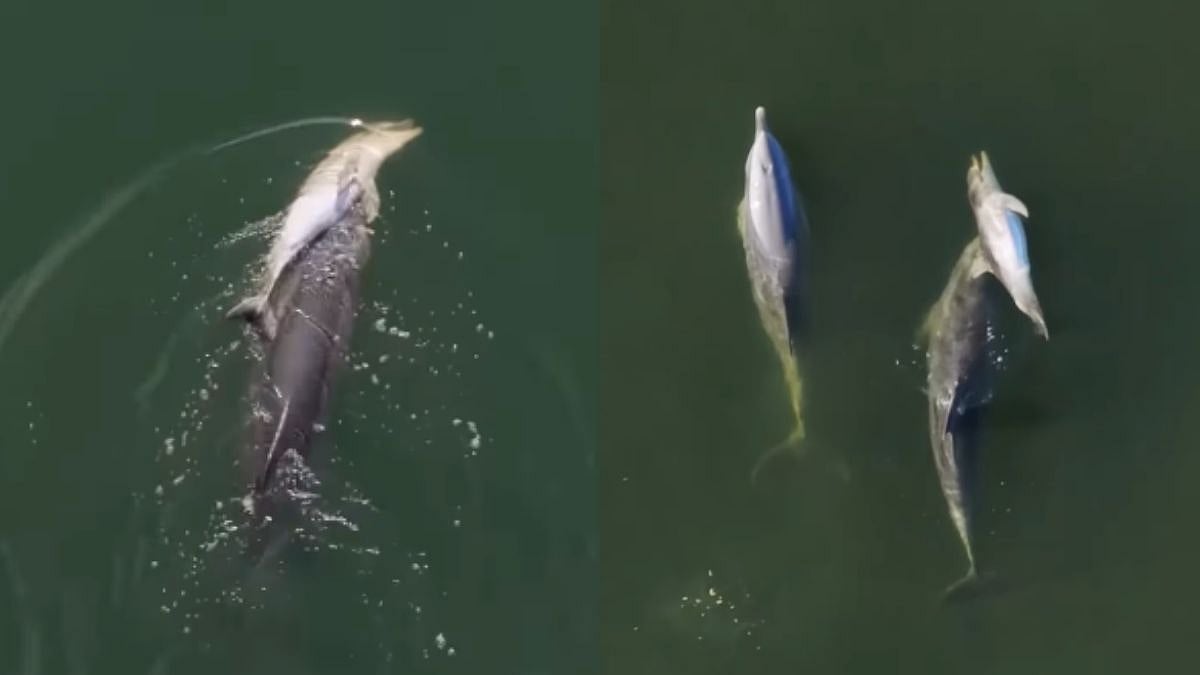
The calf died during Australia’s winter season, a particularly difficult time for young dolphins. Researchers had been monitoring Fraggle closely because they knew that a winter birth would significantly reduce the calf’s chances of survival. The young dolphin showed signs of respiratory distress before its death, but despite their hopes, the researchers were unable to prevent the tragedy.
The loss is especially poignant given Fraggle’s history. This marks at least the fourth or fifth calf she has lost throughout her life. In March 2025, she lost another calf, and the pattern of loss has made her reproductive challenges heartbreakingly clear. Yet she continues to give birth and attempt to raise offspring in an estuary where calf mortality rates remain relatively high due to seasonal challenges and environmental conditions.
What makes the footage particularly remarkable is the response from Fraggle’s pod. Her entire group of 14 dolphins remained close by her side throughout the six-day period, appearing to offer support and companionship during her time of grief. Researchers also observed what they believe to be dolphins from nearby coastal waters temporarily joining the estuary group, suggesting an unusually strong social response to Fraggle’s loss. Other dolphins circled nearby, appearing to check on her and the deceased calf.
Rodney Peterson, a director at Geographe Marine Research, spoke to the depth of dolphin emotion during such events. “Dolphins are actually very emotional creatures, and they love their offspring,” he said. “When a mother dolphin loses their calf, they are usually as sad as Fraggle was.” He noted that mothers typically keep their dead calves with them for a week at a time and may refuse to eat for an entire week due to the heartbreak of their loss.
This behavior, known as epimeletic behavior by scientists, has been documented across multiple species of dolphins, whales, and orcas around the world. Mothers have been observed carrying deceased calves for hours, days, and in some cases even weeks. The phenomenon has sparked significant scientific interest and public emotion, with many viewing it as evidence of profound maternal bonds and possibly a form of grief.
However, researchers caution against making definitive claims about animal emotions. While the prolonged carrying behavior could suggest grief comparable to human mourning, scientists cannot confirm exactly what animals experience emotionally. Some researchers believe the behavior reflects an exceptionally strong maternal instinct and bond. Others suggest that a mother’s caregiving behavior simply does not stop immediately upon a calf’s death, representing instinctual continuation of nurturing rather than conscious mourning. Many experts believe both explanations may contribute to the prolonged behavior observed in cases like Fraggle’s.
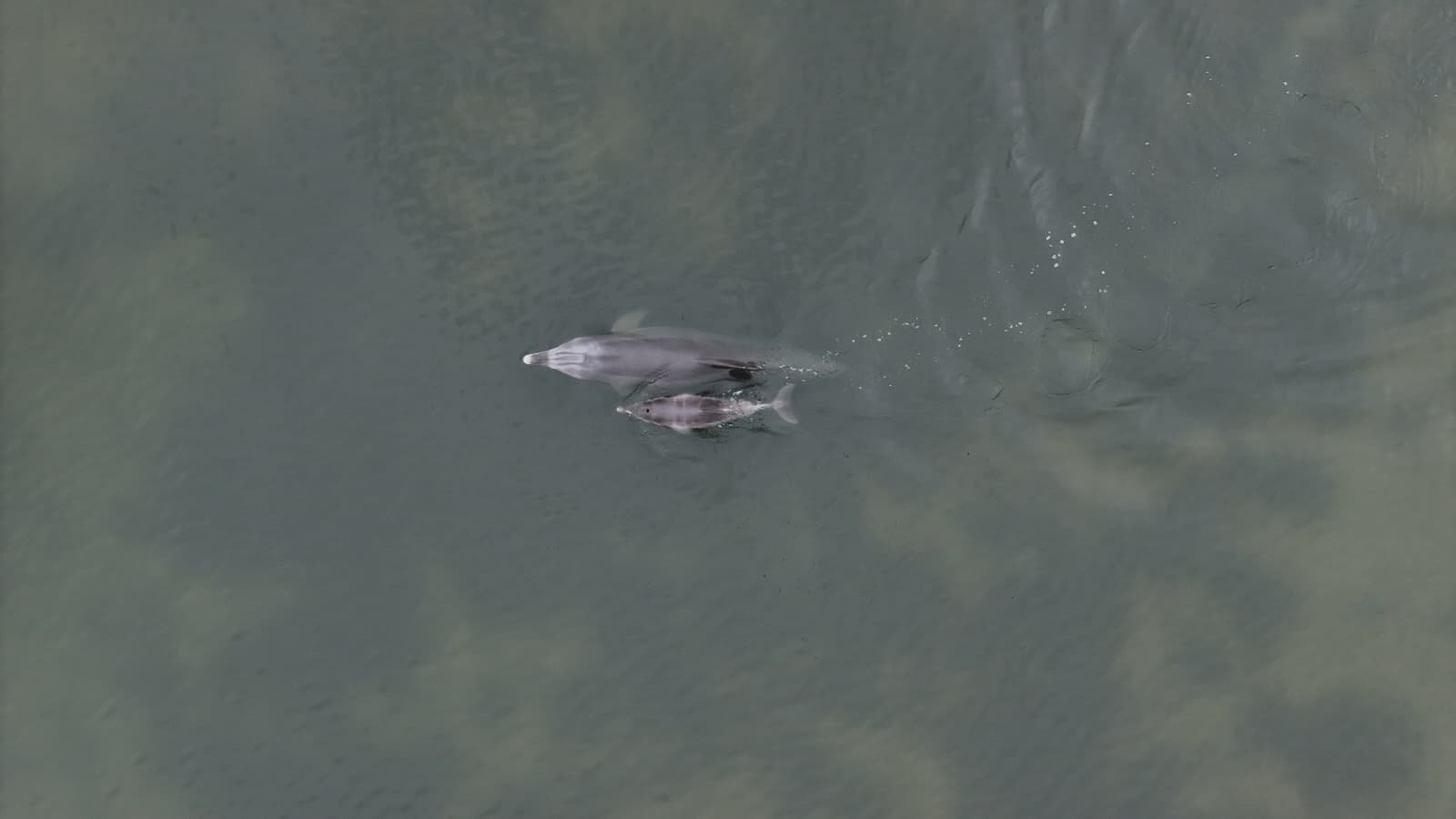
The footage has provided scientists with valuable information about dolphin communication, social relationships, and the challenges young calves face. Researchers at Geographe Marine Research have emphasized that studying such rare behavioral events could improve conservation efforts, particularly for smaller dolphin populations where calf mortality remains relatively high.
The Leschenault Estuary is home to a small resident population of bottlenose dolphins, making each calf birth and loss significant for the group. The estuary itself is an important ecological area, serving as home to various bird species and marine life. Newborn calves born in this location face particular survival challenges during the Australian winter months.
The viral video has moved millions of people online, with viewers describing it as one of the most heartbreaking wildlife moments they have witnessed. Social media users flooded comment sections with emotional responses, with many noting that the footage serves as a powerful reminder that animals experience complex emotions and understand death, challenging the notion that grief is a uniquely human experience. The video has sparked broader conversations about the emotional intelligence of marine mammals and the importance of protecting these remarkable creatures and their habitats.