

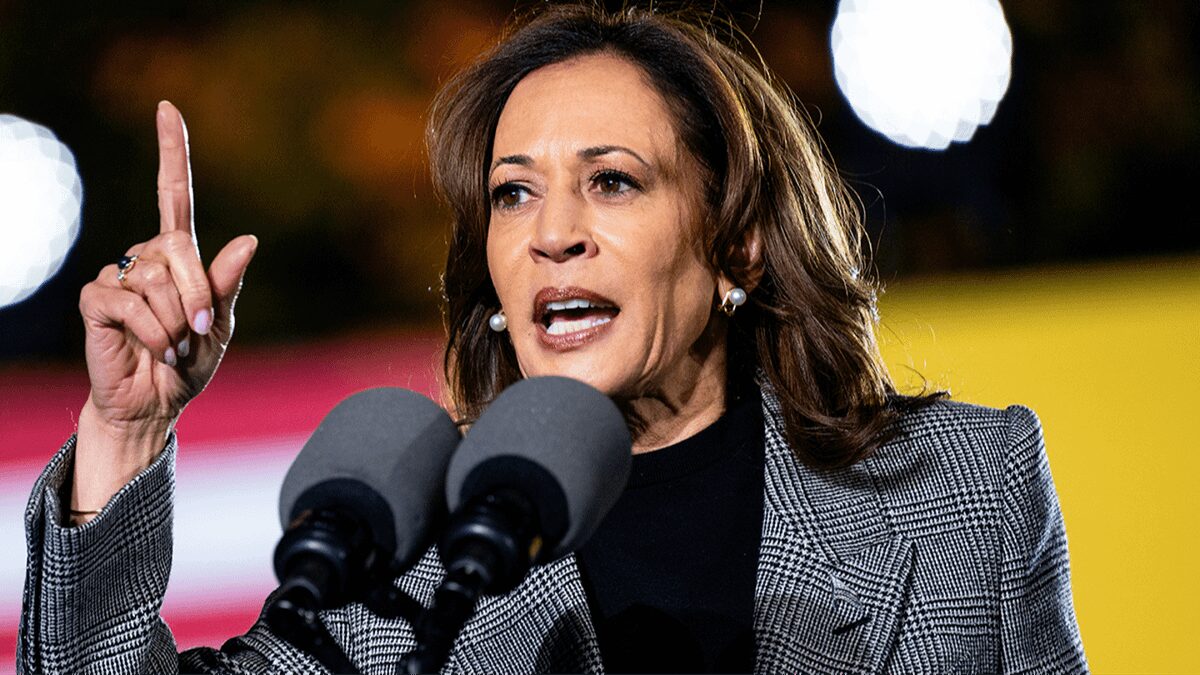
We turned to AI for an early call on the 2028 US presidential election, and its ‘tentative prediction’ points to a candidate with ‘high name recognition’.
Donald Trump has repeatedly joked about seeking another term, and ‘Trump 2028’ hats are even being sold for $55 through his official website.
However, the US Constitution bars any president from serving more than two terms, meaning Trump would not be able to return to office once his current time in power ends.
With that in mind, attention is already shifting to who could become the 48th President of the United States. According to ChatGPT, one party currently appears to hold a narrow advantage, although the race is still far too distant to call with confidence.
In its early assessment, ChatGPT gave Democrats a 55 percent chance and Republicans 45 percent, suggesting the party on the left has a modest lead heading into 2028.
Explaining its reasoning, the chatbot noted: “Historically, parties often rebound after midterm elections if they’re out of power, but that depends heavily on the economy and the sitting president’s approval.
“Democrats also have a relatively deep bench of potential candidates, though Republicans do as well.”
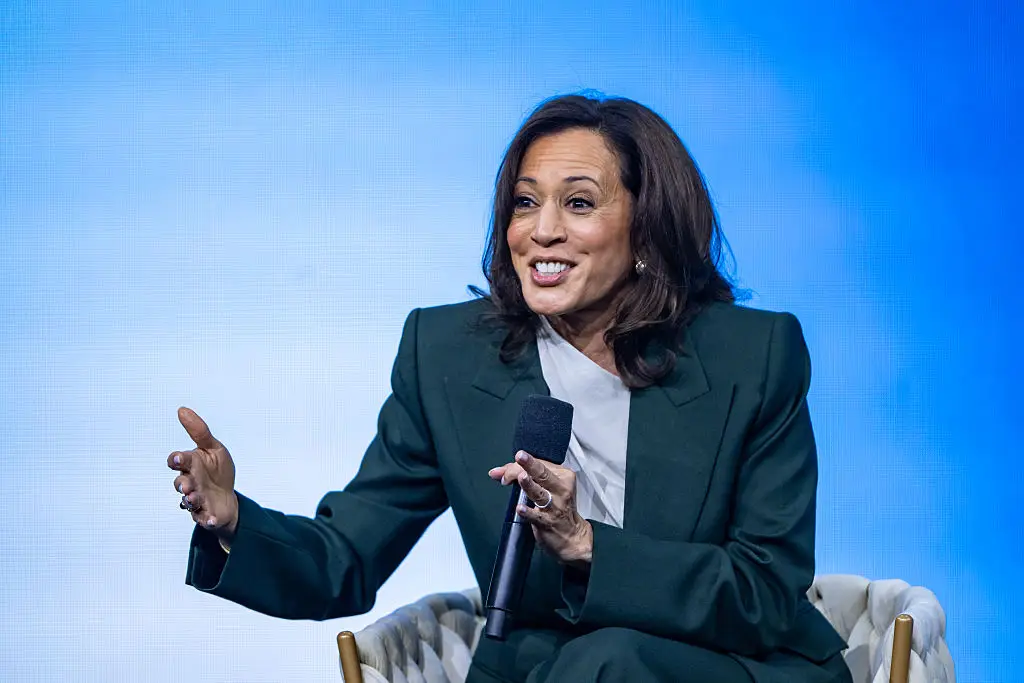
When asked to narrow the field to individual contenders, the AI highlighted two names it believes could emerge as the major-party nominees.
“If Kamala Harris and JD Vance were the nominees in 2028, I’d expect it to be a genuine toss-up, with a slight edge depending on the political environment rather than either candidate alone,” it added.
Its projected outcome gave Harris a slim advantage, estimating she could take 52 percent of the vote, compared with 48 percent for Vance.
ChatGPT said Harris benefits from substantial national exposure and pointed to her experience from the 2024 presidential race.
“Some early hypothetical polling has shown her narrowly ahead of Vance, though it’s far too early to treat those numbers as predictive,” the bot noted.
On the Republican side, the AI argued that Vance is well placed if he becomes the party’s standard-bearer.
The AI bot said: “He has become the leading early Republican figure and would likely inherit much of the Trump coalition if he secured the nomination.”
It also suggested that if Democratic voters head into 2028 wanting a different direction, that dynamic could work in Vance’s favor.
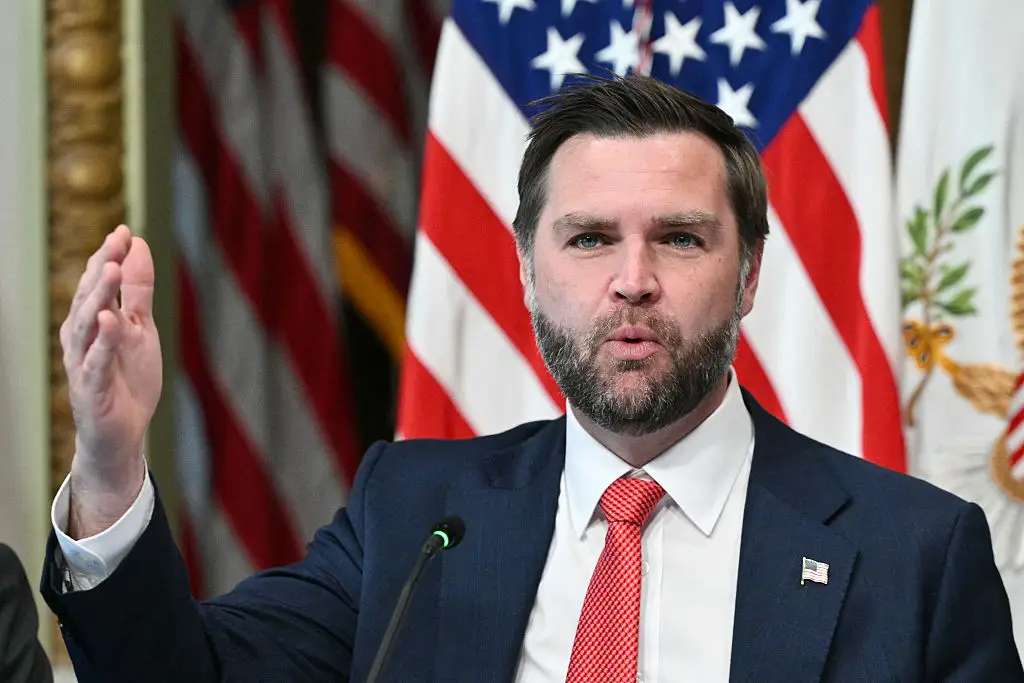
“He has appeal with many working-class voters in key Midwestern states that often decide presidential elections,” it concluded.
Still, ChatGPT stressed that the eventual result may come down less to personality and more to broader conditions, including the economy, approval ratings, and whether voters are in the mood for continuity or change.
Vance has indeed emerged as the frontrunner on the Republican side. Recent polling shows him leading the Republican primary field by significant margins, and prediction markets consistently rank him at the top among potential GOP candidates. In early 2028 national Republican primary polling, Vance leads with 42 percent support. Multiple sources show him garnering between 18 and 21 percent odds in prediction markets for winning the presidency outright. Secretary of State Marco Rubio trails as the second Republican contender in most early assessments.
The Democratic field remains more fractured. While Harris has led many national Democratic primary polls with support in the high 20s to low 40s since spring 2026, California Governor Gavin Newsom has shown strong momentum and leads prediction markets for the Democratic nomination with over 30 percent odds. Newsom has built a national profile positioning himself as a leading voice against the Trump administration. Pennsylvania Governor Josh Shapiro has also emerged as a significant contender, with supporters noting his success in the swing state. Other potential Democratic candidates mentioned frequently include Pete Buttigieg, former Transportation Secretary; Alexandria Ocasio-Cortez; and others.
Harris has given mixed signals about 2028, saying at various points that she is “thinking about it” and that she might run, though she also said host Rachel Maddow in September 2025 that 2028 was “not my focus at all.” She decided against running for California governor in 2026, fueling speculation about her presidential ambitions.
Vance has similarly demurred on concrete plans, saying in May 2026 that he would discuss a potential run with his wife after the midterms but emphasizing his focus on his current role as Vice President. In a June 2026 interview, he stated he and his wife “will absolutely sit down and talk about what comes next for our family” after the midterms.
Speaking at the rescheduled White House Correspondents’ Association dinner on July 24, Trump said: “I won three times.
“Now, I’m going to do it again. It should be easy. I’m getting very good at running for president.”