

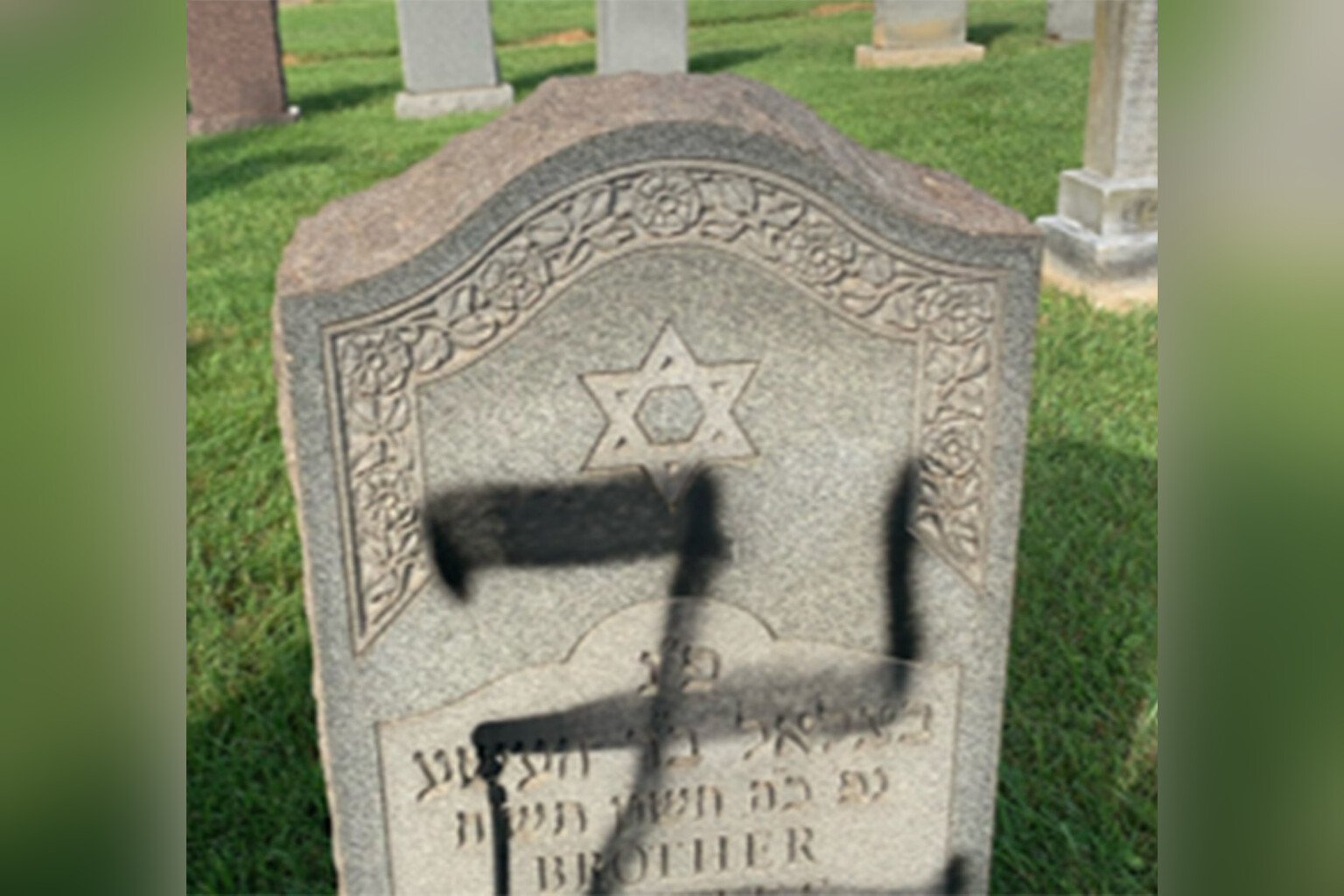
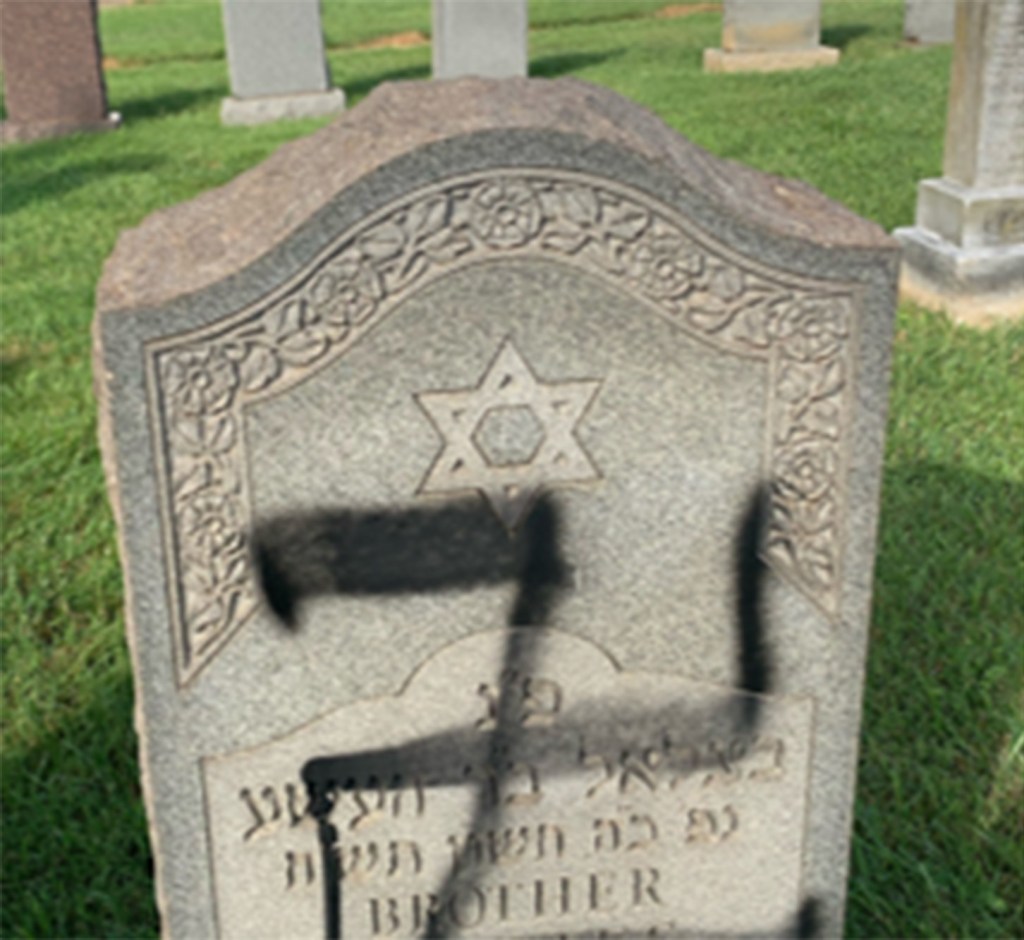
George Horn, 36, of Dundalk, pleaded guilty Tuesday to hate crime and vandalism charges for spraypainting swastikas on Jewish gravestones in Baltimore County more than three years ago.
Federal prosecutors announced the plea, which covers the July 2023 desecration of 12 headstones at Ohr Knesseth Israel Anshe Sfard Cemetery. Horn now faces up to three years in prison for damage to religious property.
The case against Horn included digital and physical evidence of extremist ideology. Prosecutors said he carried a translated copy of Adolf Hitler’s “Mein Kampf” on his phone. Antisemitic paraphernalia was also found in his car and storage unit.
Police captured Horn with video evidence. He had recorded himself spraypainting two gravestones in a clip that lasted just nine seconds. That footage became central to the investigation that led to his conviction.
Horn’s sentencing is scheduled for Jan. 14, 2027. The guilty plea comes after years of delay in bringing the case to resolution.
The vandalism struck at a historic Jewish burial ground in the Baltimore area. Ohr Knesseth Israel Anshe Sfard Cemetery serves as a sacred site for the local Jewish community, and the swastika graffiti represented a deliberate desecration of that space.
Federal hate crime charges in cemetery vandalism cases remain relatively rare. Prosecutors typically pursue such charges when evidence demonstrates religious bias motivated the damage.
The nine-second self-recorded video proved particularly damning. Horn’s decision to document his own actions provided prosecutors with direct proof of his involvement, eliminating potential challenges to identification.
The “Mein Kampf” translation on Horn’s phone and the collected paraphernalia reinforced the ideological nature of the crime. Prosecutors emphasized these materials to establish the antisemitic intent behind the vandalism.
Community members had discovered the damaged gravestones in the summer of 2023. The desecration prompted local outrage and concern about rising antisemitic incidents in the region.
Horn’s guilty plea avoids a trial but does not reduce the potential prison sentence significantly. The charge of damaging religious property carries substantial federal penalties regardless of how the case resolves.
The three-year maximum sentence reflects the seriousness with which federal authorities treat hate-motivated destruction of religious sites. Judges in such cases often consider both the physical damage and the broader harm to community security.
Baltimore County has seen other antisemitic incidents in recent years, though few have resulted in federal prosecution. The evidence in Horn’s case, particularly the self-created video, distinguished it from vandalism investigations where perpetrators remain unidentified.
The January 2027 sentencing date gives both sides months to prepare arguments about appropriate punishment. Prosecutors will likely emphasize the premeditated nature of the crime and the materials found in Horn’s possession.
Defense attorneys may argue mitigating factors, though the video evidence and collected paraphernalia limit available strategies. The guilty plea itself suggests recognition that conviction at trial was highly probable.
The case highlights how digital evidence increasingly shapes hate crime prosecutions. Horn’s phone contained not just the incriminating video but also the translated Nazi text, creating a comprehensive record of his motivations.
For the families whose relatives’ gravestones were defaced, the plea offers a measure of accountability. The desecration of burial sites carries particular emotional weight in Jewish tradition, where respect for the dead holds deep religious significance.