

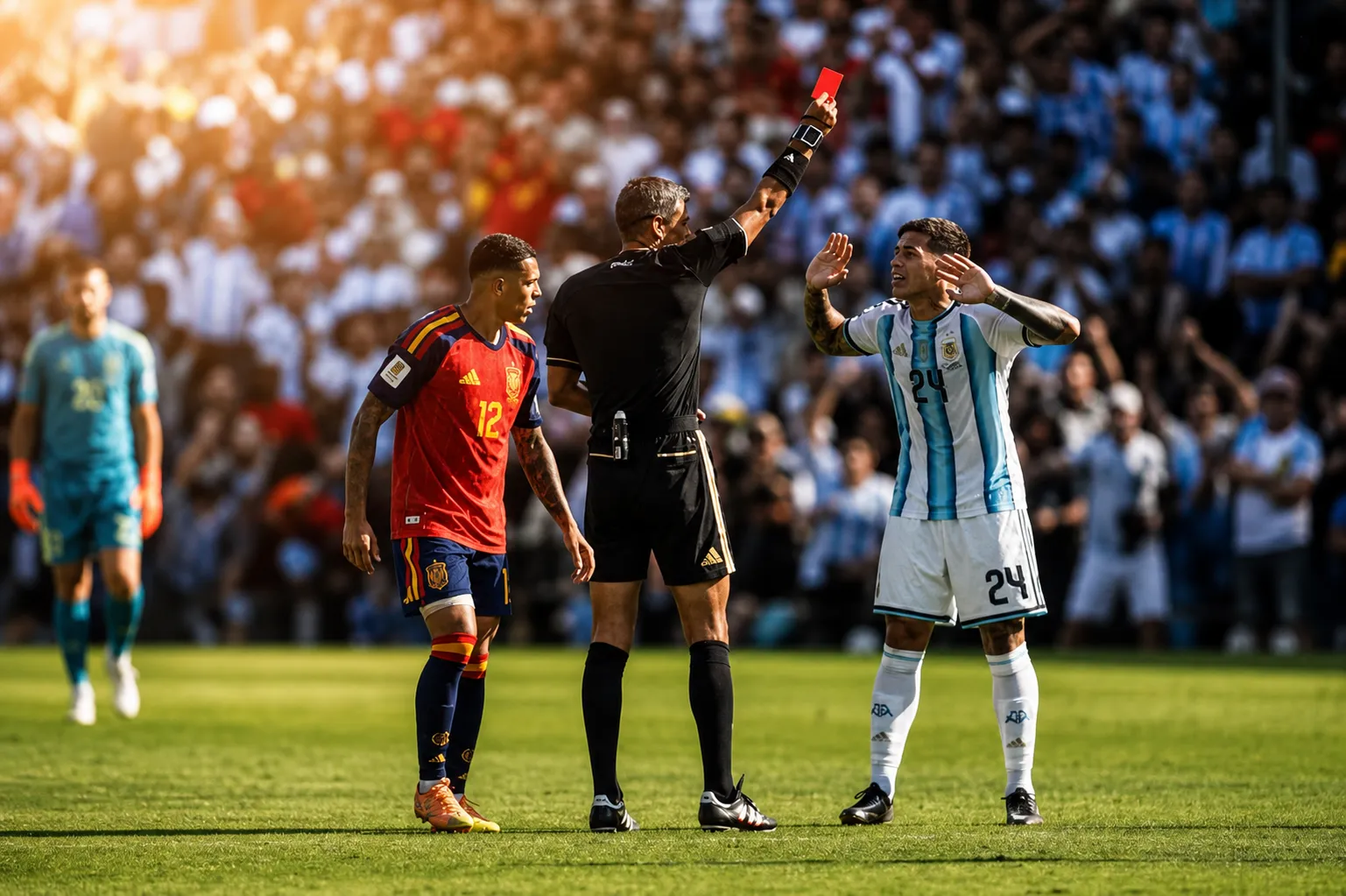
Spain claimed the 2026 FIFA World Cup title on Sunday with a dramatic 1-0 extra-time victory over Argentina at MetLife Stadium in New Jersey, but the championship will be remembered as much for the violent post-match scenes as for the competition itself. The final whistle sparked a shocking on-field brawl that has left FIFA scrambling to clarify the disciplinary record and launched a formal investigation into multiple players’ conduct.
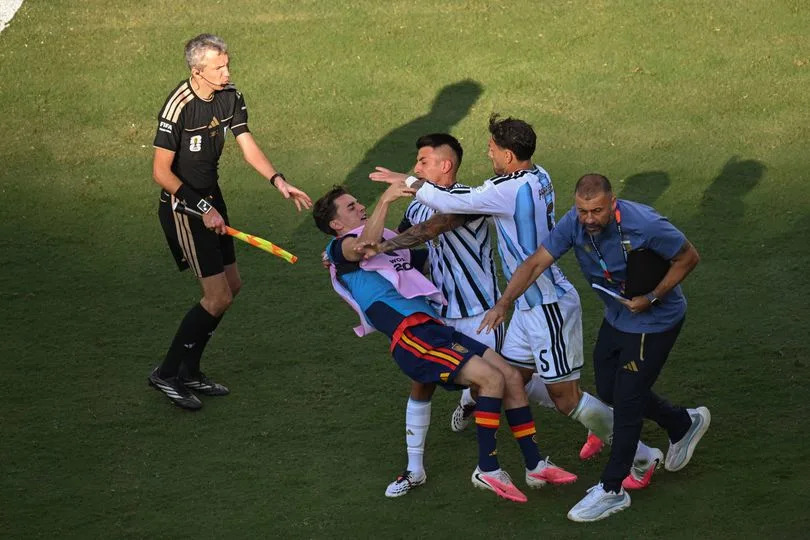
The chaos began immediately after Ferran Torres’ 106th-minute goal sealed Spain’s second World Cup championship in the nation’s history. As the Spanish players celebrated, Argentina’s Leandro Paredes launched a series of aggressive attacks on opposing players. Video footage showed the midfielder grabbing Barcelona defender Eric García by the throat and forcefully knocking him to the ground. Paredes then turned his attention to Spanish midfielder Gavi, shoving and punching him as other players from both sides rushed in to join the melee. The confrontation escalated further when other Argentine players became involved in the fracas.
The confusion surrounding Paredes’ potential red card has created an unusual situation in World Cup history. FIFA’s official commentator information system initially displayed a red card for Paredes in the match report, suggesting referee Slavko Vincic had sent him off for the violent conduct. However, the record was deleted shortly afterward, and FIFA confirmed that no disciplinary action was actually taken at the moment of the incident. BBC football correspondent Dale Johnson clarified that the appearance of a red card in FIFA’s system was simply an administrative error, stating that it was “incorrectly displayed on FIFA’s commentator information system and then deleted.”
Despite the erased red card record, Paredes remains far from out of trouble. FIFA appointed a Disciplinary and Ethics Prosecutor to investigate the post-match incidents, reviewing match reports, official documentation, and video evidence. The investigation could still result in retrospective disciplinary measures. Other Argentine players also face potential sanctions, including defender Nahuel Molina, who was captured on video striking Spain captain Rodri as he celebrated on the field, and assistant coach Roberto Ayala, who appeared to strike Spain midfielder Dani Olmo.
The violence was compounded by Argentina’s defensive performance during the match itself. The reigning world champions failed to register a single shot on target, with goalkeeper Emiliano Martínez making a World Cup record 11 saves in a futile effort to keep the score level. Argentine midfielder Enzo Fernández was sent off during regular play after receiving two yellow cards in quick succession, leaving his team with 10 men for the final stretch of the contest.
The post-match conduct sparked widespread condemnation from the global soccer community. Television commentators Gary Neville and Alan Shearer called the scenes “disgraceful,” and the confrontation quickly dominated social media as videos of the altercation spread online. Argentina’s players compounded the negative publicity by refusing to fulfill their media obligations after the match, declining to participate in mandatory post-game interviews in clear violation of FIFA requirements.
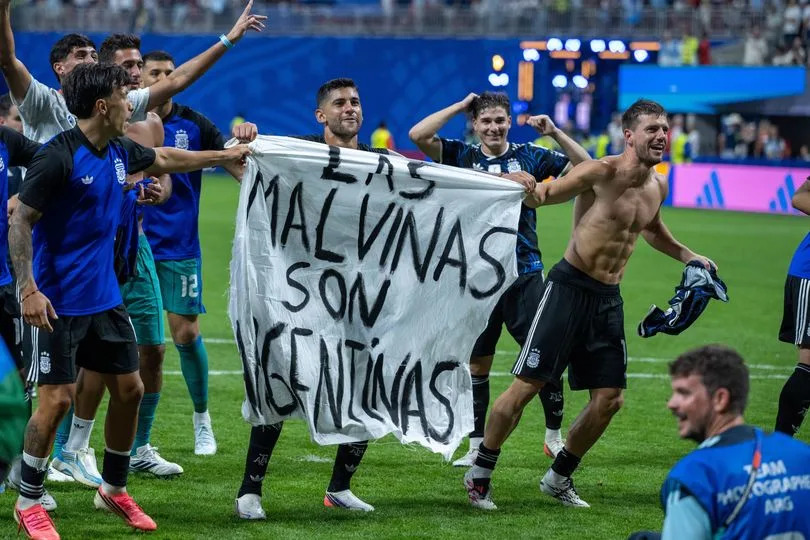
Despite the bitter defeat and the ugly circumstances surrounding it, Argentina supporters turned out in massive numbers to welcome their team home. The squad returned to Buenos Aires on Monday afternoon, greeted at the airport by enormous crowds. Most of the team rode in an open-top bus parade through the city streets, with thousands of supporters lining the route to the national team training complex. The celebration reflected Argentina’s journey through the tournament, during which they defeated England to reach the final, even as the loss to Spain denied them a chance to become the first team to win four consecutive major tournaments.
Lionel Messi, the Argentine captain, opted not to travel back to Buenos Aires with the squad. Instead, the 39-year-old forward headed to his hometown of Rosario to rest before returning to club duties with Inter Miami. The decision marked a stark contrast to celebrations following Argentina’s 2022 World Cup victory, when Messi led the triumphant homecoming that drew an estimated four to five million supporters into the streets of the capital.
The 2026 World Cup final will now occupy an uncomfortable place in football history. While Spain’s victory cemented their status as one of the sport’s elite nations, the tournament’s conclusion became overshadowed by the violence, the administrative confusion over the red card, and the broader questions raised about sportsmanship at the highest level of the game.