

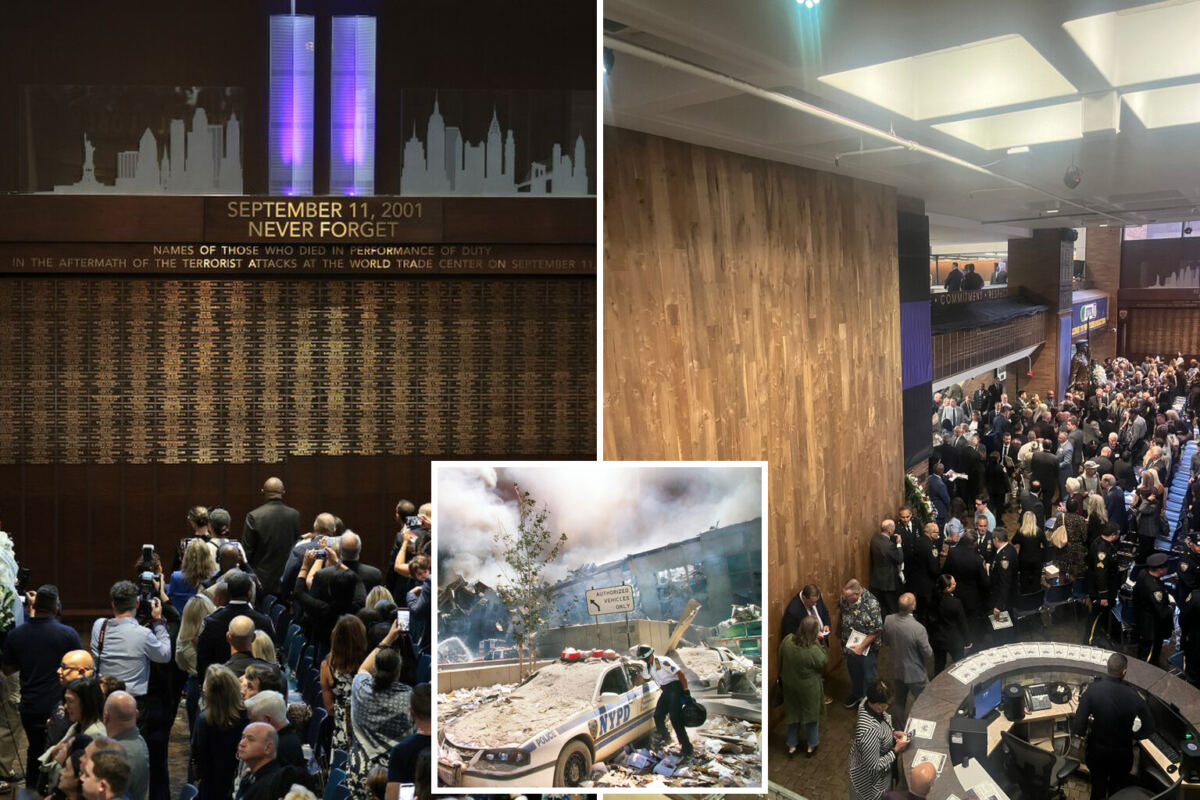
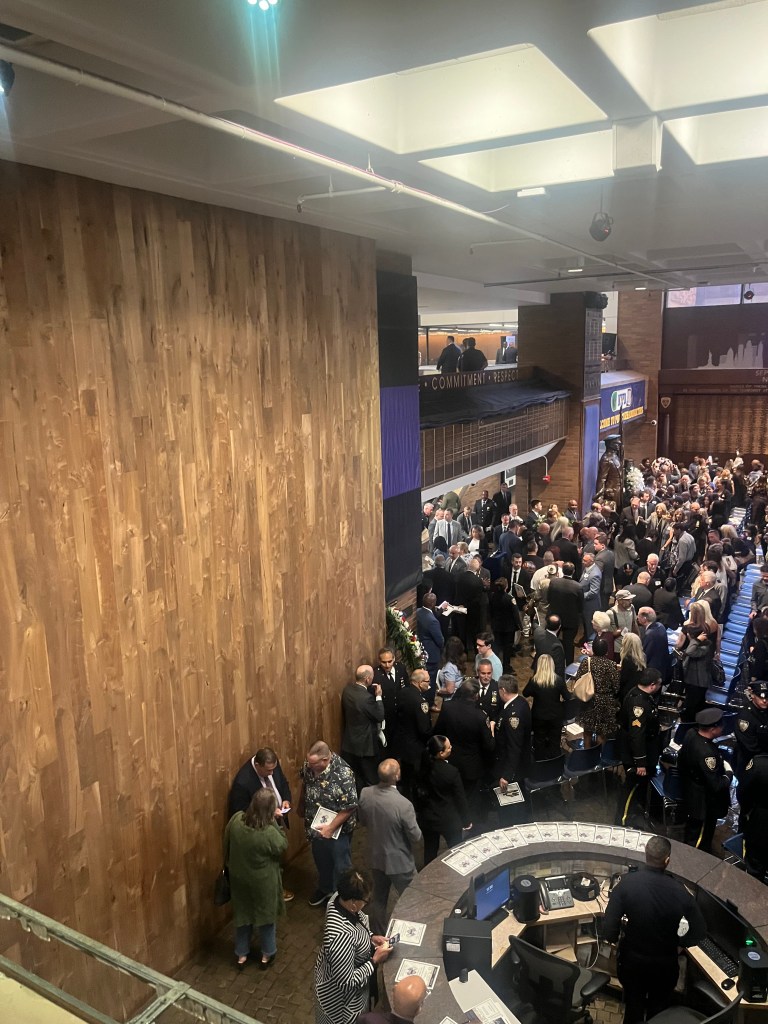
The NYPD has left a towering blank wall standing empty in its Hall of Heroes as a silent acknowledgment that the toll from September 11 continues to grow.
The empty space stretches roughly 25 feet long and 40 feet high, the only bare surface in the somber memorial hall near an entrance to NYPD headquarters at One Police Plaza in Lower Manhattan. It sits across from walls now crowded with hundreds of new names added this week.
On Wednesday, the department inscribed 469 officers who died of 9/11-related illnesses onto the Wall of Honor, bringing the total number of names in the hall to nearly 1,000 dating back to 1849. The new names appeared alongside a likeness of the Twin Towers.
“The number of people passing from 9/11 hasn’t stopped and it seems like it’s increasing,” a high-ranking police source, who helped with recovery efforts at Ground Zero, told The Post. “They need space. There’s no other way around it.”
That same police source pointed to the blank wall as practical preparation for an unended tragedy.
The scale of post-9/11 deaths has eclipsed the attacks themselves. A staggering 5,892 first responders and people who lived and worked near Ground Zero have died from cancer caused by the toxic air in the 25 years since the terror attacks — more than double the 2,753 people killed on September 11, 2001.
The NYPD has confronted expanding memorial needs before. In April, the department added 60 members who died of COVID-19 during the 2020 pandemic to one of the walls in the Hall of Heroes, demonstrating the hall’s evolving role in marking line-of-duty deaths beyond traditional circumstances.
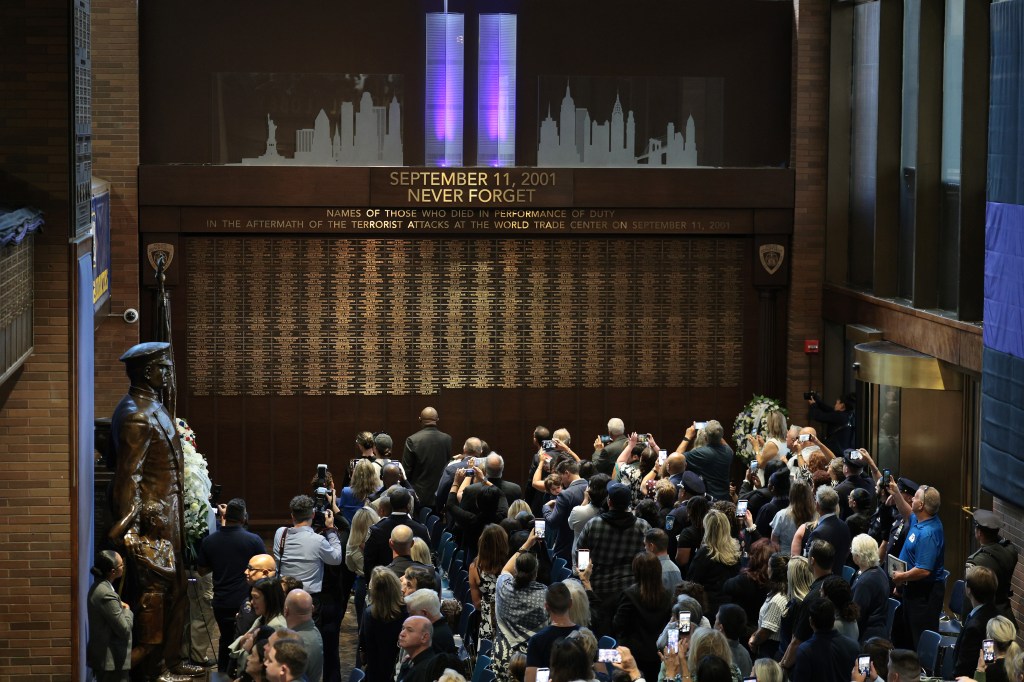
An NYPD spokesman pushed back against the implication that the blank wall awaits future 9/11 casualties, stating there are “no plans” to use it for more names. The spokesman noted that “extra spaces on the new memorial wall” remain available where the 469 officers are already listed.
The Hall of Heroes occupies a visible position in the NYPD’s lobby, making the blank wall an unavoidable sight for employees and visitors passing through headquarters. Its presence has become a focal point for those reflecting on how the department’s losses from two decades ago continue to accumulate.
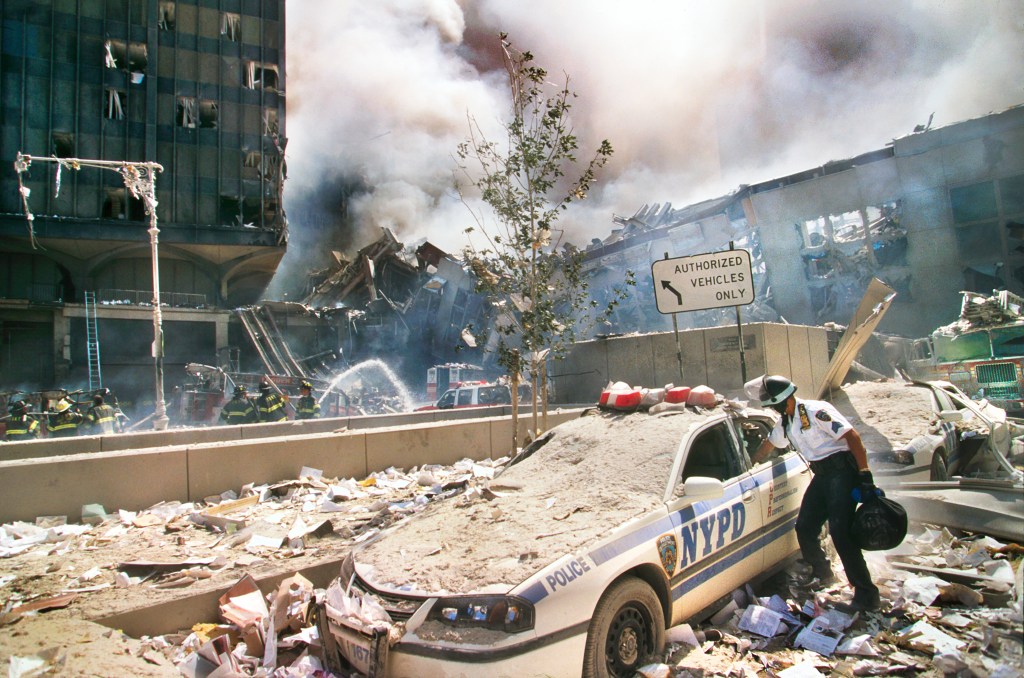
The original September 11 attacks killed 343 FDNY members, 23 NYPD officers, 37 Port Authority police officers, and numerous other first responders who rushed to the World Trade Center. In the immediate aftermath, thousands more worked amid the rubble and toxic dust for months, many without adequate respiratory protection. The EPA initially assured workers the air was safe, a claim later disproven as cancers, respiratory diseases, and other illnesses began appearing in waves among the exposed population.
The NYPD continues to monitor officer health through its World Trade Center Health Program participation, tracking members who served at Ground Zero, the Staten Island landfill, or other exposure sites.