

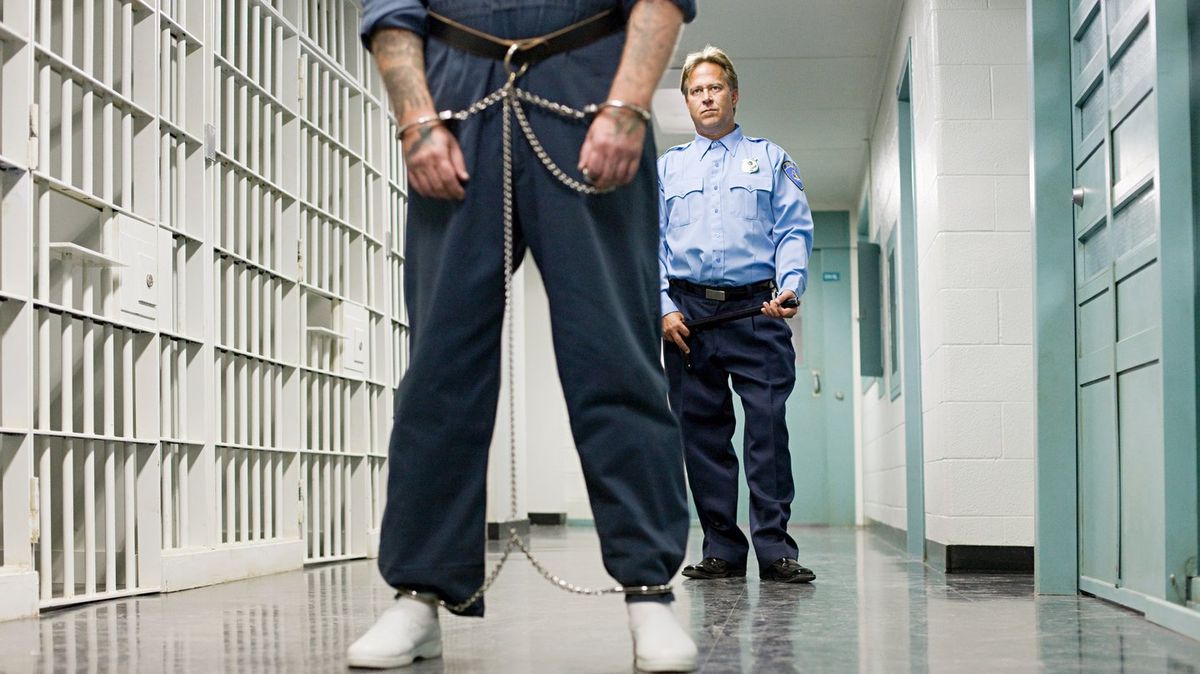
A former attorney who represented death row inmates has shared the major mistake he nearly made on an early prison visit, after staff warned him in advance about what not to wear.
Josh Pickar spent seven years working on behalf of men housed on death row in Alabama as well as in federal prisons. He first worked on pro bono capital cases at a major New York law firm before serving as a federal public defender handling post-conviction death-penalty litigation. His clients included men on both Alabama and federal death rows.
He took on the work at just 24 years old, after a friend invited him to help with two pro bono death penalty cases.
One assignment involved reviewing evidence, where he realized a supposed video was actually a sequence of still images stitched together. That experience, he has said, drew him fully into the job.
Later, he reflected on one of his earliest trips to a prison and the clothing advice he was given beforehand.
Writing for The Guardian, he explained that after some “light panicking and a full body pat down”, he eventually found himself sitting across from one of his first clients.
“Before the visit, the prison had told me not to wear khaki. Now I understood why.”
The reason became obvious once he saw the inmate’s outfit: a prison jumpsuit worn over a white undershirt.

It was khaki.
That is exactly the kind of confusion prison staff wanted to avoid.
“The guards did not want to mistake a lawyer for a prisoner.”
Guidance for prison visitors in Alabama supports that point. Alabamaprisons.org says visitors should be careful about what they wear.
“Dress codes prohibit revealing or uniform-style clothing and any item that could conceal identity.”
Dress policies can also vary from one facility to another, with some prisons using different inmate uniform colors. Prison Visitor Guide advises people not to wear shades that could match prison-issued clothing. Khaki uniforms are commonly used in federal prisons to designate general population inmates, while different state and county facilities employ various colors for security and identification purposes.
“Clothing must be knee-length and not tight or sheer.”
Advice shared on Prisoner’s Abroad by a relative of an inmate goes even further, including tips about footwear, jewelry and undergarments.

The contributor said they have found it ‘is important to make sure you have a change of clothes with you incase the officer does not approve’.
“For example, neckline too low, dress too short, clothing too tight. It’s also crucial to never wear orange or beige, as this is the colour of inmate clothing, which can vary in State and Federal prisons,” they add.
“You can’t wear backless shoes like flip flops or sandals and I always ensure there is no metal on my clothing. If a visitor is wearing jewellery or watches these have to be taken off when going through the metal detector. For women, absolutely no wired bras are allowed; even the metal hooks set the alarms off.”
Since leaving his legal career, Pickar has become a comedian and performer. He is a Rhodes Scholar and has garnered over 1.75 million online views for his work. In 2025, he launched a podcast titled “We Needed This.” He has also trained in comedy and improvisation at the Upright Citizens Brigade and the People’s Improv Theater in New York, and recently completed clown school at École Philippe Gaulier in rural France. In August 2026, he is performing his debut comedy show “Getting Off” at the Edinburgh Festival Fringe, a darkly comic exploration of his experiences in the capital defense system.