

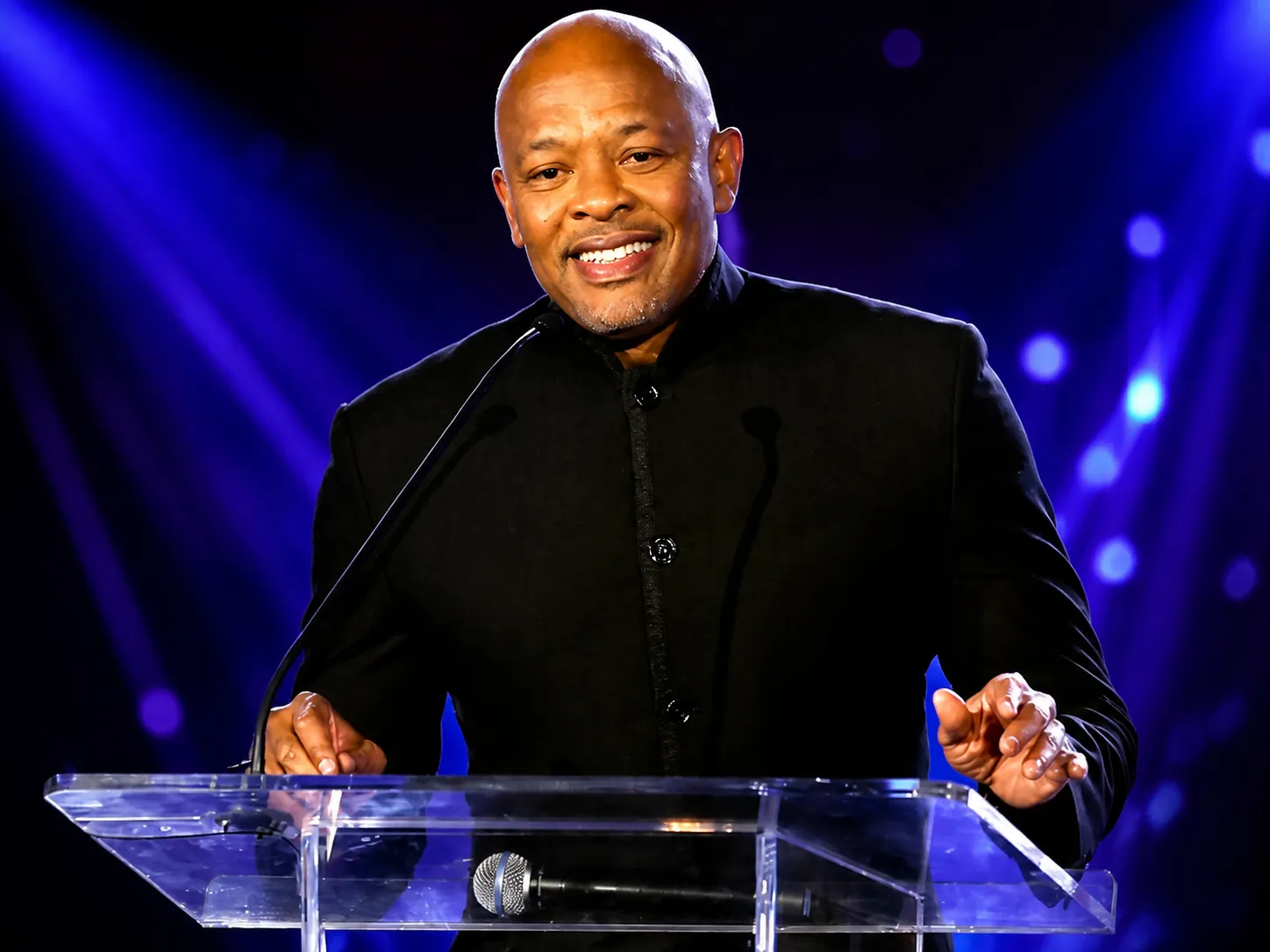
Dr. Dre has a blunt message for anyone worried AI is coming for musicians’ jobs: it’s just another tool, and only people who struggle to create in the first place have anything to fear from it.
The hip-hop mogul made the comments in an interview, published Sunday, alongside his longtime business partner Jimmy Iovine. The interview lands shortly after Dre, 60, was named to Forbes’ 2026 Billionaires list for the first time, with an estimated net worth of $1 billion.
https://www.youtube.com/watch?v=f_EeXgKvp0Y
His fortune stems partly from the 2014 sale of Beats by Dre to Apple, a deal worth more than $3 billion, and a 2023 sale of music income streams and other assets to Shamrock Holdings and Universal Music Group worth more than $200 million.
Asked about the growing anxiety around generative AI in the music industry, Dre didn’t hold back. “I think the only people that see it as a threat are the people who have trouble creating,” he said.
Dre compared the backlash to reactions against past innovations in music technology, recalling a recent conversation with skeptics. “I had a discussion with a few people a few days ago,” he said. “They were against AI and I’m like, ‘OK, you sound like the person that would have been against the drum machine when it came out.’ Or synthesizers, right? It’s a new tool for creativity. Some people are afraid of learning new things.”
Dre said he’s already experimenting with the technology in the studio, using it “as a tool to see what it would do with what I just did.” Iovine backed him up, revealing he isn’t the only major producer quietly embracing the tech.
“So is Timbaland, another brilliant producer,” Iovine said. “By the way, there’s a lot of closet AI producers out there.”
Dre’s relaxed stance comes as AI remains one of the most contentious issues in the music business. Indie publisher Round Hill Music sued AI companies Suno and Anthropic last week, accusing them of copyright infringement by scraping hundreds of its songs without permission to train their models.
Suno has already faced lawsuits from all three major labels, settling with Warner Music Group last year, and recently struck a licensing deal with BMG, which is separately suing Anthropic over similar allegations of what it called “widespread and systematic infringement.”
Streaming platforms are also adapting. Apple Music has announced it will begin labeling AI-derived songs later this year, following Spotify’s move to flag suspected AI-generated artist profiles as “AI Personas.”
Last month, a coalition including the RIAA, IFPI, the Grammys and SAG-AFTRA called for an industry-wide labeling system for AI-produced music, similar to existing explicit content warnings.
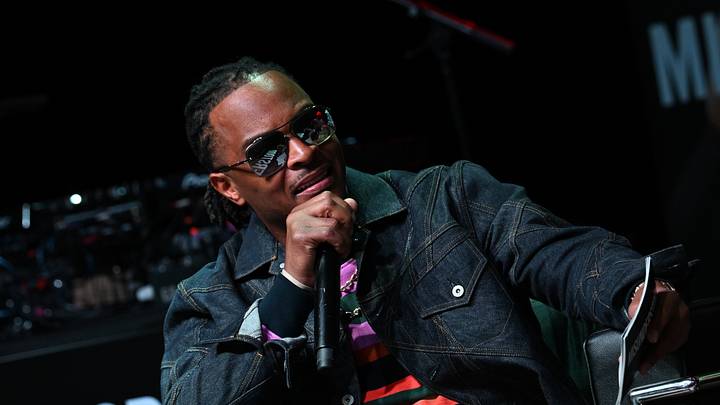
Dre’s comments mark a notable evolution in how established artists frame the technology. The producer’s perspective has already influenced others in the industry. Atlanta rapper T.I. Revealed on a recent episode of his podcast expediTIously that a conversation with Dre helped shift his own thinking about AI.
“I think it’s dangerous, and initially I have been emphatically against it,” T.I. Said. “I will say I talked to Dr. Dre and you know he was telling me about producing for Bruce Springsteen and he’s telling me that he’s using some AI stuff.”
“You still have to work, be talented, and programming to do what you want it to do,” T.I. Continued, adding that the technology is “an advantage.”
T.I. Explained how Dre framed the technology as requiring skill rather than replacing it. “And it’s almost like if everyone else has access to it and they’re using it, and you’re not, then you’re going to be left out. And you’re going to be left behind,” T.I. Said.
The exchange between Dre and T.I. Underscores how the debate over generative AI is splitting the music industry between those who see it as an existential threat and those who view it as the next evolution in a long line of technological disruptions.
Dre’s own history supports his argument. The producer built his career on pioneering sounds, from the raw energy of N.W.A. To the smoothed-out G-Funk of his solo debut “The Chronic.” He has consistently embraced new tools, from drum machines to digital production suites, that later became industry standards.
The interview with Dre and Iovine was published Sunday.