

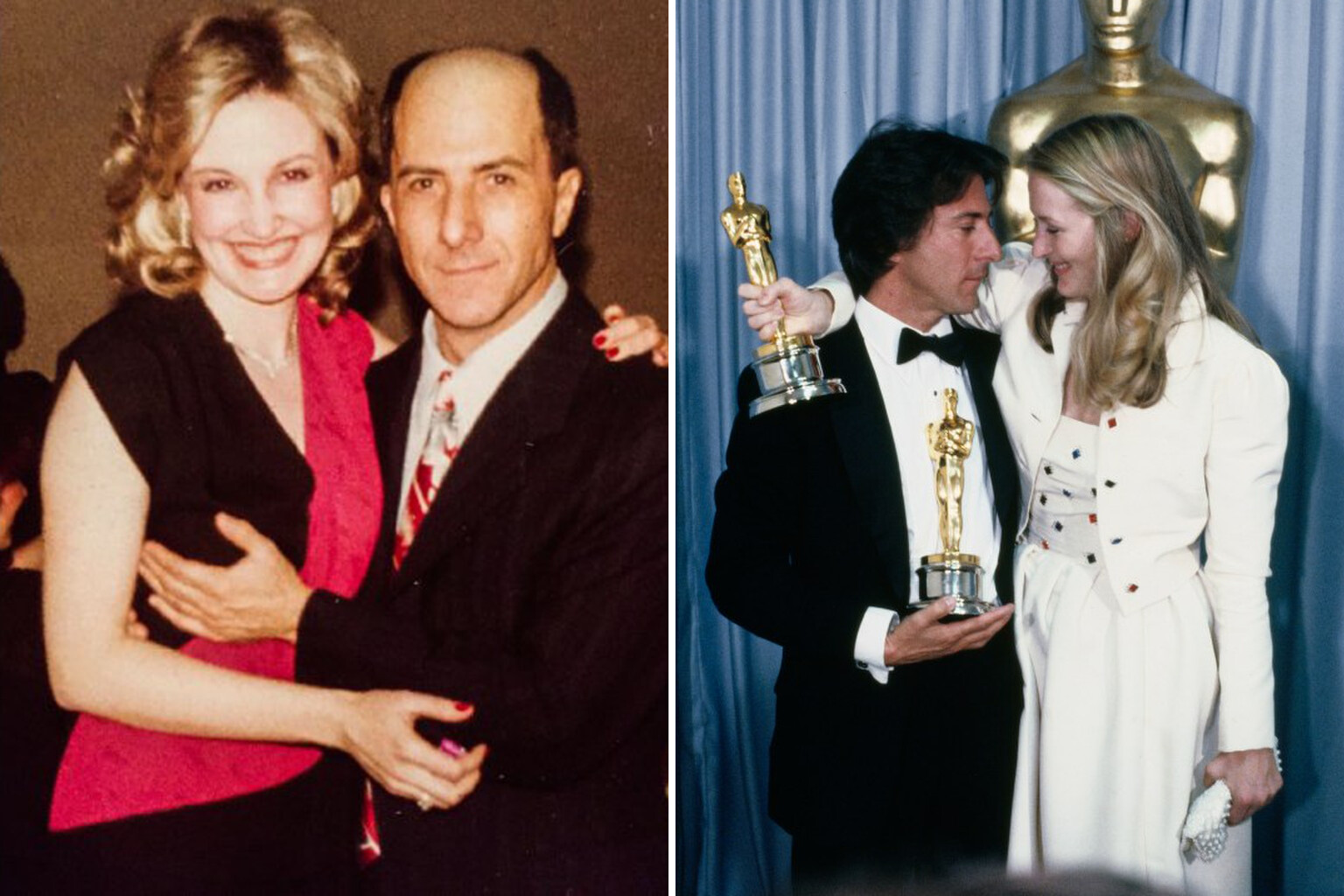
Dustin Hoffman’s accusers are speaking out against his new memoir and claiming additional women have privately shared allegations of sexual misconduct against the Oscar winner.
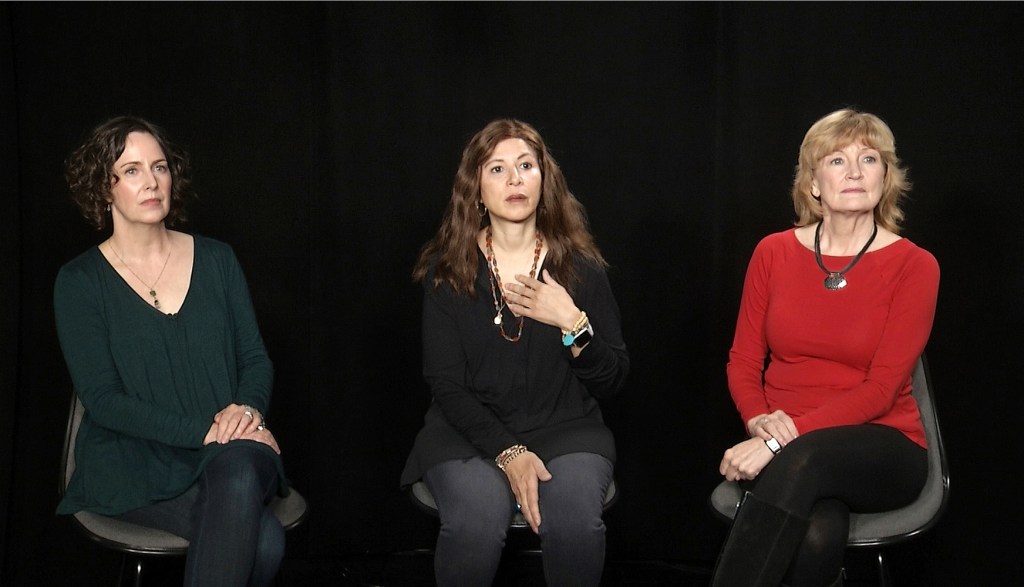
Kathryn Rossetter, 75, Cori Thomas and Anna Graham Hunter, 58, said that roughly 10 women belong to their private support circle, including three who have never publicly come forward. All three women accused Hoffman of sexual misconduct during the height of the #MeToo movement in 2017, and they now say his memoir “Look at Me” — which debuted as an instant bestseller on Nov. 10 — attempts to rewrite history without genuine accountability.
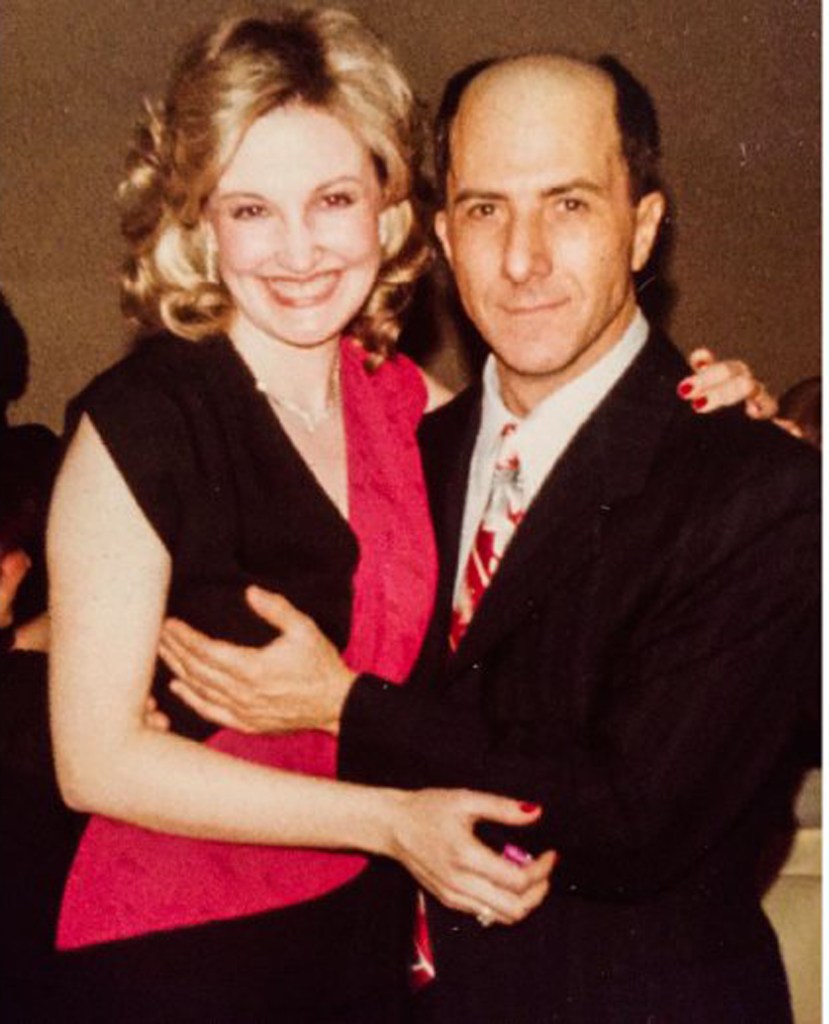
“It’s disgusting because he’s made himself the victim,” Rossetter said. “He’s done no introspection about his life at all.”
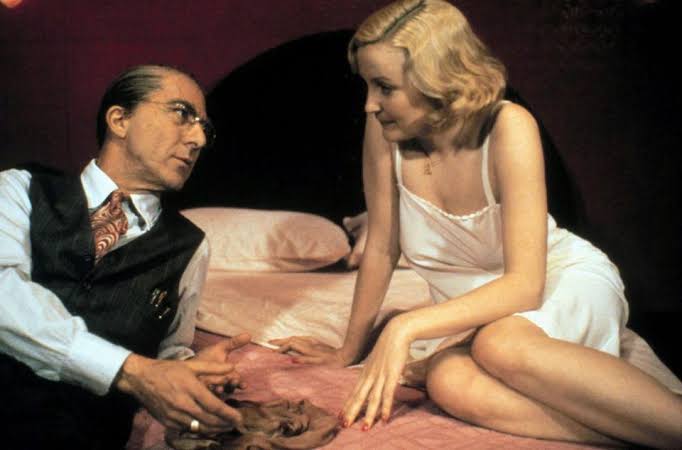
Rossetter, who played Hoffman’s mistress in the 1984 Broadway production of “Death of a Salesman,” alleges he repeatedly sexually assaulted her backstage during performances. She recalled him sitting in a chair behind her in the cramped wing space, rubbing his hand up her thigh while she tried to bat him away without missing her cues.
“The first night he started, he started rubbing his hand up the inside of my thigh and I was with my hand trying to bat him away and also not miss my cues,” she said. “He was forcing himself on me and in me and putting me in a position where I could not move. I had to do my job and say those lines and laugh on cue.”
Rossetter said she finally pushed Hoffman against a wall backstage and told him, “F–k you, you f–k. How would you like it if someone did this to you every night before you went on stage?” She said he stopped for three performances, then started again “like an addict or something.” An NYPD sex crimes detective later told her the alleged conduct constituted felony rape, but the statute of limitations had expired, she said.
Thomas, who was 16 in 1980 when she alleges Hoffman exposed himself to her in a Manhattan hotel room, said the actor had been her childhood idol and the father of one of her best friends. She recalled a day when Hoffman bought her a T-shirt at New York’s Drama Book Shop before allegedly sending his daughter home and asking Thomas to massage his feet while he lay naked on the bed, speaking to his then-girlfriend Lisa on the telephone.
“I have this beautiful young woman in front of me … She’s 16 years old, and I’m going to ask her to massage my feet,” Thomas said Hoffman told Lisa. “I’d never seen a naked man in my whole life. So he’s the first naked man I ever saw.”
Thomas said she had blamed herself for decades until reading Hunter’s 2017 account in The Hollywood Reporter, which included a detail about Hoffman requesting a foot massage. “I immediately recognized it wasn’t my fault,” she said. She added that an attorney had approached the women about legal action, but she had little appetite for a financial settlement: “Truthfully, this has zero to do with money. It’s not about money. It’s about respect.”
Hunter, who was a 17-year-old production intern on the television adaptation of “Death of a Salesman” in 1985, was the first woman to publicly accuse Hoffman in November 2017. She claimed he grabbed her backside, questioned her about her sex life and, when asked for his breakfast order, said, “I’ll have a hard-boiled egg … and a soft-boiled clitoris.” Hoffman responded at the time with a statement saying, “I have the utmost respect for women and feel terrible that anything I might have done could have put her in an uncomfortable situation. I am sorry. It is not reflective of who I am.”
Hunter is now furious with prominent media figures who have promoted Hoffman’s memoir, including New Yorker editor David Remnick, Seth Meyers and Conan O’Brien.
“For him to write this book and dismiss every one of our stories and then have people I used to admire, like David Remnick and Seth Meyers and Conan O’Brien, give him a platform, that’s what is so heartbreaking to me,” Hunter said. “They decided that we don’t matter.”
In the memoir, Hoffman, 89, does not address the specific accusations made by six women in 2017. Instead, he writes, “I’m sure it’s true that in my life, especially 40 years ago, I made some women uncomfortable. But ‘uncomfortable’ is a subjective emotional state. What is crass and offensive to one person, another individual might find hilarious, or enlivening, or even sort of cozy.” He likens the #MeToo reckoning to the McCarthy era, writing, “There was no innocence until proven guilty. There was no proving anything at all.”
“That makes me furious,” Thomas said of his characterization. “I was fine to just ignore it and keep on walking. But that infuriates me … That’s offensive.”
Hunter noted that Hoffman never faced professional consequences. “It’s not like he ever got canceled,” she said. “There’s this bizarre notion with #MeToo that time passing equals accountability.” She also questioned how the memoir made it through the publishing process at Simon and Schuster with co-author Ariel Levy. “It’s upsetting to me that they all went along with his refusal to take responsibility for what he did,” she said. “They made that choice.”
Rossetter said she still mourns what should have been a career highlight. “It makes me interminably sad because it was something that I should have loved and enjoyed. It colored all of my journey through my career,” she said. Yet she refuses to define herself as a victim: “It happened. It sucked. It was terrible. It had a far-reaching effect on my life, but I’m not allowing it to control my life or be a victim to it.”
The women said other accusers have remained silent out of fear. Rossetter recalled receiving messages saying, “‘Keep going. It happened to me too.’ They just would not give names. Everybody’s scared of him. Everyone,” Thomas said their private circle includes women who experienced “brutal things he’d done, many of which never came to light.”
Hunter connected with other women after publishing her 2017 essay. “When I wrote my story in 2017, I didn’t know how many other people he’d done this to, and worse,” she said. “It wasn’t until I started connecting with all these other women that I learned awful, awful things,” She added, “No one was asking for this book. I would’ve been fine just ignoring him for the rest of his life.”
Hoffman’s legal team denied the 2017 accusations as “defamatory falsehoods” at the time. His lawyers and representatives did not respond to requests for comment on the memoir.
Hoffman credits Lisa — the girlfriend he was speaking to on the phone during the alleged 1980 incident with Thomas — with helping him understand that flirting with every woman was inappropriate. In the memoir, he describes himself as a “Borscht Belt” flirt with a penchant for dirty jokes, writing, “I know I’m harmless, she knows I’m harmless, but if you’d never met me before, would you know? … I’m not looking to humiliate or offend anybody. I’m not a person who gets off on having power, or pressuring people to do things.”
“If he had just been a Borscht Belt comic and said off-color things, I would’ve laughed and wouldn’t have cared,” Rossetter said.
Other women who came forward in 2017 included Melissa Kester, who alleged Hoffman sexually assaulted her in a recording studio in 1985 while working on “Ishtar,” and an anonymous extra from the same film. Writer Wendy Riss Gatsiounis alleged Hoffman propositioned her during a 1991 meeting, asking if she had ever been “intimate with a man over 40” and saying, “It would be a whole new body to explore.”
Hunter is adamant that Hoffman will not control his legacy. “One thing that I keep thinking is, we’re going to be in his obituary,” she said. “Maybe not by name, but he does not get to write a version of his life in which he never did these horrible things.”
Hoffman turns 90 next year.