

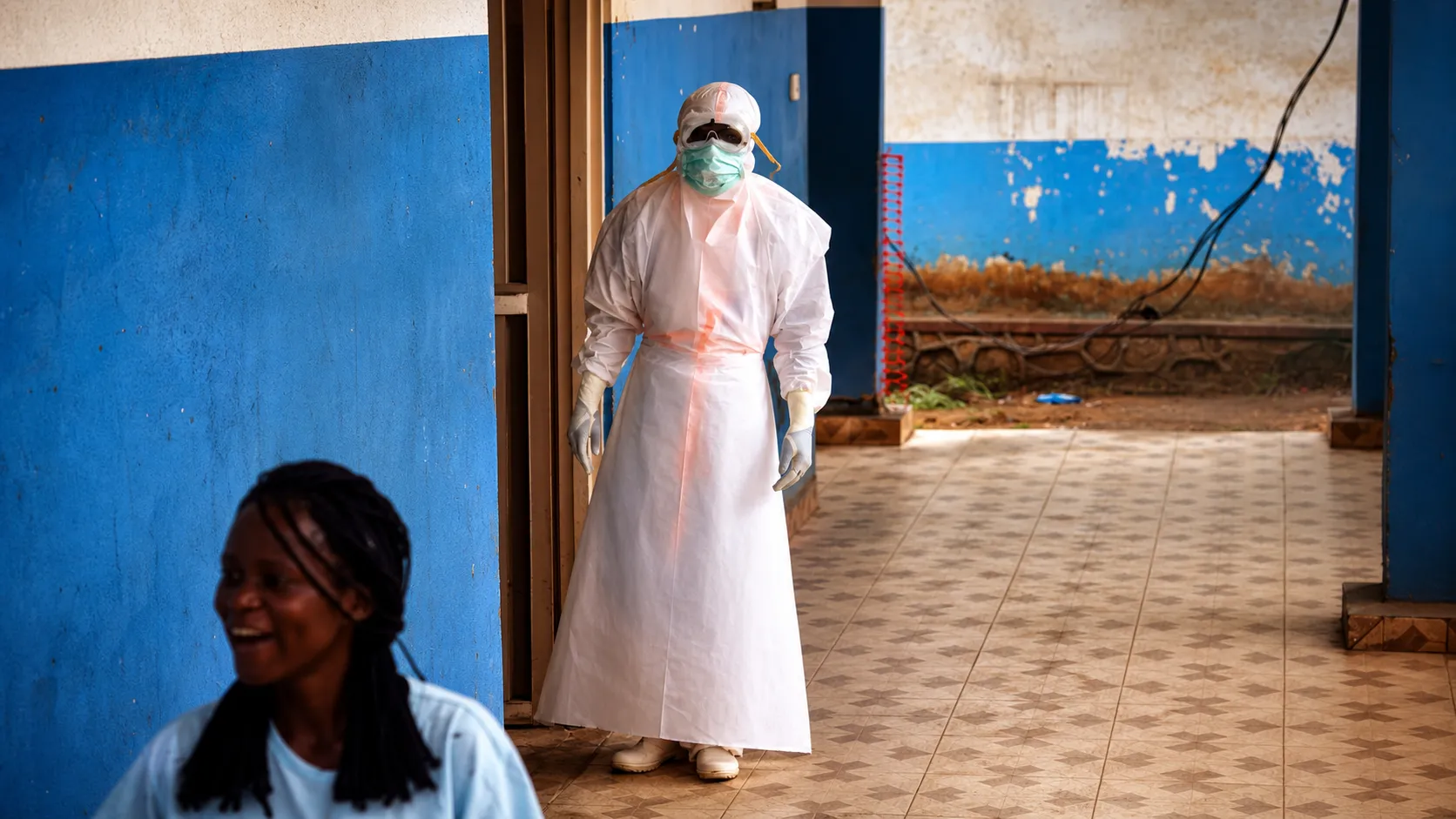
The fastest-growing Ebola outbreak in history has killed more than 1,000 people in eastern Congo as health officials race to contain a virus with no approved vaccine or treatment. An update from Congo’s public health institute confirmed 2,536 cases and 1,033 deaths, with at least 738 patients in isolation or hospitalized.
The outbreak declared on May 15 is fundamentally different from most previous Ebola crises because the Bundibugyo virus responsible has no approved vaccines or specific therapeutics. This rare strain is one for which existing Ebola treatments, certified for the more common Zaire variant, are ineffective. The case fatality rate for Bundibugyo outbreaks historically ranges from 30 to 50 percent, though early supportive care can be lifesaving.
The outbreak took roughly ten weeks to reach 1,000 deaths. In comparison, the West African epidemic of 2014-2016, the deadliest Ebola outbreak on record, took about eight months to reach that grim milestone and ultimately killed more than 11,000 people. This rapid acceleration has alarmed global health experts and raised concerns the current crisis could become the worst outbreak ever documented if not contained soon.
The disease remains concentrated in the remote Ituri Province in northeastern Congo, which accounts for nearly 90 percent of cases, though confirmed cases have spread to five provinces including Kinshasa, one of Congo’s largest cities. Cases also have been reported in Uganda, France, and Germany. Uganda has reported 20 confirmed cases including two deaths, but has not recorded new cases since June 21 and has begun a 42-day countdown to officially declaring the end of its outbreak.
The World Health Organization declared the outbreak a public health emergency of international concern on May 17, determining it requires international coordination and cooperation for the response. Global transmission risk remains low, as Ebola spreads through direct contact with bodily fluids rather than through the air, making it much harder to transmit than respiratory viruses. However, health officials assess the risk as very high within Congo and high in Uganda and neighboring countries due to cross-border movement and ongoing transmission.
Experts have highlighted multiple critical challenges impeding containment. The vast majority of new cases are emerging from unknown chains of transmission, making it difficult to trace how people became infected. Contact tracing, which health officials aim to achieve at 95 percent of contacts, has been far below that benchmark at roughly 60 percent as confirmed in June. Insecurity, displacement, population movement, weak transportation networks, and mistrust of medical institutions complicate efforts to locate and monitor those exposed to the virus.
Dr. Jean Kaseya, director-general of the Africa Centres for Disease Control and Prevention, struck an urgent tone at a health summit in Ghana. “These are people dying,” he said. “They are dying because we don’t have vaccines, we don’t have medicine, we don’t have funding.” He also warned that “if we do not stop it today, this will become the worst outbreak the world has ever documented.”
The response effort faces a significant funding gap of more than 400 million dollars, according to the WHO’s joint continental preparedness and response plan launched with the Africa CDC. That plan aims to raise 518 million dollars to support African countries in preparing for, rapidly detecting, and responding to the outbreak.
Health officials and experts point to cuts in international development assistance as a complicating factor. The closure of some development programs has weakened surveillance, laboratory capacity, and supply chains. Cold chain infrastructure previously funded by development assistance has degraded, contributing to delays in detecting the virus as swab samples degrade during transport to testing facilities. Ongoing armed conflict in the region continues to hamper detection, treatment, and prevention efforts, with attacks on health centers and strikes by unpaid health workers further disrupting response operations.
Testing and laboratory capacity remain insufficient to interrupt transmission. WHO Director-General Tedros Adhanom Ghebreyesus noted during a visit to the outbreak epicenter that while only about 45 percent of contacts were being followed up in early June, the number needed to be above 90 percent to gain ground on the outbreak. He emphasized that containing the epidemic requires stronger political backing, sustained financial support, and community trust and engagement.
“The outbreak remains ahead of us and we are still in a phase of catching up,” said Thierno Balde, the WHO incident manager for Bundibugyo in Congo. The emergence of unknown transmission chains suggests the virus may have been circulating undetected since as early as January or February 2026, before health authorities officially recognized the outbreak.
A WHO official emphasized the fundamental challenge. “We know how to stop this epidemic,” the agency said. “The challenge is not the lack of solutions, but the lack of funding to deploy them at the scale needed.”
Experts have also noted that misinformation spreads nearly as fast as the virus itself, making community engagement and trust essential to stopping transmission. Without the participation of local populations, contact tracing falters, safe care is delayed, and new transmission chains emerge. Several clinical trials are underway to identify the first effective treatments for Bundibugyo virus disease, with enrollment beginning at treatment centers across the region.