

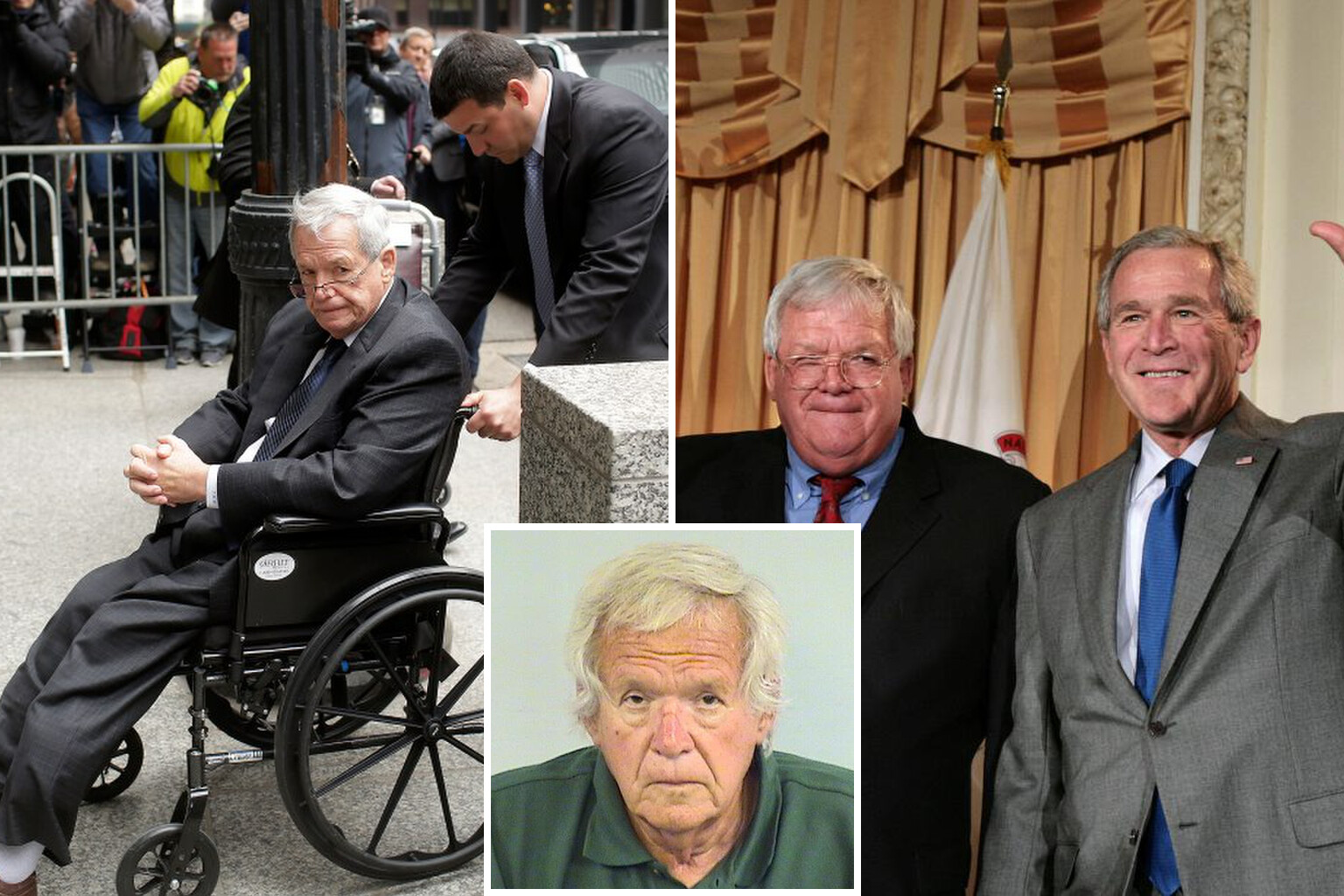
Dennis Hastert, the former Republican House Speaker who admitted to sexually abusing boys while a high school wrestling coach, died over the weekend at his home in the Chicago area.
Hastert, 84, passed away at the residence where he had lived since completing a federal prison sentence for financial crimes tied to hush-money payments to his victims.
The disgraced Illinois lawmaker’s death closes a chapter that began with a 2013 FBI probe into suspicious cash withdrawals and ended with one of the most stunning falls from power in modern congressional history. Federal investigators discovered Hastert had paid $3.5 million to a person identified only as “Individual A,” whose accusations would eventually expose decades-old crimes.
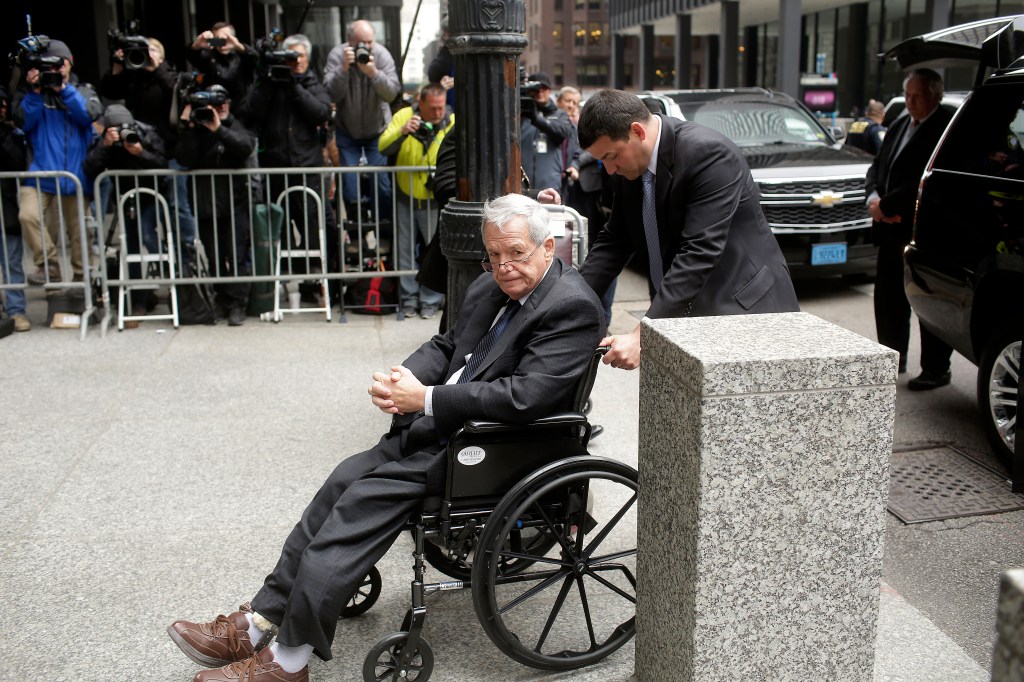
In 2015, the identity and allegations of “Individual A” became public: he accused Hastert of sexually abusing him while a student at Yorkville High School in the Chicago suburbs. Federal prosecutors ultimately alleged Hastert had molested at least four boys during his coaching tenure there, though he was never charged with sexual abuse because the statute of limitations had expired.
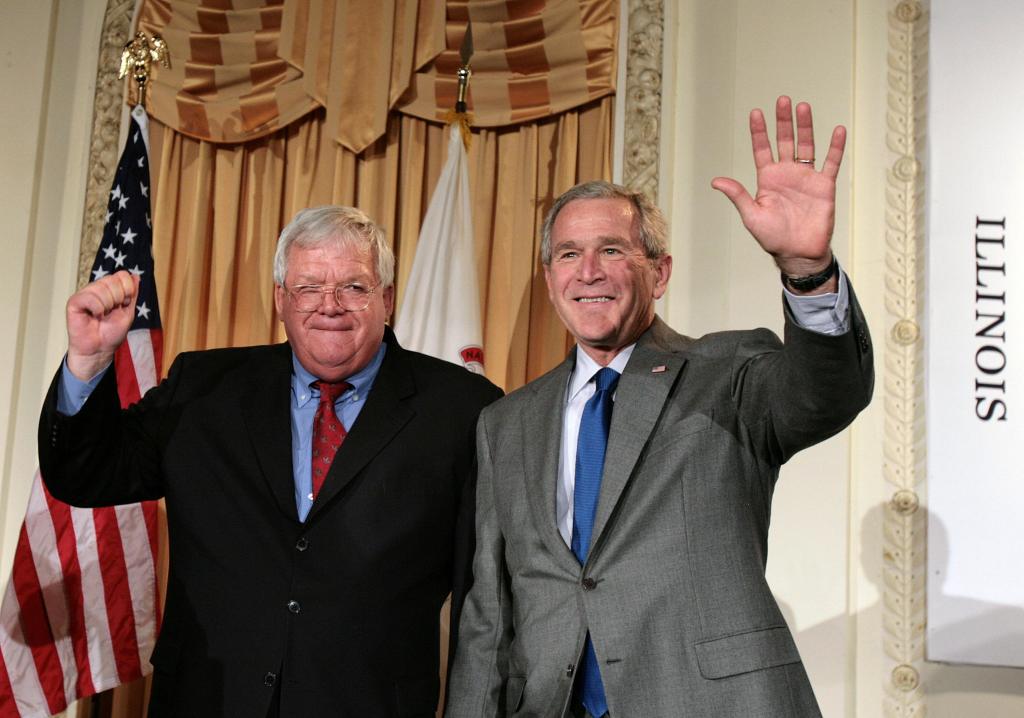
Hastert entered politics after his years as a coach and went on to serve 20 years in the House of Representatives. He rose to become Speaker of the House, presiding over the chamber during the Sept. 11, 2001, terrorist attacks and the October 2001 anthrax crisis, when envelopes containing the deadly powder were mailed to Capitol Hill offices. He resigned from Congress in November 2007.
The financial investigation that brought his past to light resulted in a 2014 grand jury indictment on charges of making false statements to investigators and unlawfully structuring cash withdrawals to evade bank reporting requirements. Rather than fight the charges at trial, Hastert entered a guilty plea.
At his sentencing hearing, Hastert admitted in open court that he had molested boys during his time as a wrestling coach. The admission came decades after the crimes and only after federal authorities had uncovered the financial scheme he used to silence at least one victim.
He was sentenced to 15 months in federal prison, ordered to undergo sex-offender treatment, required to serve two years of supervised release, and fined $250,000. Hastert served 13 months of that sentence before his release in July 2017.
The case has remained a touchstone for discussions about statutes of limitations in child sexual abuse cases, as Hastert’s actual crimes went unpunished while his efforts to conceal them resulted in prison time. Legal experts and victim advocates have frequently cited his case when pressing for legislative reforms that would allow prosecutors to bring charges years after abuse occurs.
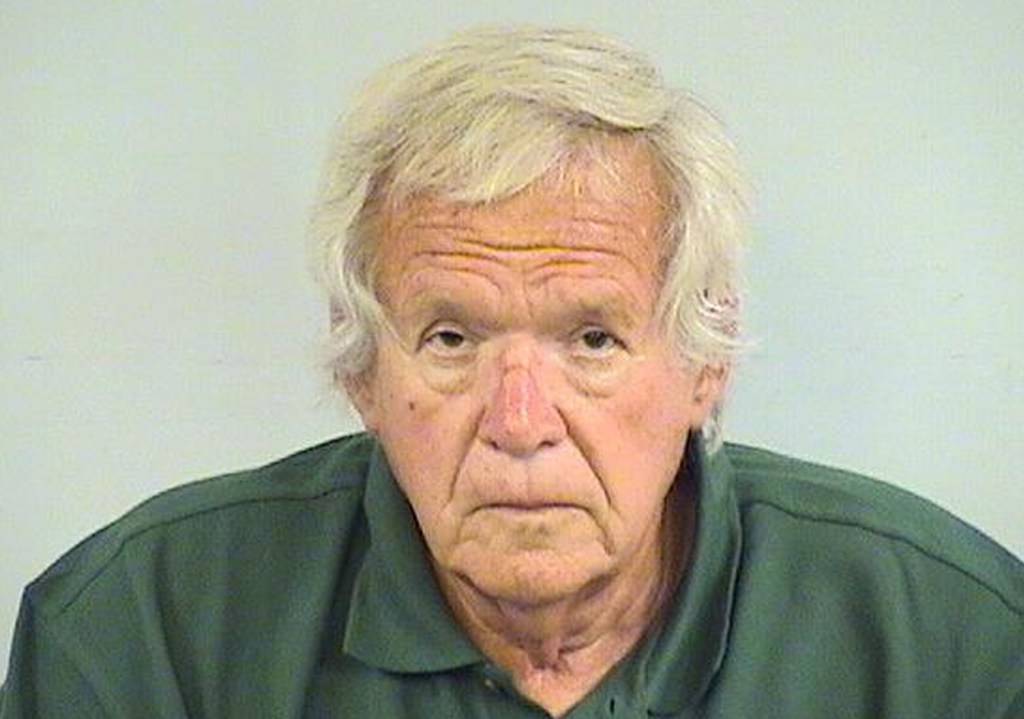
Hastert’s political legacy, once defined by his steady leadership during a national crisis, was permanently eclipsed by the revelations of his conduct as a coach and the elaborate financial cover-up that followed.