

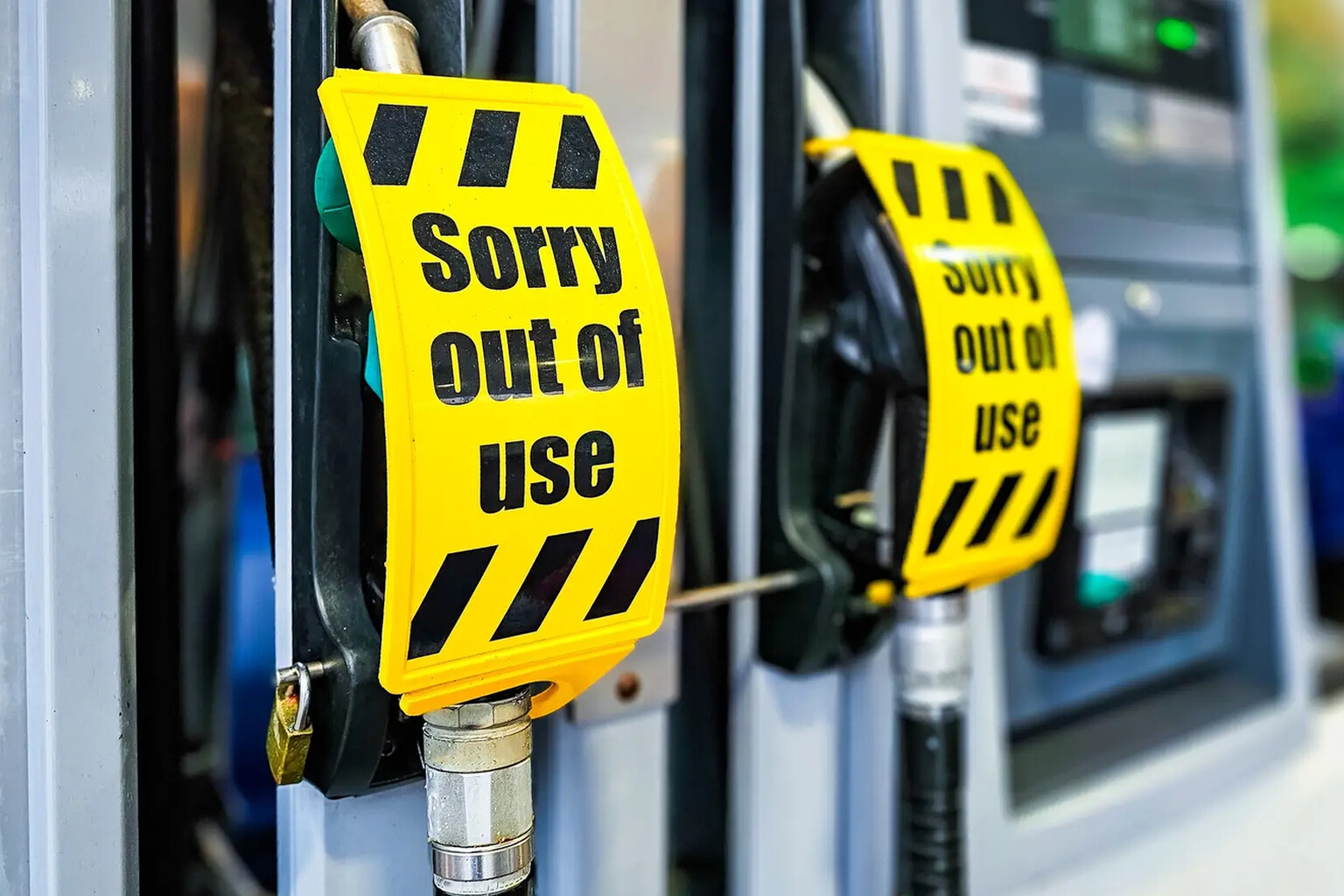
The UK government has outlined who would receive first priority for fuel if emergency rationing is activated amid plunging diesel reserves and surging prices.
The Department for Energy Security & Net Zero’s National Emergency Plan for Fuel, published as contingency talks intensify, would place emergency services and public transport at the front of the queue for scarce road fuel. The plan also proposes slashing the national speed limit to 50 miles per hour to stretch supplies further. The measures come as UK diesel stockpiles have reportedly fallen to just 42 days of cover, the lowest among developed nations except Australia.
DESNZ documents state: “The majority of potential fuel supply disruptions can be addressed by measures to help industry maintain fuel supply; these would be deployed by DESNZ in co-ordination with industry and other government departments.”
The same documents add: “However, the government does have emergency powers under the Energy Act 1976, which it can use to control supply and demand of petroleum products. It should be noted that use of these emergency powers is reserved for the most severe of disruptions.”
Under the proposed Designated Filling Station scheme, emergency and critical service vehicles would gain priority access at named petrol stations. Oil companies and fuel distributors would then be directed to prioritise bulk petroleum deliveries to emergency services, utilities and public transport operators. The plan further specifies that road diesel should flow to commercial vehicles supporting key supply chains including food distribution and health services.
For ordinary motorists, the restrictions would bite hard. The National Emergency Plan for Fuel proposes capping the amount of road fuel any driver can purchase per visit and potentially limiting the hours when retail sales can occur. The overarching goal is to ensure all motorists retain at least some access rather than leaving tanks completely dry.

A separate Crude Oil and Imported Product Allocation Scheme would grant ministers formal power to allocate crude oil and other imported petroleum products across the UK market. Officials emphasise these levers would only be pulled when an incident threatens significant and widespread oil supply disruption.

The threshold for activation remains deliberately high. DESNZ guidance reads: “Only when an incident has the potential to cause significant and widespread disruption to oil supply will government consider activating measures within the NEP-F.” The decision would be taken at national level with DESNZ leading, though local resilience forums and essential service providers are expected to maintain their own business continuity plans rather than counting on early government intervention.
The RAC, the British motoring organisation, predicted this weekend that price spikes would accompany the escalating conflict between the United States and Iran. By the organisation’s calculations, diesel has already climbed to 99.05 pence per litre while petrol sits at 174.04 pence per litre, levels not seen in the past 18 months. The Strait of Hormuz chokepoint, through which much of Britain’s fuel imports flow, has become the focal point of supply anxiety.
International comparisons paint a stark picture of British vulnerability. While the UK scrapes by with 42 days of diesel cover, the United States maintains 677 days, Japan holds 1,025 days, and Canada stockpiles a commanding 1,382 days according to reports. Australia alone sits below Britain at just 31 days.

The proposed speed limit reduction to 50mph represents a throwback to 1970s energy crisis responses, when similar measures were deployed to curb consumption. Motorway speeds in Britain normally reach 70mph for cars and light vans.
Government officials continue to stress what they term the “diversity and resilience” of the overall fuel supply system, insisting that no emergency measures are imminent. The contingency planning nonetheless signals deepening official concern about geopolitical risks to energy security that seemed remote only months ago.