

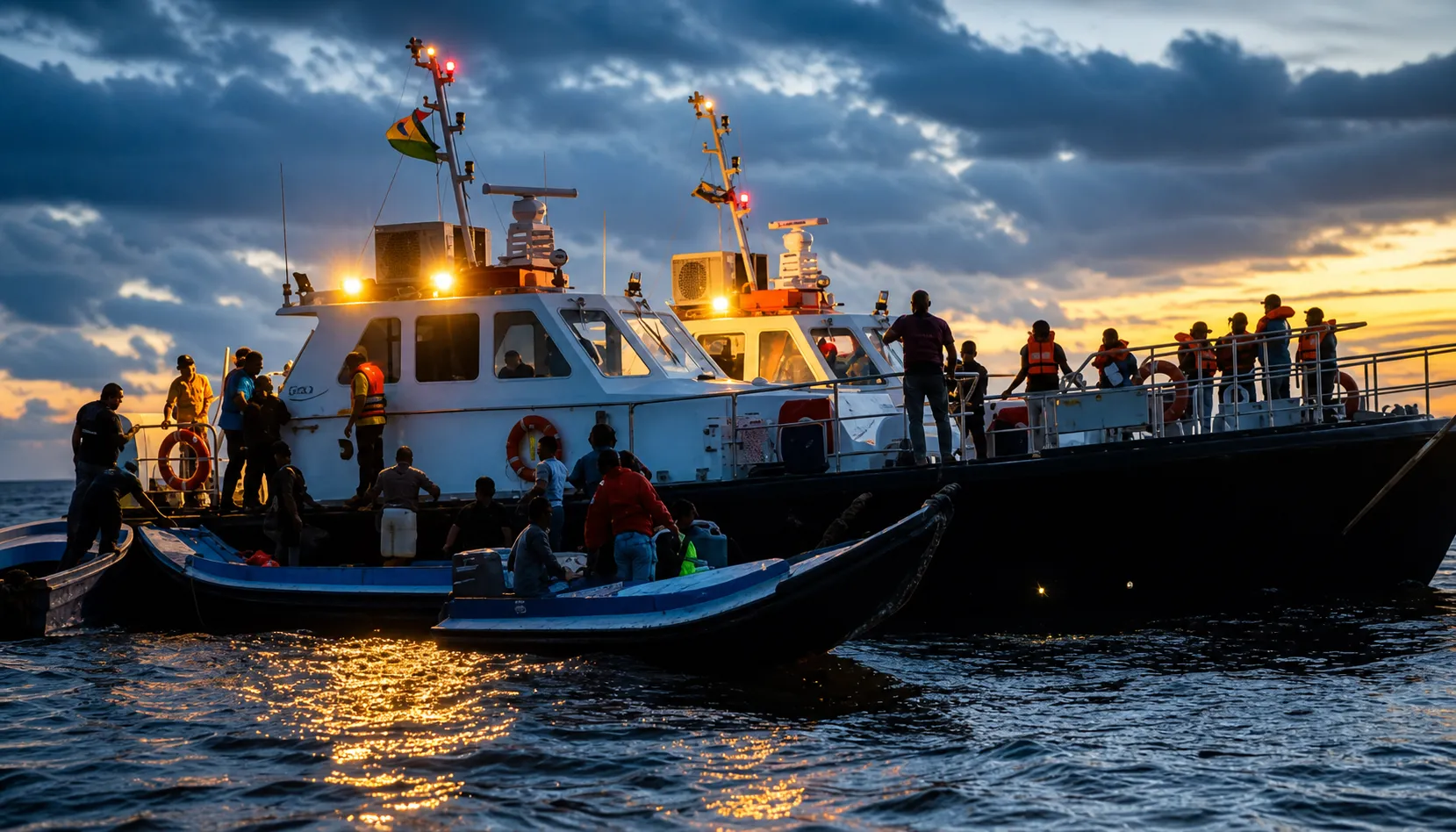
A massive search and rescue operation continued off the coast of Guyana on Monday as authorities launched a criminal investigation following the capsizing of a passenger ferry that left dozens of people missing over the weekend. The MV Barima, an aging vessel built in 1939, capsized late Saturday night while traveling from the capital Georgetown to Port Kaituma in the country’s northwest interior. The incident has become one of Guyana’s most serious maritime disasters in recent years.
The ferry issued a distress call at approximately 11 p.m. On Saturday, triggering an immediate response from the coast guard and private vessels. By Sunday morning, authorities had rescued 67 people, including 15 children, but the total number of people aboard remained unclear due to significant discrepancies in the vessel’s passenger manifest. Officials believe many more than the officially documented 116 passengers and 17 crew members were actually on board when the ferry went down.
Preliminary accounts from survivors suggest the vessel was struck by a large wave that caused it to list sharply, sending water rushing in within seconds. The ferry, carrying approximately seven miles from shore, capsized and sank rapidly in the dark waters off the Pomeroon coast near Iron Punt. Passenger Leon Murray told local news that about four hours after leaving Georgetown, someone shouted that the boat was sinking. Murray managed to swim to the surface and kept himself afloat using a life jacket, eventually finding his son and three others holding onto a floating box. Murray said his wife, daughter and four grandchildren remain missing.
Early rescue efforts were hampered by darkness and a lack of vessels equipped with scanners. However, companies in Guyana’s oil and gas sector subsequently deployed vessels with scanning capabilities, and the government activated divers to search inside the capsized ferry. Authorities expanded the search area from 400 square kilometers to 1,040 square kilometers. By Monday, no new survivors had been found since Sunday afternoon.
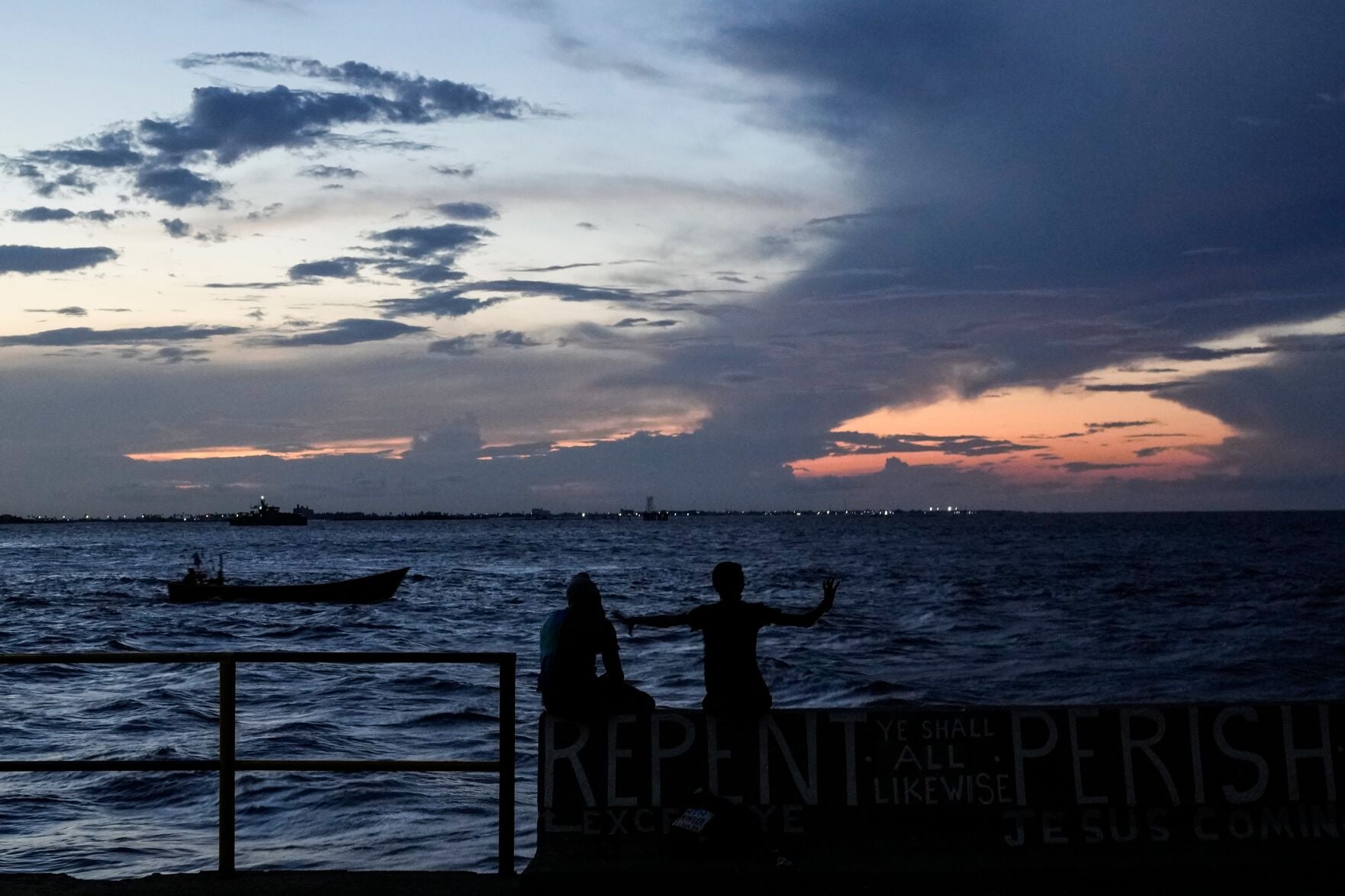
The criminal investigation launched by authorities centers on several troubling circumstances surrounding the disaster. Most significantly, the captain and at least one other crew member tested positive for cannabis, raising questions about the crew’s fitness to operate the vessel. The captain and other crew members were taken into police custody pending the investigation. Prime Minister Mark Phillips stated that “where negligence, misconduct or criminal wrongdoing is established, those responsible will face the full force of the law.”
Additionally, a significant number of people rescued were not listed on the ferry’s official passenger manifest, complicating rescue operations because authorities did not know the exact number of people they were searching for. Minister of Public Works Juan Edghill emphasized that the manifest was not “a true reflection” of the actual occupants aboard. Of the 67 people rescued, at least 35 were not on the original manifest list.
Despite these concerns, Edghill insisted there was no evidence the vessel was overloaded. He stated the ferry was licensed to carry more than 300 passengers and was carrying only 116 officially, well below capacity. He said the cargo manifest showed 268 tons out of a licensed capacity of 284 tons. Edghill attributed the incident to rough Atlantic tides and rejected claims circulating on social media that overloading was the cause.
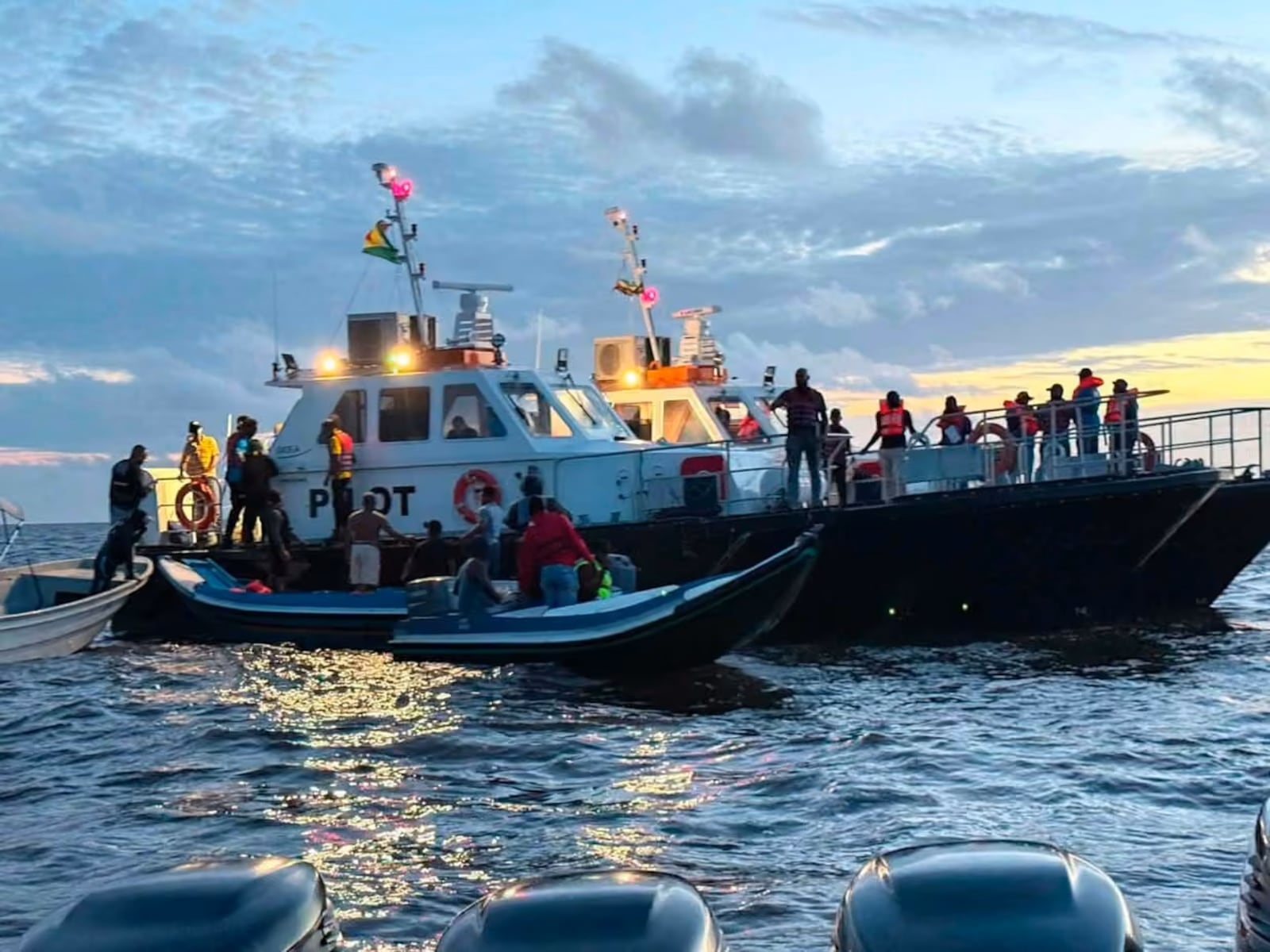
The MV Barima was equipped with 250 life jackets, two rigid life rafts and six inflatable life rafts, according to government officials. The 40-meter vessel had been in service for decades, regularly transporting passengers and cargo between Georgetown and Port Kaituma. The ferry underwent maintenance in 2024 and had been scheduled for dry docking later this year.
The disaster sent shock waves through Guyana, a nation of about one million people for which maritime transport remains essential infrastructure. Large sections of the country rely on rivers and coastal shipping for everyday mobility, making passenger ferries indispensable rather than optional. The investigation will examine the vessel’s maintenance history, operational condition, inspection records and the sequence of events that led to the emergency.
Authorities also launched investigations into potential wrongdoing by members of the police force, defense force and maritime administration department. The government pledged transparency and committed to examining what lessons might be learned to improve maritime safety standards across Guyana’s ferry network.