

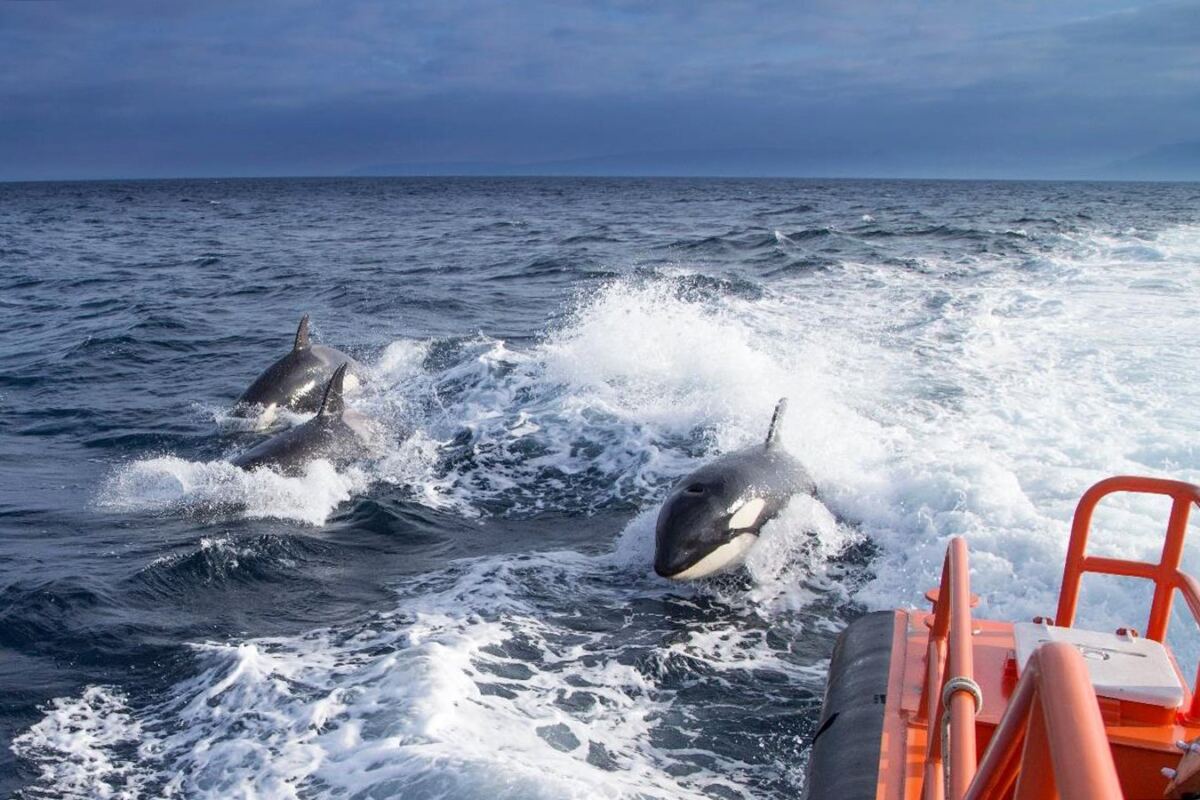
Spanish authorities have opened an investigation after Toñi, the oldest known Iberian orca, was spotted with fresh wounds that conservation groups believe were caused by shotgun pellets.
Toñi, estimated to be around 60 years old, was found in the Strait of Gibraltar this week with multiple unexplained marks across her dorsal fin and back. Spain’s Ministry for the Ecological Transition and the Demographic Challenge (MITECO) confirmed the injuries were not visible in photographs taken just weeks earlier. The ministry said it was alerted on August 11 by marine conservation group WeWhale, which holds government authorization to operate in the area.
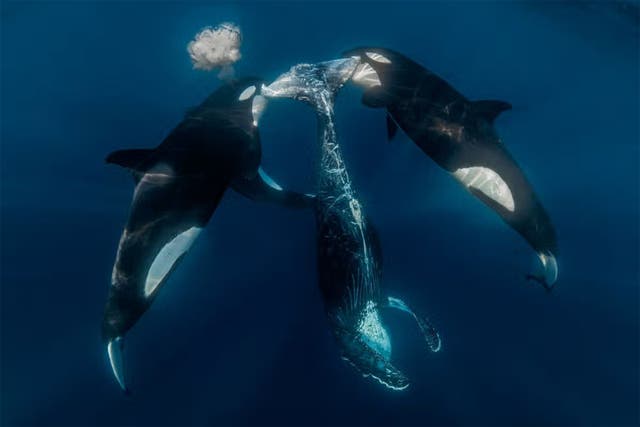
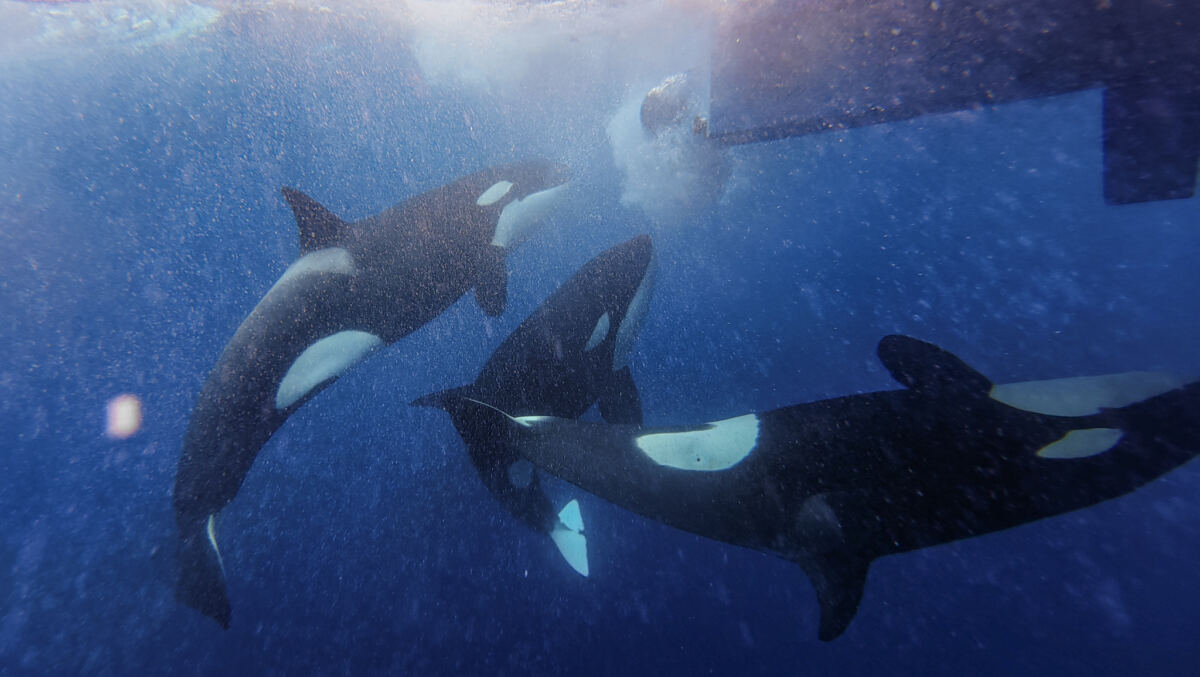
Officials opened preliminary investigative proceedings the following day to determine what happened and identify anyone responsible. While Spanish authorities have not confirmed a cause, both WeWhale and the Iberian Orca Guardians say the pattern, number and distribution of the injuries point to something more deliberate than an accident.
WeWhale’s team reported counting roughly 10 apparent impact marks on the left side of Toñi’s dorsal fin. At least two or three projectiles appear to have passed straight through the fin, while other pellets or bullets could still be lodged inside her body.
Janek Andre, 47, founder and president of both WeWhale and the Iberian Orca Guardians Foundation, told DIVE magazine that the timing made the wounds especially alarming.
“We know Toñi. We were with her a few weeks ago and these wounds were not there,” he said.
Andre added that the pattern of damage was consistent with a shotgun blast, and did not hold back on what he believes it represents.
“If someone has deliberately fired a shotgun at her, this is not only an act of extreme cruelty against an individual animal,” he said. “It is an attack on one of the last remaining members of a critically endangered population.”
Given her advanced age, experts are particularly concerned about how Toñi’s body will cope with the trauma. WeWhale explained that a dorsal fin carries a rich blood supply and helps regulate body temperature, meaning the wounds could lead to swelling, tissue damage or infection. If pellets remain trapped inside, the group warned, an infection could become life-threatening.
Despite the severity of the injuries, the group said Toñi has so far continued to swim and hunt normally, and her condition is being closely monitored. Conservationists are preserving their original photographs and observational records as the government’s investigation continues, with no suspect yet named.
Toñi, also known as ‘La Abuela,’ which means ‘the grandmother,’ belongs to a population of orcas in the Strait of Gibraltar and Gulf of Cádiz that is officially classified as vulnerable under Spain’s Catalog of Endangered Species. Under Spanish law, killing, capturing, pursuing or disturbing protected species can result in fines of up to two million euros, approximately $2.3 million, alongside possible criminal charges.
Andre said that regardless of how people feel about orca-boat encounters, using a firearm on the animals could never be justified.
“There has been enormous public discussion about Iberian orcas and their interactions with vessels,” he said. “Whatever someone’s opinion about those interactions may be, shooting at these animals can never be an acceptable response. These orcas need protection, not retaliation.”
Iberian orcas have repeatedly interacted with vessels in Atlantic waters since the summer of 2020, sparking years of tense encounters between the marine mammals and boaters. The behavior has included orcas approaching sailboats, targeting rudders, and in some cases causing vessels to sink. Spanish authorities have issued safety guidance to sailors that explicitly warns against using measures that could injure or kill the animals in response, advising boaters to navigate toward shallower waters instead. Scientists remain uncertain why the orcas engage in this behavior, with some suspecting it may be a form of play linked to the seasonal migration of bluefin tuna through the area.
The ministry’s General Directorate of Biodiversity, Forests and Desertification is now leading the investigation into Toñi’s injuries.