

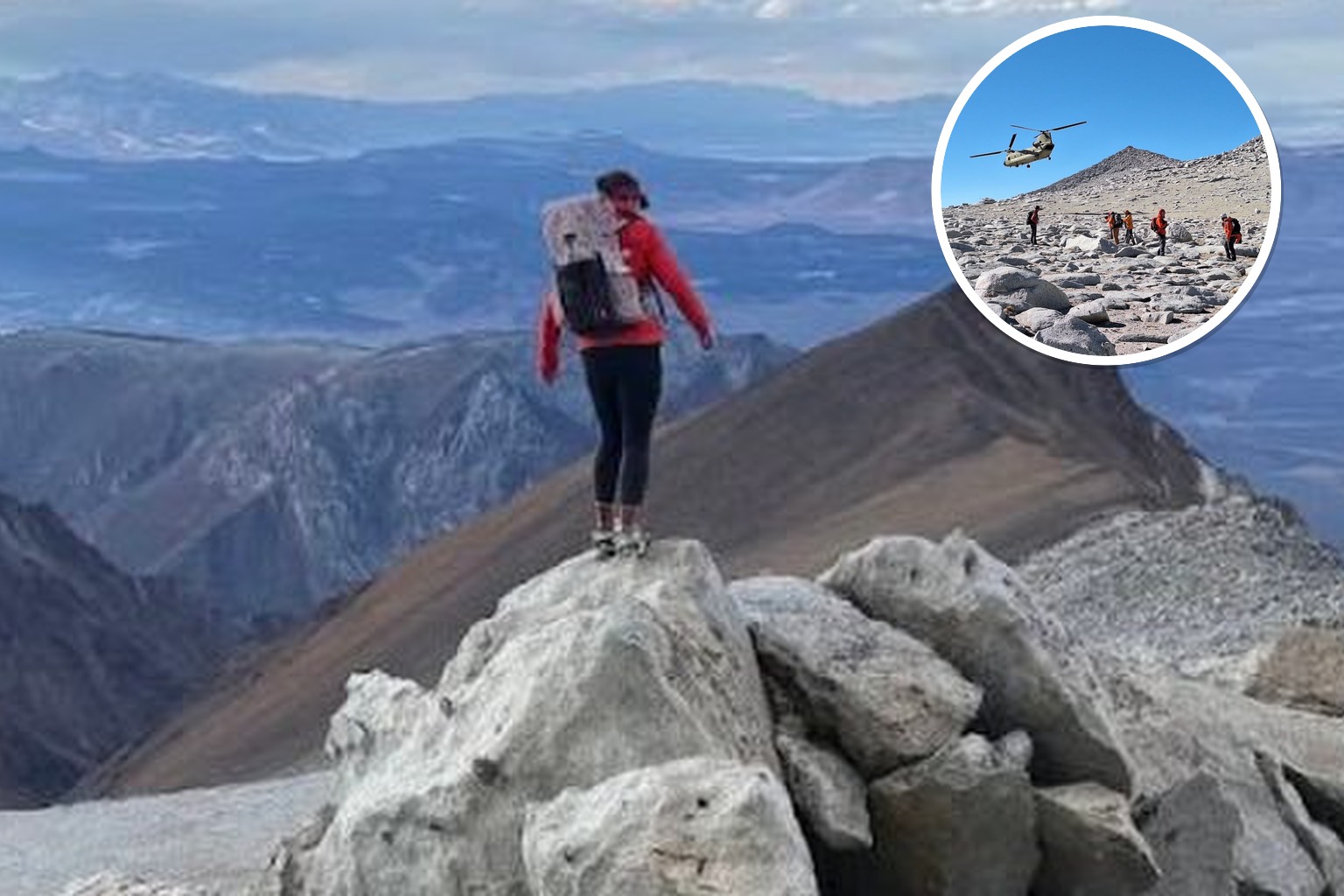
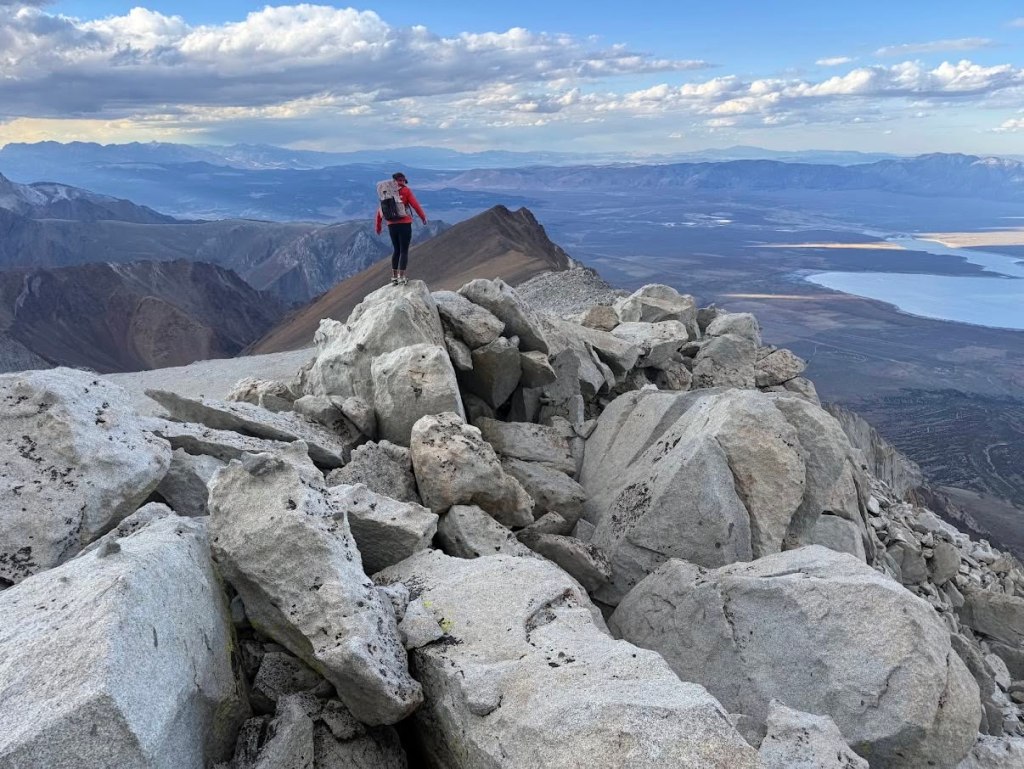
A California climber who had just summited a 13,000-foot peak sent a final text message saying he was heading down before he suffered what rescuers called an “unsurvivable” fall.
Brian Seibert, 53, transmitted the message around 7 p.m. On Sunday, Oct. 4, according to authorities. He had reached the top of Mount Morgan and was beginning his descent when he communicated his plans. He was expected back by approximately 11:30 p.m. That night.
When Seibert failed to return, the Mono County Sheriff’s Search and Rescue Team launched a response the following day, Monday, Oct. 5. The operation would stretch across multiple days and involve multiple agencies working in extreme alpine conditions.
Investigators reconstructed Seibert’s movements through a combination of photo topographic matching, extensive cell phone forensics, and a K-9 search of his vehicle. The technical investigation helped narrow the search area on the treacherous mountain terrain.
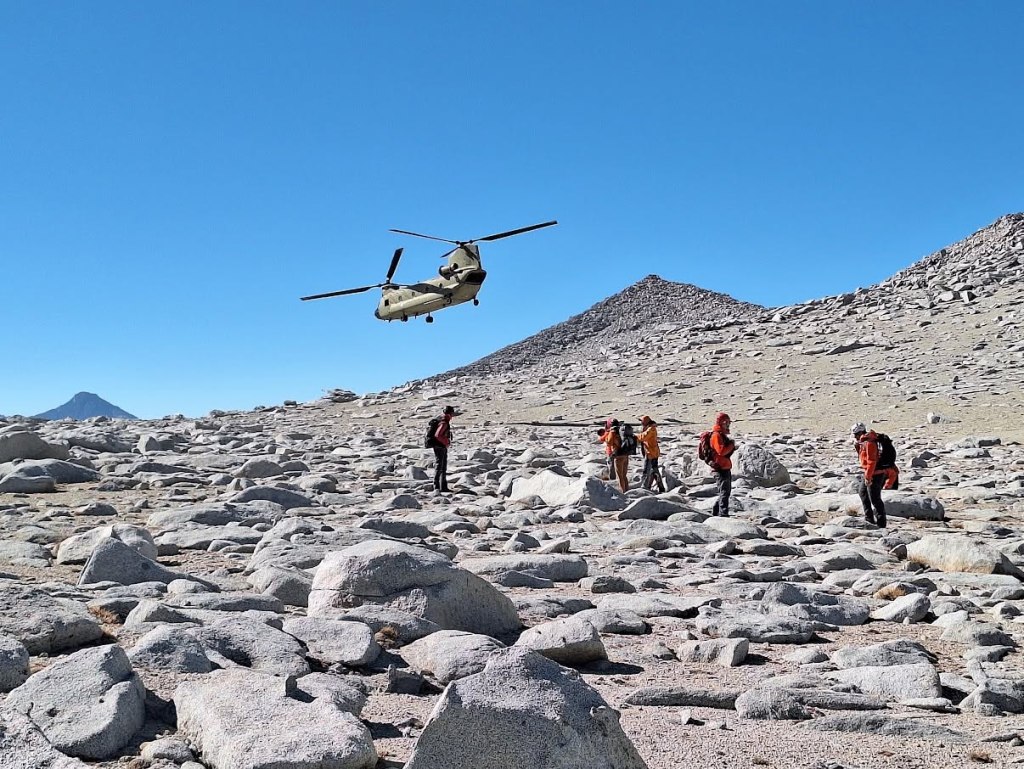
A California National Guard CH-47 Chinook helicopter deployed rescuers at an elevation of 12,500 feet on Monday to resume the search. The high-altitude insertion put teams in position to probe the dangerous east-facing gullies below the summit.
“Just after 1400 hours [on Tuesday, Oct. 6], the Schooner crew identified an anomaly from the air near the bottom of Grand Central Couloir, which is a prominent east-facing gully off of the summit proper,” Mono County Search and Rescue, a volunteer wilderness rescue team, said in a statement.
Another team that had been tracking a single set of footprints descending the couloir reached the anomaly. The discovery confirmed the worst: Seibert had plunged off a cliff ledge at the base of the Grand Central Couloir.
“Due to the extremely challenging nature of the terrain between Brian’s location and the nearest landing zone, it was determined that there would be insufficient time to safely complete the recovery that [Tuesday],” the rescue group explained.
Seibert’s body remained on the mountain overnight. The recovery finally came early Wednesday, carried out by Yosemite National Park’s shorthaul-capable helicopter 551 and crew from YOSAR, the park’s search and rescue team. More than 72 hours had passed since his fatal fall.
The Grand Central Couloir on Mount Morgan is known among climbers as a demanding route with significant exposure. The east-facing gully presents technical challenges even for experienced mountaineers, with cliff bands and steep terrain complicating both ascents and descents.
Seibert had completed the summit portion of his climb successfully. The message he sent at 7 p.m. Indicated he was aware of the need to descend and was taking that step. What exactly caused him to fall remains part of the investigation, though the terrain itself presents inherent hazards.
The multi-agency response highlighted the difficulties of mountain rescue in the Sierra Nevada. Teams from Mono County, the California National Guard, and Yosemite National Park all contributed to the operation, with helicopter assets proving essential for reaching the high-altitude search area.